
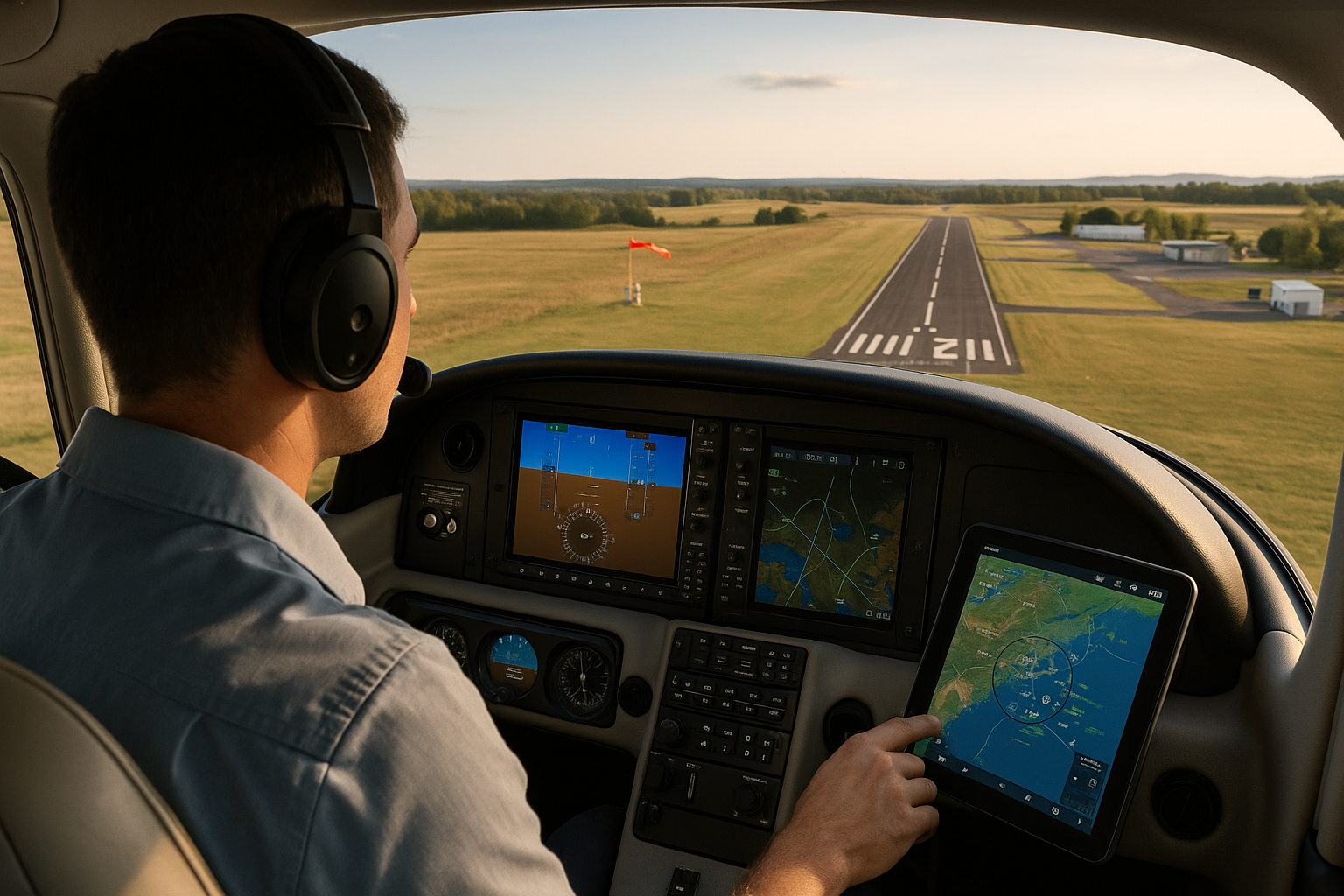
Uncontrolled airports are likely to remain an essential part of the aviation infrastructure, and career pilots will need to understand how they evolve. Whether you fly for charter, cargo, flight instruction, air ambulance, or regional operators, the way non-towered fields function affects training, operational risk management, dispatch planning, and pilot decision-making.
This article explains what uncontrolled airports are, why they matter to career pilots now and in the future, and how to translate technical developments into safer, more efficient operations. It focuses on operational implications rather than regulatory predictions, and it is written for pilots, instructors, training organizations, and aviation professionals who need actionable guidance.
Clear Main Section
An uncontrolled airport is an aerodrome without an operating control tower. Pilots communicate position and intentions on a common traffic advisory frequency or use published procedures when available. Many uncontrolled airports provide other services such as automated weather observation systems, instrument approaches, and advisory services. The core future questions for career pilots are practical: how will new technology and organizational changes affect runway access, traffic management, safety margins, training standards, and the skills employers expect?
Technologies and operational models likely to influence uncontrolled airports include improved surveillance from ADS-B and multilateration, remote tower services, expanded approach and surface guidance procedures, digital communications, and more widely distributed automated weather and NOTAM delivery. Each change affects the pilot’s mental model of situational awareness, communications, and acceptable risk at fields without live tower oversight.
Why This Matters in Real-World Aviation
Career pilots operate under commercial pressures that amplify small operational differences. An additional 10 minutes of taxi time, a marginal runway condition, or an ambiguous traffic advisory can change a dispatch decision or an alternate selection. Uncontrolled airports often serve as primary bases for flight training, commuter routes, aerial application, and on-demand charters. That means pilots will encounter them routinely and must be prepared for both normal flows and nonstandard events.
From a safety perspective, uncontrolled airports present unique human factors challenges. Pilots must self-coordinate, scan effectively for traffic, judge spacing without tower assistance, and manage distractions from passengers, cargo, or schedules. When an airport evolves with new technologies, the cognitive load shifts. For example, ADS-B traffic displays add information but can also foster overreliance or delay visual scanning. Remote tower services may provide improved surveillance, but they change how pilots interpret communications and rely on external advisories.
For training and career progression, employers may begin to prefer pilots with specific experience operating into non-towered fields under diverse conditions. Instructors should integrate decision-making scenarios that reflect both legacy operations and emerging tools. Flight schools and airline training departments can prepare students by teaching robust traffic scanning, effective radio calls, and conservative risk management when operating into uncontrolled airports.
How Pilots Should Understand This Topic
Think of the future of uncontrolled airports as a change in the balance between human judgment and external information. Historically, a pilot at a non-towered field relied mainly on visual scanning, position reports, pattern discipline, and published procedures. New tools add layers of information that can improve outcomes but also introduce new failure modes.
Operationally, career pilots should frame their approach around four practical domains:
- Situational awareness: Maintain visual scan and use digital traffic and weather tools as supplements, not replacements.
- Communication: Use standard phraseology, concise position reports, and readbacks when necessary. When digital advisory services are available, verify that their status is current and that you can still self-coordinate on the common frequency.
- Risk management: Treat non-towered operations as higher inherent risk for loss of separation and runway incursions. Build margins into approach and go/no-go decisions.
- Procedural proficiency: Know the airport’s published procedures, preferred traffic patterns, noise abatement, and any instrument procedures that affect arrival and departure paths.
Pilots should learn how to integrate new aids such as ADS-B In traffic displays, airport moving maps, and remote advisory feeds. Each tool requires a clear understanding of latency, coverage limitations, and the potential for false or incomplete information. For example, ADS-B relies on the other aircraft broadcasting. Aircraft without ADS-B or with system failures will not appear on displays, so visual scanning and radio position reporting remain essential.
Common Mistakes or Misunderstandings
Career pilots and instructors sometimes assume that modern surveillance and digital communications reduce the need for basic airmanship. That belief is risky. Common operational errors include:
- Overreliance on electronic traffic displays: Treating ADS-B as complete traffic awareness can lead to missed conflicts from non-transmitting aircraft or from traffic outside the display’s effective range.
- Poor radio discipline: In crowded non-towered airports, long-winded transmissions create clutter and can obscure critical position reports. Concise, standardized calls improve predictability for everyone in the pattern.
- Assuming advisory coverage: Some airports have remote or automated advisories that appear reliable but may experience outages. Always verify service availability and maintain procedures for operations without advisory assistance.
- Underestimating wake turbulence or small-runway effects: Smaller fields often have narrower, shorter runways and limited taxi options. Career pilots transitioning from large controlled airports must remain vigilant about performance planning and wake turbulence from heavier aircraft.
- Inadequate coordination with operators and dispatch: In business operations, pilots sometimes accept missions into uncontrolled fields without confirming ground handling, alternate airports, or current field conditions.
Training programs that treat non-towered operations as trivial reinforce these misunderstandings. Instead, integrate real-world complexity into syllabus items: mixed-traffic patterns, CTAF congestion, sensor outages, and scenario-based decision-making under time pressure.
Practical Example
Scenario: You are a captain for a regional cargo operator flying a light twin. The flight plan includes a diversion to a non-towered municipal airport due to deteriorating weather at your original destination. The municipal field has a published GPS approach, ADS-B coverage, and an automated weather observation system. Dispatch gives a fuel plan that assumes a smooth turnaround. On arrival, you find a windsock indicating a crosswind component near your aircraft’s published demonstrated crosswind; the runway is narrow and partially frost-covered in shaded areas.
How to approach the situation:
- Before committing, verify the AWOS/METAR and any NOTAMs for runway condition and closures. If the AWOS is unreliable, confirm via company operations or other pilots on CTAF.
- Use your ADS-B traffic display to develop initial traffic awareness but maintain continuous outside visual scanning for aircraft that might not be broadcasting. Make frequent, precise position reports on CTAF: announce initial approach, 10 miles out, entering downwind, base, and final as appropriate for the airport’s typical traffic density.
- Assess landing performance for the narrow, potentially contaminated runway. If the crosswind component, runway condition, or approach angle poses increased risk, brief a go-around option and prepare to divert to a specified alternate with better conditions.
- Coordinate with dispatch about ground handling and turnaround time. If the operator cannot service the aircraft safely, consider holding for improved conditions or diverting—professional operations require balancing schedule with safety margins.
This example highlights the layered decision-making required at uncontrolled airports: interpreting automated data, combining it with visual cues, communicating clearly on CTAF, and coordinating with operational stakeholders.
Best Practices for Pilots
Adopt practical habits that reduce risk and increase reliability when operating into uncontrolled airports. The following practices prioritize safety and operational clarity.
- Master CTAF discipline: Keep transmissions short and informative: location, altitude, intentions, and runway or pattern entry method. Use standard pattern positions and announce any deviations clearly.
- Use electronic tools conservatively: Treat ADS-B In, taxi diagrams, and airport moving maps as supplements. Know each tool’s blind spots and latency.
- Plan for degraded services: Have a mental plan if AWOS, ADS-B, or advisory services fail. Revert to visual procedures and conservative decision criteria.
- Practice non-standard scenarios: During training flights, practice pattern work at busier non-towered fields, operations with parked aircraft blocking taxiways, and runway contamination scenarios.
- Communicate proactively with operations: For revenue flights, confirm ground support, fueling, security, and alternate options before accepting a mission into a remote field.
- Maintain performance margins: Use conservative approach speeds, plan stable approaches, and brief go-arounds early. When in doubt, divert.
- Train for the human factors: Teach lookouts, frequency scanning, and assertive position reporting in recurrent training syllabi. Emphasize the psychological effects of schedule pressure and workload management.
Frequently Asked Questions
Can modern surveillance systems make non-towered fields as safe as towered airports?
Modern surveillance reduces some risks by improving traffic awareness and providing advisors with a broader picture. However, surveillance alone does not replicate the active separation service that a control tower provides. Pilots still perform visual scanning, self-separation, and position reporting, and they must manage situations when electronic feeds are incomplete or offline.
How should new pilots gain experience at uncontrolled airports?
Structured exposure is best. Start with supervised pattern work at quieter non-towered fields, then progress to busier airports with mixed traffic. Include scenario-based training that simulates traffic congestion, advisory outages, and adverse weather. Instructors should emphasize clear radio calls, visual lookout, and conservative decision-making.
Do ADS-B and digital communications remove the need to monitor CTAF?
No. ADS-B is a helpful tool but it does not replace the need to monitor CTAF. Some aircraft may not broadcast, and electronic displays can lag or fail. CTAF remains the primary means for pilots to announce intentions and self-coordinate in the traffic pattern at uncontrolled airports.
What are the operational considerations for corporate or cargo flights into non-towered fields?
Operational considerations include runway length and condition assessments, ground handling and security, alternate planning, fuel availability, and crew fatigue factors. Dispatch should verify local services and contingency plans, and pilots should brief contingencies before departure.
Common Misconceptions and Training Gaps
A few persistent misconceptions hinder safe operations at uncontrolled airports. First, the belief that automation reduces the need for basic airmanship leads to erosion in visual scanning and pattern discipline. Second, treating CTAF calls as optional or informal creates unpredictability that increases collision risk. Third, inadequate emphasis on crosswind technique and short-field performance in training leaves pilots underprepared for smaller municipal runways.
Training programs should close these gaps by embedding non-towered operations into recurrent syllabi, requiring proficiency checks that include at least one non-towered field under varying conditions, and using simulators or flight scenarios that replicate sensor outages or traffic conflicts.
How Airlines and Operators Might Adapt
Operators will likely adapt in practical ways rather than wholesale regulatory changes. Possible adaptations include specifying minimum experience hours at non-towered fields for certain routes, incorporating ADS-B and remote advisory use into standard operating procedures, and requiring dispatch verification for ground services at remote airports. Training departments may add modules on digital advisory feeds, remote tower interfaces, and contingency planning for advisory outages.
Employers should avoid assuming that technology alone mitigates risk. Policies that encourage proactive diversion, conservative dispatch margins, and clear communication with ground agents will produce more reliable safety outcomes than policies that emphasize schedule adherence alone.
Implementation Challenges and Human Factors
New technologies also bring new human factors challenges. Remote tower cameras create different visual cues than an on-field controller. Pilots may have to learn new phraseology or ways to request advisories through digital links. ADS-B displays can create fixation hazards, where pilots fixate on a screen and reduce outside scan. Training should therefore focus on transition skills: how to integrate new information streams while preserving traditional visual lookouts and communications discipline.
Another human factor is mixed-traffic experience. Many uncontrolled airports host a broad range of aircraft types: gliders, ultralights, piston trainers, turboprops, and business jets. Pilots must expect varied performance characteristics and anticipate unexpected maneuvers, like touch-and-go patterns or back-taxi operations, particularly at smaller fields.
Regulatory Awareness and Practical Compliance
Regulatory frameworks define responsibilities for pilots and air traffic services, but their application varies by country and operator. Career pilots should stay current with applicable national guidance and operator procedures. When in doubt, prioritize conservative operational choices. If regulatory interpretation affects a flight decision, consult operations or a company safety office before the flight where possible.
Because regulatory specifics differ and may change, this article intentionally avoids asserting new mandates. Verify local regulatory requirements and operator policies directly with official sources and company manuals. See manual review notes for items that require verification in your jurisdiction.
Preparing for the Future: Training and Organizational Steps
Flight schools, training departments, and operators can prepare pilots for the future of uncontrolled airports through deliberate curriculum design. Recommended training emphases include:
- Robust radio communication drills focused on brevity and clarity.
- Frequent practice at varied uncontrolled airports to build pattern judgment and traffic scanning habits.
- Simulations of sensor outages and false or absent traffic displays to train recovery strategies.
- Decision-making scenarios that force pilots to choose between on-field operations and diversion under operational pressure.
Operators can reinforce safe behavior by setting conservative minima for operations into non-towered fields, requiring contingency and alternate planning before dispatch, and by recognizing the value of hands-on airmanship in hiring and promotion criteria.
Key Takeaways
- Practical takeaway: Treat technology at uncontrolled airports as a supplement to, not a replacement for, basic airmanship and radio discipline.
- Safety takeaway: Maintain conservative margins and a go/divert mindset when runway conditions, traffic, or advisory services are uncertain.
- Training/operational takeaway: Employers and training organizations should require hands-on experience at non-towered fields and include sensor-outage scenarios in recurrent training.
Final Thoughts for Career Pilots
Uncontrolled airports will continue to be vital nodes in aviation. Career pilots who understand how to integrate modern surveillance and communications tools with foundational skills will be more effective and safer operators. The future will reward pilots who can navigate mixed-traffic environments, apply disciplined communication, and make conservative operational decisions when data are incomplete or ambiguous.
Invest time now in pattern work at varied fields, refine radio discipline, and familiarize yourself with the capabilities and limits of the electronic aids you use. Employers who prioritize these competencies will have crews better prepared for operational realities and fewer unexpected disruptions.
For trainers, integrate realistic non-towered scenarios into syllabi. For operators, reinforce conservative dispatch margins and clear procedures for advisory outages. The interplay between human judgment and technological augmentation will shape how uncontrolled airports function for career pilots in the coming years.