
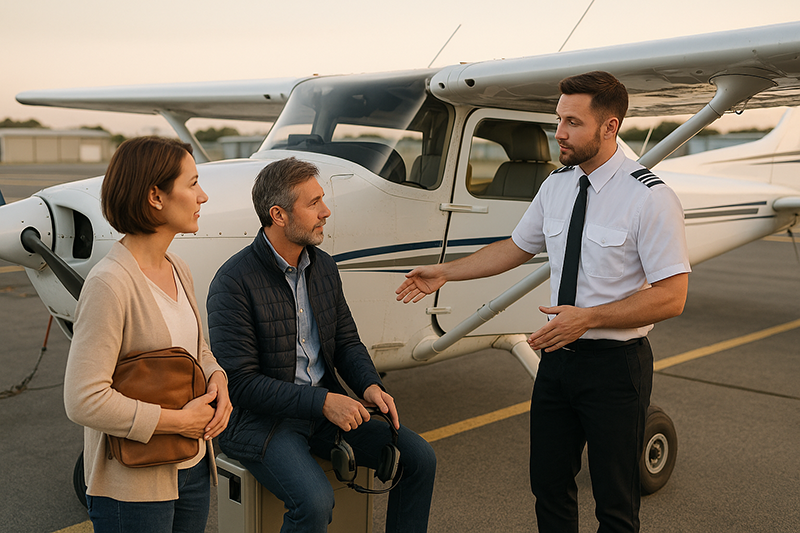
A professional passenger briefing is one of the simplest ways a pilot can improve safety, reduce confusion, and set the tone for a disciplined flight. It is not just a speech before engine start. It is a practical communication tool that helps passengers understand what will happen, what they should do, and how they can avoid becoming a distraction at the wrong time.
For student pilots, private pilots, flight instructors, and aviation professionals, passenger briefing technique deserves the same thoughtful attention as checklist discipline, weather planning, and cockpit resource management. A good briefing protects the flight deck environment, gives passengers confidence, and prepares everyone for normal and abnormal situations without creating unnecessary alarm.
The best passenger briefings are short, calm, specific, and matched to the aircraft and the people on board. A first-time passenger in a light training airplane needs a different explanation than a frequent flyer riding in the back of a turbine aircraft. A nervous family member needs reassurance. A fellow pilot may need a clear division of responsibilities. A child may need simple instructions and supervision. The skill is knowing what matters, saying it clearly, and confirming that passengers understand before the airplane begins moving.
What a Professional Passenger Briefing Should Accomplish
A passenger briefing should accomplish four practical goals: orient the passenger, prevent interference with the flight, improve emergency readiness, and build trust. If it does those things, it has served its purpose. If it becomes a rushed checklist item that passengers do not absorb, it has not.
Orientation means explaining the aircraft environment in plain language. Most non-pilots do not naturally understand how loud a small aircraft can be, how warm the cabin may become on the ramp, why the door may feel unusual, or why the pilot may become quiet during certain phases of flight. A few calm sentences before departure can prevent confusion later.
Preventing interference is equally important. Passengers need to know when they may talk, when they should remain quiet, what not to touch, how to handle loose items, and why seat belts or shoulder harnesses matter. In a small cockpit, an innocent movement can affect controls, block a switch, interfere with rudder pedals, or distract the pilot during a high-workload moment.
Emergency readiness does not require a dramatic presentation. It requires practical information. Passengers should know how to release their restraint, how to open the door or exit if appropriate, where to place their hands and feet, what to do if they feel sick, and how to follow pilot instructions. The tone should be serious but not frightening.
Trust is the final goal. A professional briefing shows passengers that the pilot is prepared, organized, and in command of the flight. It also makes it easier for passengers to speak up if they feel unwell, notice something unusual, or have a safety concern. That matters because passengers are part of the operating environment, whether or not they have aviation knowledge.
Why This Matters in Real-World Aviation
Passenger briefing quality matters because the cabin and cockpit are not separate worlds in many general aviation aircraft. In a two-seat trainer, a passenger may be inches from the flight controls. In a four-seat piston airplane, a rear-seat passenger may have limited visibility, limited ventilation control, and no clear understanding of what normal flight sensations feel like. In a high-performance aircraft, the pace of operations may leave little time to explain basic safety information once the flight has started.
Good briefings are also part of workload management. Pilots often think about workload in terms of radios, navigation, weather, aircraft control, and traffic. Passenger questions, anxiety, motion sickness, loose phones, open vents, or confusion about door latches can add workload quickly. A preflight briefing reduces the chance that these issues appear during taxi, takeoff, climb, approach, or landing.
Flight instructors see this clearly. A student pilot who brings a passenger for the first time may be technically ready to fly but not yet comfortable managing people. That is a training opportunity. The instructor can help the student develop a repeatable passenger briefing flow that covers safety without sounding robotic. The goal is not to memorize a script. The goal is to build a professional habit.
For aviation professionals, the briefing also reflects culture. Crews that brief well tend to communicate well. Pilots who explain expectations before problems occur usually handle distractions more smoothly. A passenger who understands that the pilot may be silent during radio calls or busy phases of flight is less likely to interpret that silence as rudeness or uncertainty.
A briefing also helps with decision-making boundaries. If the pilot explains before departure that weather, passenger comfort, or aircraft concerns may lead to a delay, diversion, or return to the airport, passengers are less likely to view those decisions as surprising. This can reduce subtle pressure on the pilot to continue a flight that should be changed.
Start With the Passenger, Not the Script
The strongest passenger briefings begin with the person, not the checklist. Before deciding what to say, the pilot should consider who is on board. Are they experienced around airplanes? Are they nervous? Do they have mobility limitations? Are they prone to motion sickness? Are they a child, an elderly passenger, a photographer, a business traveler, or another pilot? Each passenger brings different risks and questions.
A professional pilot does not assume that silence means understanding. Many passengers are reluctant to ask questions because they do not want to appear nervous or uninformed. Others may nod politely while missing important details. The pilot can invite questions early with a simple statement: “I’ll walk you through what to expect, and I want you to ask about anything that is unclear.”
This is also the right time to identify special concerns. A passenger may be uncomfortable with steep turns, sensitive to heat, worried about turbulence, or unsure how to use a headset. A parent may need guidance on securing a child or managing a child’s headset. A passenger carrying equipment may not realize that loose bags, cameras, and water bottles can become cockpit hazards.
The pilot should also consider the flight profile. A local sightseeing flight, night cross-country, training observation flight, and backcountry landing all call for different emphasis. The briefing for a short local flight may focus on seat belts, doors, sterile cockpit, traffic scanning, and airsickness. A longer cross-country may add weather expectations, planned stops, oxygen considerations if applicable, comfort items, and diversion decision-making.
The Core Elements of a Professional Passenger Briefing
Although the wording should vary, most passenger briefings include several core elements. These elements are not a substitute for aircraft-specific procedures, company procedures, or applicable regulations. They are a practical framework pilots can adapt to the aircraft and operation.
Seat Belts, Shoulder Harnesses, and Seating Position
Passengers should understand how to fasten, tighten, and release their seat belt or restraint system. In aircraft equipped with shoulder harnesses, the pilot should explain how they are worn and adjusted. The explanation should be hands-on enough that the passenger can demonstrate the release without hesitation.
Seating position also matters. Passengers should know where to place their feet, especially near rudder pedals or control linkages. In small aircraft, a front-seat passenger may need to keep knees, bags, and hands clear of the yoke, stick, throttle quadrant, trim wheel, flap control, fuel selector, or other controls. The briefing should be specific to the cockpit layout.
Doors, Windows, and Exits
Aircraft doors can be unfamiliar. Some latch in more than one place. Some require a particular motion to close, secure, or open. Some windows or vents may have speed or operating limitations that are specific to the aircraft. The passenger does not need a maintenance lesson, but they should know how to avoid interfering with the door and how to open an exit if instructed.
The pilot should avoid casual language such as “don’t worry about the door.” If a door has an unusual latch, explain it calmly. If the passenger should not attempt to reclose a door in flight unless directed, say so in plain terms. If an exit procedure is aircraft-specific, demonstrate it while parked and unhurried.
Sterile Cockpit and When to Stay Quiet
Sterile cockpit means minimizing nonessential conversation and distractions during high-workload phases of flight. In airline and commercial operations, sterile cockpit concepts may be tied to specific procedures. In general aviation, the same safety idea can be applied practically: during taxi, takeoff, climb near the airport, approach, landing, and any time the pilot is talking on the radio or handling a problem, passengers should remain quiet unless they see something safety-related.
This part of the briefing should be friendly but firm. Passengers do not always know that a casual question on short final or during a busy radio exchange can break the pilot’s concentration. A helpful phrase is: “If I hold up a hand or say ‘stand by,’ I’m not ignoring you. I’m just handling the airplane or the radio first.”
Headsets, Intercom, and Communication
Many passengers have never worn an aviation headset. They may speak too softly, place the microphone too far away, or bump the push-to-talk switch if one is installed at their seat. A short headset briefing prevents frustration. Show them where the microphone should sit, how to adjust volume if appropriate, and how to tell you if they cannot hear clearly.
If passengers have access to transmit controls, the briefing must make clear that they should not press transmit unless specifically instructed. If they are using a portable intercom or noise-canceling headset, check that it works before taxi. Communication problems are easier to fix on the ramp than during a busy departure.
Motion Sickness, Comfort, and Physiological Concerns
Passengers may not volunteer that they feel sick until the situation is already uncomfortable. A professional briefing makes it acceptable to speak up early. The pilot can say, “If you feel warm, dizzy, nauseated, anxious, or uncomfortable, tell me right away. It is much easier to help early than late.”
For flights involving altitude, heat, turbulence, or maneuvering, pilots should be realistic about comfort. Avoid promising a perfectly smooth ride. It is better to explain that bumps can be normal, that the pilot will adjust the flight when possible, and that passenger comfort is part of the plan. If oxygen use, ventilation, hydration, or other equipment is relevant, brief it in accordance with the aircraft and operation.
Emergency Expectations
The emergency portion of the briefing should be direct and calm. Passengers should know that if the pilot gives an instruction, they should follow it immediately. They should know how to secure loose items, tighten restraints, open or avoid opening an exit as directed, and evacuate away from the aircraft if needed.
In some aircraft, it may be appropriate to identify fire extinguisher location, first aid kit location, emergency locator equipment, flotation equipment, or survival gear. The pilot should only brief equipment that is actually installed, accessible, and relevant. Avoid generic claims about safety equipment that may not exist in the aircraft.
How to Sound Professional Without Sounding Robotic
A common mistake is trying to sound like an airline captain while flying a two-seat trainer. Professional does not mean theatrical. It means clear, accurate, calm, and appropriate. Passengers respond better to a pilot who speaks naturally and confidently than to one who races through memorized phrases.
A useful tone is conversational authority. The pilot is friendly, but the safety boundaries are not optional. For example: “You’re welcome to ask questions during cruise, and I’ll point things out along the way. During takeoff and landing, I’ll need a quiet cockpit unless you see traffic, smoke, an open door, or anything else that seems unsafe.”
That statement does several things at once. It welcomes participation, defines quiet periods, and gives the passenger permission to speak up about safety concerns. It also avoids making the passenger feel like a burden.
Body language matters. Face the passenger when possible. Demonstrate equipment instead of merely describing it. Ask them to practice the seat belt release. Have them point to the door handle or headset controls. A briefing that includes a quick confirmation is more effective than one that assumes comprehension.
Common Mistakes and Misunderstandings
The first common mistake is skipping the briefing because the flight is short. Many distractions and misunderstandings happen close to the airport, where flights are often shortest and workload is highest. A ten-minute local flight still involves boarding, engine start, taxi, takeoff, climb, maneuvering, approach, landing, and shutdown. Passengers still need to know what to do.
The second mistake is briefing too late. If the engine is already running, the cockpit is noisy, passengers are adjusting headsets, and the pilot is thinking about taxi clearance or traffic, the briefing will be less effective. Whenever practical, brief the most important items before engine start, preferably while parked with doors open or before passengers board.
The third mistake is using jargon. Terms such as “sterile cockpit,” “egress,” “PIC,” or “positive exchange of controls” may be familiar to pilots but unclear to passengers. If you use a technical term, translate it. “Sterile cockpit” becomes “quiet during takeoff, landing, radio calls, and any time I ask for quiet.”
The fourth mistake is failing to set expectations for abnormal but non-emergency events. A door that pops slightly ajar, a radio call from air traffic control, light turbulence, a go-around, or a change in destination can surprise passengers. You do not need to brief every possibility, but you can say, “If I change the plan, I’ll explain when workload permits. Sometimes the safest choice is to return, divert, or try the landing again.”
The fifth mistake is treating passengers as passive cargo. Passengers can help by keeping quiet when needed, watching for traffic if briefed, reporting discomfort early, securing loose items, and following instructions. They should not be assigned duties beyond their understanding, but they can contribute to safety when properly briefed.
The sixth mistake is giving different passengers conflicting expectations. If one passenger is told to take photos whenever they want and another is told to remain still, the cockpit can become disorderly. Everyone should hear the same essential safety information, even if individual details vary by seat.
Practical Example: Briefing a First-Time Passenger in a Four-Seat Aircraft
Imagine a private pilot taking a first-time passenger on a daytime local flight in a four-seat piston airplane. The weather is good, the route remains near the departure airport, and the passenger is excited but slightly nervous. A professional briefing might sound like this in natural language.
“Before we get in, I’ll show you a few things so the flight is comfortable and safe. This is a small airplane, so we keep loose items secured and we avoid touching any controls unless I ask. Your seat belt works like this. Please tighten it for takeoff and landing, and keep it fastened during the flight unless I tell you otherwise. This door latches here and here. I’ll close it, but I want you to know how the handle works if I ask you to open it after landing.”
“Once the engine is running, it will be loud, so we’ll use headsets. Keep the microphone close to your lips. If you can’t hear me, point to your headset. During taxi, takeoff, landing, and radio calls, I’ll need a quiet cockpit. If you see another aircraft, smoke, an open door, or anything that concerns you, tell me immediately. Otherwise, I’ll answer questions once we’re in cruise.”
“If you feel warm, uncomfortable, anxious, or sick, tell me early. We can open vents, smooth out the flying, turn back, or land. There’s no pressure to continue if you’re not comfortable. If I ever give short instructions, just follow them first and I’ll explain later when I can.”
This briefing is not long, but it covers the essentials: restraints, doors, loose items, headset use, sterile cockpit, safety callouts, comfort, and pilot authority. It also reassures the passenger that changing the plan is acceptable. That is professional because it supports safety and reduces social pressure before it can affect the flight.
Briefing Fellow Pilots, Observers, and Instructors
When another pilot is on board, the briefing should become more precise, not less. Pilot passengers may understand the aircraft environment, but they can also create ambiguity if roles are not defined. The pilot flying should establish who is manipulating controls, who is handling radios if applicable, who is navigating, and what level of assistance is welcome.
In a dual instruction environment, the positive exchange of controls should be clear between instructor and student. In non-training flights with two qualified pilots, it is still wise to state who is acting as pilot in command for the flight and how decisions will be made. The exact legal and operational implications depend on the flight and regulations, so pilots should ensure their understanding matches the applicable rules and insurance or operating requirements.
For observers, photographers, maintenance personnel, or aviation media riders, the pilot should brief movement restrictions, equipment security, door or window limitations, and communication expectations. A camera lens, kneeboard, tablet, or headset cable can become a cockpit management issue if it is not secured.
Best Practices for Pilots
A professional briefing works best when it is repeatable but adaptable. Many pilots develop a mental flow rather than a rigid script. The flow might move from passenger condition, to restraints, to doors and exits, to controls and loose items, to communication, to sterile cockpit, to comfort, to emergency expectations. That sequence is easy to remember because it follows how passengers physically interact with the aircraft.
Use plain language and demonstrate important items. A passenger should not merely hear about a seat belt release. They should touch it. They should not simply be told there is a door latch. They should see it. If a passenger is seated near controls, show exactly what to avoid.
Brief before the airplane becomes noisy or rushed. The ramp, hangar, or quiet cockpit before engine start is usually the best teaching environment. Once the propeller is turning, attention shifts quickly.
Keep the briefing proportionate. A local flight with one experienced passenger may require less explanation than a mountain cross-country with first-time passengers. However, proportionate does not mean casual. The core safety items still deserve attention.
Invite early communication. Passengers should know they can report discomfort, confusion, traffic, odors, smoke, an unlatched door, or anything that seems unusual. Pilots should be careful not to dismiss passenger concerns automatically. Even if the passenger uses imprecise language, the underlying observation may matter.
Finally, make the briefing part of your personal standard operating practice. If you brief every passenger every time, you are less likely to forget when the flight feels routine. Routine is exactly when small omissions can creep in.
Adapting the Briefing to Different Types of Flights
Passenger briefings should change with the operation. For a training flight with an observer in the back seat, explain that maneuvers may feel unusual, that the instructor and student may use technical language, and that the observer should avoid interrupting during maneuver setup or recovery unless there is a safety concern.
For a scenic flight, passengers may be focused on photos and views. Brief camera security, movement limits, headset cords, and the need to avoid leaning into controls or blocking visibility. If passengers are expected to look for traffic, explain how to call it out using clock position and relative altitude only if they understand the method.
For a cross-country flight, discuss the route in passenger-friendly terms. Explain expected time en route, planned stops, weather considerations, and the possibility of changing the plan. Passengers should understand that a diversion is a normal safety decision, not a failure.
For night flying, passengers may need additional expectation setting. Darkness changes visual references and can make normal sensations feel unfamiliar. The pilot can explain that cockpit lighting will be managed carefully and that passengers should avoid using bright screens or flashlights without asking.
For operations involving water, remote terrain, cold weather, high density altitude, or specialized equipment, the briefing should reflect the actual risk environment and available equipment. The pilot should avoid generic survival language and instead brief what passengers can realistically do if the plan changes or an evacuation becomes necessary.
Frequently Asked Questions
How long should a passenger briefing be?
A good passenger briefing is usually brief enough to hold attention but complete enough to cover the important risks for that aircraft and flight. For many light aircraft flights, a few focused minutes before engine start is more effective than a long, rushed explanation while taxiing.
Should pilots brief passengers on emergencies?
Yes, passengers should receive calm, practical emergency information appropriate to the aircraft and flight. They should know how to release restraints, follow instructions, avoid interfering with controls, and evacuate if directed. The briefing should prepare, not frighten.
What should I tell passengers about talking during flight?
Explain that normal conversation is welcome during low-workload portions of the flight, but the cockpit must be quiet during taxi, takeoff, landing, radio calls, and any time the pilot asks for quiet. Also make clear that safety concerns should be spoken immediately.
How do I brief a nervous passenger?
Use a calm tone, explain what sensations may be normal, invite questions, and give the passenger permission to speak up early if uncomfortable. Avoid overpromising smooth conditions or minimizing concerns. Confidence comes from clarity and trust.
Do frequent passengers still need a briefing?
Yes. The briefing may be shorter, but it should not disappear. Aircraft, seats, weather, route, and passenger condition can change from one flight to the next. A short review reinforces expectations and prevents complacency.
Should passengers help scan for traffic?
They may help if they are briefed clearly and the task does not distract them or the pilot. Explain how to report traffic in simple terms. Passengers should not be given responsibilities they do not understand or that interfere with the pilot’s duties.
Key Takeaways
- A professional passenger briefing is a practical safety conversation that covers restraints, exits, communication, comfort, cockpit discipline, and emergency expectations.
- The best briefings are calm, specific to the aircraft and flight, and delivered before the cockpit becomes noisy or workload increases.
- Pilots should adapt the briefing to the passenger, confirm understanding, and comply with all applicable aircraft, operator, and regulatory requirements.