
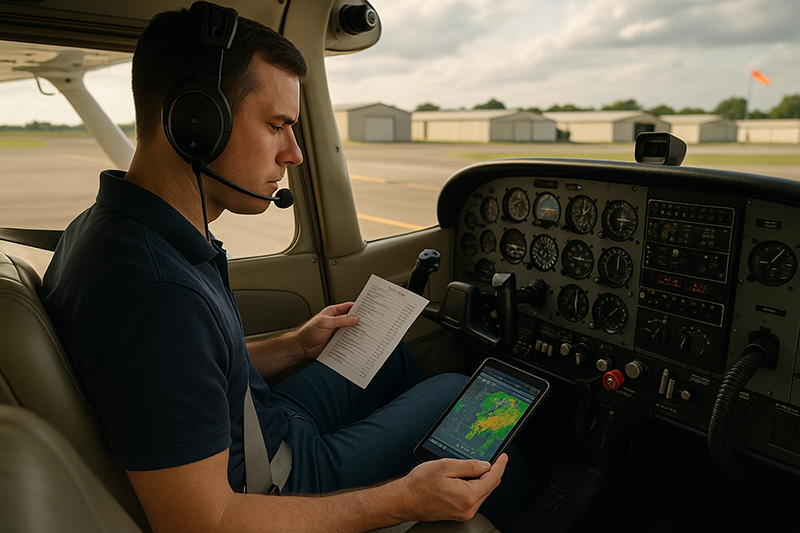
Earning a pilot certificate is a major achievement, but it is not the finish line for safe airmanship. Preventing pilot complacency after certification is one of the most important habits a new pilot can build, because the first months and years after a checkride often bring more freedom, less direct supervision, and new opportunities to make independent decisions.
A successful practical test confirms that a pilot met the applicable standards on that day, in that aircraft, under those conditions. It does not mean the pilot has experienced every weather pattern, airport environment, passenger pressure, aircraft abnormality, or personal performance limit. The transition from student pilot to certificated pilot is exciting, but it can also create a subtle risk: confidence may grow faster than experience. This article explains how complacency develops, why it matters in real-world flying, and how pilots can continue building discipline after the certificate is in hand.
What Pilot Complacency Really Means
Pilot complacency is not the same as laziness, carelessness, or lack of intelligence. In aviation, complacency often appears when a pilot becomes comfortable enough with routine tasks that the mind stops treating them with the attention they deserve. A pilot may still care deeply about safety, yet begin skipping small steps, accepting weaker margins, or assuming that familiar flights will go as expected.
Complacency is especially difficult to recognize because it often develops gradually. A pilot does one short flight without fully reviewing the weather and nothing bad happens. The next time, the same shortcut feels normal. A pilot taxis out after a quick preflight because the airplane flew fine yesterday. A pilot accepts a gusty crosswind because the airport is familiar and the runway is long. Each individual decision may feel minor, but over time the pilot’s personal standard can drift away from the disciplined habits learned during training.
The word “complacency” can also be misleading because it sounds like overconfidence. Overconfidence is part of the picture, but complacency can also come from fatigue, repetition, distraction, pressure, or a desire to appear capable. A pilot who says, “I have done this flight a dozen times,” may be less alert to changes in weather, fuel planning, aircraft status, or personal readiness. Familiarity reduces mental friction, which is useful for efficiency, but dangerous when it replaces verification.
After earning a certificate, the goal is not to fly with fear. The goal is to fly with professional suspicion. That means expecting the routine to stay routine only after confirming the facts. Good pilots do not assume the fuel is sufficient, the weather is acceptable, the aircraft is configured correctly, or the runway environment is clear. They verify, monitor, and remain willing to slow down or stop when something does not fit.
Why This Matters in Real-World Aviation
Flight training is structured. A student normally flies with an instructor, follows lesson objectives, reviews performance after each flight, and receives immediate correction when technique or judgment begins to drift. After certification, that structure often disappears. The pilot may rent an aircraft, fly with friends, plan weekend trips, or begin additional training, but no instructor is automatically present to catch every weak decision.
This is why the period after certification deserves deliberate attention. New private pilots, sport pilots, and recently certificated commercial pilots may have a valid certificate, but they are still building operational experience. The checkride proves competence against defined standards. The real aviation environment adds complexity: weather changes after departure, passengers ask questions during busy phases of flight, radios become congested, avionics behave differently than expected, and airports present layout or traffic challenges that were not encountered during training.
Complacency also matters because many high-value safety habits are small and repetitive. Weight and balance review, performance planning, checklist use, weather evaluation, fuel management, sterile cockpit discipline, passenger briefings, and stabilized approach criteria are not glamorous. They are basic, but basic does not mean optional. Most pilots do not get into trouble because they lack every skill. More often, trouble begins when a capable pilot allows one or two routine protections to weaken at the wrong time.
Instructors and aviation organizations see this pattern in many forms. A pilot who was meticulous during training becomes casual when flying alone. A pilot who once verbalized every checklist item starts relying on memory. A pilot who learned to calculate takeoff performance begins using habit instead of current conditions. A pilot who would have delayed a student solo for marginal weather launches with passengers because the trip has been planned for weeks. These are not dramatic failures of knowledge. They are discipline failures, and they are preventable.
For aviation professionals, preventing complacency is also a matter of culture. A flight school, flying club, corporate flight department, or maintenance organization that treats small deviations as normal may unintentionally teach pilots to accept drift. A professional culture does the opposite. It makes normal operations look boring, consistent, and repeatable because pilots take the same care on the tenth flight as they did on the first.
The Certificate Is a License to Keep Learning
A pilot certificate grants privileges, but it should also trigger a change in mindset. Instead of thinking, “I passed, so I am done,” a safe pilot thinks, “I passed, so now I am responsible for continuing the process.” Training provides a foundation. Experience builds judgment. Recurrent practice keeps both from eroding.
The best pilots treat every certificate and rating as a beginning. A private pilot certificate opens the door to cross-country flying, passenger carrying, night operations if appropriately qualified and current, and more independent decision-making. An instrument rating adds a major capability, but it also requires disciplined proficiency. A commercial certificate expands professional expectations. None of these achievements remove the need for humility. In fact, each new privilege increases the need to manage risk intentionally.
One practical way to view post-checkride flying is to separate legal currency from true proficiency. Currency generally refers to meeting applicable regulatory experience requirements for certain operations. Proficiency is broader. It asks whether the pilot can perform the task safely, smoothly, and with good judgment in the actual conditions expected. A pilot may be legally current for a certain operation and still be rusty, distracted, unfamiliar with the avionics, or unprepared for the day’s weather. Legal compliance is essential, but it is not the same as peak readiness.
This distinction helps pilots make better decisions. For example, a pilot planning to carry passengers at night should not ask only whether the required recent experience has been met. The pilot should also consider recent night takeoffs and landings, comfort with airport lighting, route familiarity, terrain awareness, weather, fatigue, and the ability to handle distractions. A certificated pilot has the authority to decide whether to go, but the safest pilots develop personal standards that often exceed the minimum needed to be legal.
How Pilots Should Understand This Topic
Preventing complacency is not about adding complexity to every flight. It is about protecting the habits that keep ordinary flights from becoming unforgiving. Most general aviation flights involve repeated tasks: preflight inspection, engine start, taxi, runup, takeoff, climb, cruise, descent, approach, landing, taxi in, and shutdown. Because the sequence is familiar, the brain can slide into automatic mode. Automation of skill is helpful when it allows smooth aircraft control, but it becomes risky when it causes the pilot to stop thinking critically.
A disciplined pilot uses routines to support awareness, not replace it. Checklists are a good example. The checklist is not merely a piece of paper or a digital page. It is a barrier against memory error, interruption, and assumption. A pilot who has flown the same aircraft for years may know the flow by heart, but the checklist still provides confirmation. The point is not to prove that the pilot remembers. The point is to catch what the pilot may have missed.
The same idea applies to weather. A local flight on a familiar day may seem simple, but a weather briefing still serves a purpose. It prompts the pilot to look beyond the ramp: winds aloft, ceilings and visibility, convective potential, temperature and dew point spread, frontal movement, NOTAMs, and destination conditions when applicable. The level of planning should match the flight, but the habit of checking should remain strong.
Risk management is also practical, not theoretical. A pilot does not need to label every decision with formal terminology in order to think well. The essential questions are straightforward: What has changed since the last time I did this? What is my weakest link today? What will make me turn around, divert, delay, or cancel? What am I assuming, and how can I verify it? These questions slow down complacency because they force the pilot to look for differences instead of relying on habit.
Instructors can help by teaching graduates how to self-brief. During training, the instructor often asks the hard questions. After certification, the pilot must learn to ask those questions independently. A good self-brief includes aircraft condition, pilot condition, route, weather, fuel, alternates, airspace, passenger needs, and clear decision points. It does not need to be lengthy for every flight, but it should be honest.
Common Mistakes and Misunderstandings
One common misunderstanding is believing that complacency only affects high-time pilots. Experienced pilots can certainly become complacent, but newly certificated pilots can also be vulnerable because they may have enough confidence to launch but limited exposure to unusual conditions. Early success can create a false sense of completeness. A pilot who has never encountered a real diversion, strong mechanical concern, passenger illness, rapidly lowering ceiling, or unexpectedly complex airspace may underestimate how quickly workload can rise.
Another mistake is confusing comfort with competence. Feeling comfortable in the cockpit is valuable, but comfort alone is not proof of readiness. A pilot may feel relaxed because the route is familiar, the airplane is familiar, and the passengers are friends. Yet that same comfort can reduce vigilance. Competence shows up in preparation, stable aircraft control, timely decisions, and willingness to change the plan when conditions require it.
Checklist complacency is especially common. Pilots sometimes begin by using a checklist carefully, then shift to memory, then eventually skip items because the aircraft “always” looks the same. Interruptions make this worse. A passenger asks a question during runup. Ground control issues a taxi instruction while the pilot is configuring avionics. Another aircraft calls final as the pilot prepares to enter the runway. In these moments, checklist discipline protects the flight from small omissions that can have large consequences.
Weather complacency is another recurring risk. Local knowledge is helpful, but it can create assumptions. A pilot may know that afternoon winds usually favor a certain runway, or that a coastal layer often clears by a certain time, or that a mountain pass normally remains usable on a familiar route. The problem is the word “usually.” Weather does not owe the pilot consistency. Good decision-making requires current information, conservative interpretation, and an escape plan.
Passenger pressure can also feed complacency. A newly certificated pilot may want to provide a smooth, confident experience for family or friends. That desire is understandable, but it can make the pilot less willing to delay, cancel, ask for help, or admit discomfort. Passengers generally prefer a conservative pilot once the situation is explained clearly. A professional briefing before the flight can reduce pressure later: “If the weather is not right, we will delay or drive. If I am not satisfied with the aircraft or conditions, we will not go.”
A final misunderstanding is treating recurrent training as remedial. Training after certification is not a punishment for weak pilots. It is how serious pilots maintain sharpness. A focused session with an instructor can reveal drift in crosswind technique, emergency procedures, instrument scan, radio work, or decision-making. The most professional pilots are often the most willing to seek coaching because they understand that skill fades without practice.
Practical Example: The Familiar Lunch Flight
Consider a newly certificated private pilot planning a Saturday lunch flight to an airport 70 nautical miles away. The pilot has flown the route twice during training and once after the checkride. The airplane is familiar, the weather looks good from the ramp, and two friends are excited to go. The pilot feels confident and wants the day to run smoothly.
A complacent version of this flight might begin with a quick glance at a weather app, a rushed preflight because the airplane flew earlier that morning, and a casual fuel estimate based on past experience. The pilot assumes the destination runway will be the same one used before and expects the return flight to be easy. During taxi, conversation continues in the cockpit. After takeoff, the pilot notices stronger headwinds than expected and later finds the destination pattern busier than anticipated. Nothing has necessarily gone wrong, but the safety margin has become thinner because several basic protections were weakened.
A disciplined version of the same flight looks different without being burdensome. The pilot reviews current and forecast weather, checks NOTAM information, confirms fuel with a conservative reserve, evaluates aircraft performance for the expected conditions, and briefs passengers before engine start. The pilot explains that sterile cockpit procedures will apply during taxi, takeoff, approach, and landing, meaning nonessential conversation will pause during high-workload phases. The pilot also sets simple decision points: if the winds at the destination exceed personal limits, the flight will divert; if fuel burn or groundspeed differs significantly from the plan, the pilot will reassess early; if workload becomes uncomfortable, the pilot will ask for help from air traffic services when available or choose a simpler option.
The difference between these two flights is not talent. It is discipline. Both pilots may have the same certificate and the same aircraft. The safer pilot recognizes that familiar flights still deserve current planning. That mindset is the heart of preventing complacency.
Best Practices for Pilots After Certification
The strongest defense against complacency is a personal operating standard. This is a set of habits and decision thresholds that guide the pilot before stress, excitement, or external pressure enters the cockpit. Personal standards should be realistic, written down when useful, and updated as experience grows. They may cover weather minimums, crosswind comfort, fuel planning, night operations, passenger briefings, recency of experience, and when to call an instructor for a refresher.
Personal minimums should not be static forever. A new pilot may set conservative limits and gradually expand them through training and experience. The key is that expansion should be deliberate, not accidental. A pilot should not discover a new personal crosswind limit for the first time with passengers aboard at the end of a long day. Expanding capability is best done with an instructor, in suitable conditions, and with a plan.
Another best practice is to keep a training mindset on ordinary flights. After each flight, take two minutes to debrief yourself. What went well? What was sloppy? Did the plan match reality? Was there a moment when workload rose unexpectedly? Did you maintain sterile cockpit discipline? Did you use the checklist properly? This short reflection keeps learning active and prevents small weaknesses from becoming normal.
Pilots should also maintain relationships with instructors and mentors. A certificated pilot does not need to wait for a formal requirement to fly with a CFI. A one-hour proficiency flight can be valuable before carrying passengers after a long break, before flying to a challenging airport, after transitioning to unfamiliar avionics, or when preparing for a longer cross-country. Mentorship is not a sign of dependence. It is a sign of professionalism.
Technology should be treated as a tool, not a substitute for airmanship. Modern avionics, tablets, moving maps, electronic checklists, and weather products can improve situational awareness when used correctly. They can also create distraction or overreliance. A complacent pilot may follow a magenta line without maintaining basic navigation awareness, or accept displayed weather without understanding its limitations. A disciplined pilot uses technology while continuing to think, verify, and maintain aircraft control.
The following habits are especially useful for pilots who have recently earned a certificate:
- Use written or electronic checklists consistently, even in familiar aircraft.
- Brief every flight, including local flights, at a level appropriate to the operation.
- Set personal minimums before passengers, schedule pressure, or weather uncertainty are involved.
- Practice go-arounds, abnormal procedures, navigation, and communication skills before they feel rusty.
- Debrief each flight honestly and identify one improvement for the next flight.
- Schedule periodic training with an instructor instead of waiting until confidence has already declined.
These habits are not complicated, but they work because they are repeatable. Aviation safety is often built from ordinary actions performed consistently.
The Instructor’s Role in Preventing Complacency
Flight instructors have a lasting influence on how pilots behave after certification. A student who sees the instructor treat checklists, weather, performance planning, and risk decisions seriously is more likely to carry those habits forward. Conversely, if a student sees shortcuts during training, the student may interpret those shortcuts as normal professional behavior.
Instructors should help learners understand that the practical test is a milestone, not the final measure of a pilot’s development. During the final phase of training, instructors can shift more responsibility to the applicant by asking them to plan flights, make go or no-go decisions, brief risks, and critique their own performance. The goal is to build a pilot who can think independently, not simply perform while being supervised.
After a pilot earns a certificate, instructors can remain involved through transition training, proficiency flights, instrument training, cross-country planning, and scenario-based discussions. Scenario-based training is particularly useful because complacency often appears in decision-making, not just stick-and-rudder technique. Asking, “What would make you cancel this flight?” or “What will you do if the destination winds increase?” builds the kind of judgment that protects pilots when real conditions change.
Building a Professional Mindset at Any Experience Level
Professionalism in aviation is not defined only by whether a pilot is paid to fly. A private pilot can fly with a professional mindset, and a professional pilot can lose that mindset if discipline erodes. Professionalism means taking the operation seriously, respecting limitations, communicating clearly, and being willing to choose the safer option even when it is inconvenient.
One of the most useful professional habits is standardization. Standard callouts, standard flows, standard passenger briefings, and standard go-around criteria reduce ambiguity. They also make deviations easier to spot. If a pilot always verifies fuel caps during preflight, it stands out when that step is interrupted. If a pilot always briefs the approach before descent, it feels wrong to arrive at the traffic pattern unprepared. Standardization creates a baseline that resists complacency.
Another professional habit is humility. Humility does not mean doubting every skill. It means recognizing that aviation is dynamic and that good pilots can make mistakes. A humble pilot is willing to ask air traffic control for clarification, request progressive taxi instructions when needed, delay a departure, divert to a more suitable airport, or tell passengers the flight will not happen today. These decisions may feel uncomfortable in the moment, but they are often the decisions passengers respect most.
Frequently Asked Questions
Why do pilots become complacent after earning a certificate?
Pilots can become complacent because training structure decreases, familiar flights feel easy, and confidence grows after passing a checkride. The risk is not usually a lack of caring. It is the gradual acceptance of shortcuts that no longer feel like shortcuts.
Is legal currency the same as proficiency?
No. Legal currency means meeting applicable requirements for a particular operation. Proficiency means being truly prepared to perform safely in the expected conditions. A pilot can be current but still need practice, coaching, or more conservative limits.
How can a new pilot avoid overconfidence with passengers?
Set expectations before the flight. Tell passengers that weather, aircraft condition, and pilot readiness determine whether the flight happens. Use sterile cockpit procedures during busy phases and do not let passenger excitement override conservative decision-making.
How often should a certificated pilot fly with an instructor?
The right interval depends on experience, aircraft type, recent flying, mission complexity, and personal goals. Many pilots benefit from instructor sessions before new types of operations, after time away from flying, when transitioning aircraft or avionics, or whenever a skill feels rusty.
What is one simple habit that reduces pilot complacency?
Use a real preflight briefing and checklist discipline on every flight, including short local flights. These habits keep the pilot engaged with current conditions instead of relying on memory or routine.
Final Thoughts
Preventing complacency after earning a pilot certificate is not about adding anxiety to aviation. It is about preserving the seriousness that made the certificate possible in the first place. The safest pilots enjoy flying, but they do not confuse enjoyment with casualness. They prepare, verify, brief, monitor, and debrief because they understand that ordinary flights deserve professional attention.
The newly certificated pilot has earned the right to act as pilot in command within the privileges and limitations of the certificate. That authority is meaningful. It also requires the pilot to keep learning without being forced, to seek help before problems become urgent, and to maintain habits when no instructor is watching. A certificate is proof of achievement. Long-term safety comes from what the pilot does next.
Key Takeaways
- Preventing pilot complacency begins with treating the certificate as the start of independent learning, not the end of training.
- Routine flights still require current weather review, checklist discipline, passenger management, fuel planning, and honest risk assessment.
- Legal currency matters, but real proficiency requires practice, reflection, personal minimums, and recurrent training when skills or confidence need calibration.