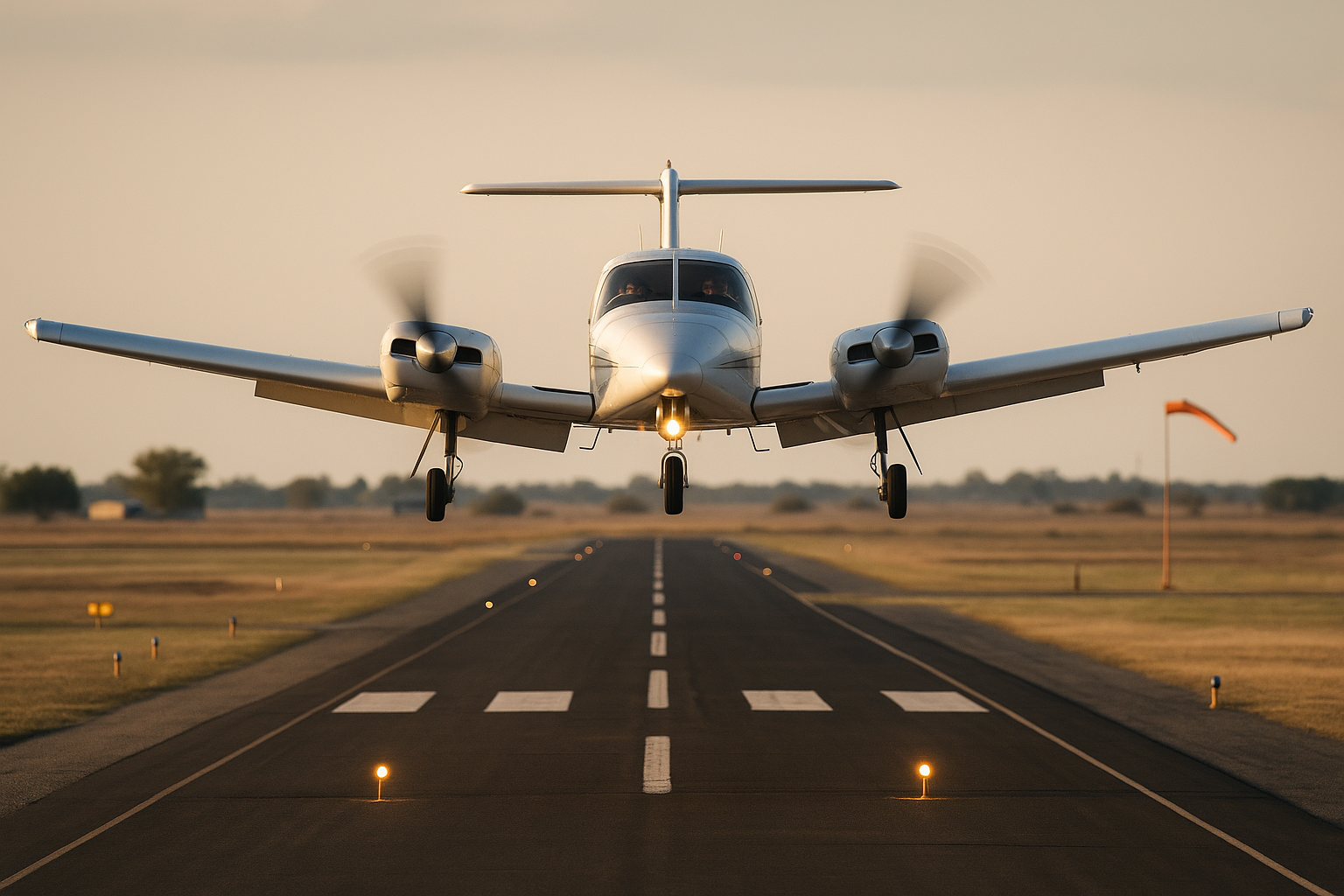
Multi-engine training is the foundation pilots rely on to manage asymmetric thrust, approach control, and decision-making that directly affect landing outcomes. For pilots transitioning from single-engine aircraft or deepening multi-engine skills, the ability to land smoothly and safely in a twin involves more than memorizing procedures. It demands a practical understanding of aerodynamics, energy management, and human factors that show up most clearly on final approach and touchdown.
This article explains why focused multi-engine training improves landings, what instructors should emphasize, and how pilots can practice and evaluate the maneuvers that matter. The guidance here is centered on operational judgment, aerodynamic principles, training practice, and safety implications rather than specific regulatory requirements or aircraft limits. Any aircraft-specific numbers, performance tables, or regulatory mandates must come from the appropriate aircraft flight manual, operator procedures, or official regulatory documents.
Core ideas: what multi-engine training teaches pilots about landings
At its core, multi-engine training teaches pilots to manage the airplane when both engines are operating and when one engine has failed. On approach and landing those skills converge: pilots must control airspeed, attitude, configuration, thrust, and directional control while maintaining energy for a safe touchdown or a go-around. The training emphasizes three interrelated competencies.
First, predictable airplane control. Pilots learn how asymmetric thrust affects yaw and roll, how to use rudder and aileron coordination to maintain runway alignment, and how configuration changes alter handling during the approach and roundout.
Second, energy and speed control. A successful multi-engine landing depends on managing energy so the airplane arrives at the flare with sufficient lift and controllability. That includes understanding how flaps, gear, and power changes interact differently in a twin compared to a single-engine airplane.
Third, decision-making under pressure. Multi-engine training stresses when to continue an approach, when to execute a go-around, and how to prioritize actions when faced with failures, windshear, or runway limitations. Training scenarios simulate degraded scenarios so pilots practice clear priorities and timely decisions.
Why this matters in real-world aviation
Most multi-engine accidents occur during critical phases of flight: takeoff, initial climb, approach, and landing. Landing in a multi-engine airplane can be more demanding than in a single because pilots must manage asymmetric thrust, higher approach speeds, and sometimes more complex systems. Training that focuses on approach stabilization, engine-out recognition, and controlled decision-making reduces the chance that small deviations become unrecoverable on final.
For flight instructors and operators, effective multi-engine training lowers operational risk by building repeatable habits. For students and transitioning pilots, it shortens the learning curve by emphasizing practical anticipation: expecting how the airplane will behave when the workload increases, when crosswind gusts shift, or when a Go/No-Go call must be made in seconds.
Operationally, good multi-engine training has ripple effects. Better landings reduce wear on brakes, tires, and landing gear. They improve passenger comfort and confidence. They also provide clearer decision points for dispatch and maintenance teams because predictable approaches and stabilized landings create consistent aircraft state reports.
How pilots should understand the technical fundamentals
Several aerodynamic and procedural principles underpin multi-engine landings. Pilots do not need to memorize every mathematical derivation, but they must understand how these principles translate into cockpit actions.
Asymmetric thrust. When one engine produces more thrust than the other, the airplane tends to yaw toward the failed engine. Pilots must apply rudder to counter the yaw and coordinated aileron to maintain the runway track. Rudder input becomes a primary control to keep the nose aligned, while aileron prevents roll toward the inoperative side.
Directional control vs. bank. In twins, a small bank into the operative engine can assist directional control by creating a rolling moment that helps counter yaw. However, excessive bank reduces lift and can increase drag. Training emphasizes a small, measured bank into the operative engine paired with appropriate rudder rather than aggressive wing-dropping or heavy rudder alone.
Stabilized approach concept. Stabilized approach means arriving at a consistent airspeed, descent rate, and configuration that the pilot can manage without high workload or surprise inputs. In multi-engine practice, a stabilized approach includes predictable power management. That is: plan power changes so they are gradual and expected, and avoid abrupt power reductions near the ground unless required for a go-around.
Energy management in the flare. With asymmetric thrust or a single inoperative engine, energy bleed-off during the flare must be handled deliberately. The pilot must trade thrust for pitch and configuration changes smoothly to avoid a sudden sink or a floating flare. Practicing power-on and power-off flares in a multi-engine context is essential.
Configuration and drag effects. Flap and gear settings change lift and drag in ways that interact with thrust. Many twins have different flap schedules and drag characteristics than single-engine airplanes; pilots must understand the feel and altitude/airspeed effects of each configuration and how to transition without surprise.
Training syllabus elements that improve landings
A useful multi-engine syllabus includes both planned exercises and unpredictable scenarios. Planned work covers normal approaches, short-field and soft-field techniques as appropriate for the aircraft, single-engine go-around procedures, and safe engine-out landing profiles. Unpredictable scenarios present simulated failures at varying phases of approach, changing winds, and partial panel conditions to test pilot judgment under load.
Scenario-based training is particularly effective. Instead of repeating the same approach pattern, instructors create realistic mission contexts: a night cargo approach into a busy field with a simulated engine malfunction; a single-pilot cross-country where the pilot must decide whether to continue to destination after a system fault; a training flight with an induced asymmetric thrust during final. These scenarios foster the decision-making muscles that produce better landings under pressure.
Common mistakes and misunderstandings
Pilots often bring single-engine habits into multi-engine flying, and that can create risk. A common misunderstanding is believing that the airplane will remain controllable with the same control inputs used in a light single. In twins, rudder becomes more critical, and the timing of inputs matters more.
Another mistake is under-prioritizing the go-around. On a marginal approach, pilots sometimes attempt to salvage the landing rather than executing a go-around when the approach becomes unstabilized. In twins, an unstabilized approach can escalate more rapidly because of higher approach speeds and system complexity. Training should set clear personal and procedural criteria for calling for a go-around early and decisively.
Mismanaging configuration changes near the ground is also common. Lowering flaps or gear late while simultaneously reducing power can cause an unexpected sink rate. Pilots should plan configuration steps and make them at points where there is margin to recover if the airplane does not respond as expected.
Finally, complacency about checklists and briefings is a real hazard. A thorough approach briefing that includes single-engine considerations, go-around planning, and touchdown goals reduces the chance of confusion during high workload moments.
Practical example: a training scenario for approach with simulated engine failure
Imagine a multi-engine single-pilot training flight practicing final approaches in daylight with light crosswind. The instructor plans a scenario where, on short final, the student experiences a simulated loss of power on one engine. The briefed learning objectives include maintaining runway alignment, completing the engine-out checklist items that are appropriate for the scenario, and deciding whether to land or go around.
Before the approach, the instructor and student agree clear callouts: which engine will be simulated as inoperative, what minimum decision height or visual references will trigger a go-around, and who will fly the airplane if the situation escalates. This shared mental model reduces ambiguity when workload increases.
On short final, the instructor retards power on the simulated engine. The student notes the yaw and applies coordinated rudder, introduces a small bank into the operative engine as needed, and adjusts power on the operative engine to maintain approach energy. If alignment deteriorates or airspeed becomes marginal, the student calls for a go-around and executes a climb with the operative engine producing the required climb thrust while maintaining runway alignment and reconfiguring as appropriate.
Debrief focuses on what inputs helped, any delayed actions, and whether the student anticipated the need for power adjustments earlier. The instructor gives immediate, specific feedback: for example, tighten the timing of rudder input, plan the flare with a slightly higher energy margin, or brief the go-around point earlier on the approach.
Best practices for pilots to translate training into better landings
Practice under realistic conditions. Schedule training that includes crosswinds, night, high-density traffic patterns, and partial-panel work when appropriate. Realistic challenge builds practical competence faster than sterile repetition of the same approach.
Brief every approach. A short, focused briefing should cover approach profile, target speeds, configuration points, go-around criteria, and who is pilot flying versus pilot monitoring. In multi-engine operations, include the single-engine considerations in the briefing so both pilots are mentally prepared.
Train the go-around as a normal maneuver. Many pilots treat go-arounds as emergency-only. In multi-engine training, rehearse go-arounds from stabilized and unstabilized approaches, and from configurations with flaps or gear down. Practicing the maneuver reduces hesitation in real events.
Emphasize smooth, measured control inputs. Aggressive control can quickly upset the energy state of the airplane. Encourage gentle, deliberate rudder and power adjustments combined with small bank into the operative engine when necessary.
Use realistic simulation and partial panel work. Flight simulators and flight training devices offer safe environments to practice single-engine approaches and system failures. Partial panel practice improves scan discipline and reduces surprise when instruments or systems become unreliable.
Debrief with data when possible. Use flight data, video, or instructor observation to focus on measurable elements: approach stability, touchdown point consistency, crosswind correction, and decision timeliness. Targeted feedback accelerates improvement.
Training considerations for instructors
Instructors should structure lessons progressively. Start with normal multi-engine approaches emphasizing stabilized energy and predictable configuration changes. Add crosswind and gusty conditions, then introduce single-engine scenarios at safe altitudes. Only after the student demonstrates consistent handling should simulated engine failures be practiced on final approaches, always with safety margins and clear abort criteria.
Teach recognition cues as much as corrective actions. Knowing the feel of an engine failure is as important as knowing the rudder input that follows. Encourage students to verbalize control observations: airspeed trends, yaw onset, rudder pressures, and roll tendencies. That active verbalization helps build quicker recognition and response.
Be explicit about personal and operational minimums. While this article does not prescribe regulatory minima or aircraft-specific numbers, instructors should ensure each student understands the operator's and aircraft's published limits and applies them conservatively during training flights.
Human factors and decision-making
Stress, task saturation, startle effects, and expectation biases shape the landing outcome as much as aerodynamics. Multi-engine training must include psychology: how pilot attention narrows under stress, how confirmation bias can delay a go-around call, and how clear crew communication can prevent errors.
Encourage checklists and standard callouts to reduce communication gaps. In single-pilot operations, teach explicit verbal check-points that a lone pilot can run out loud to maintain situational awareness. In multi-crew operations, promote assertiveness training so monitoring pilots feel empowered to call deviations and insist on a go-around when the approach becomes unsafe.
Common training pitfalls instructors should avoid
One pitfall is introducing simulated emergencies without adequately prepared safety margins. Simulations that begin too close to the ground or with unbriefed variability force hurried, unrealistic responses. Another is neglecting partial-panel and instrument abnormalities; pilots who only practice visual approaches will be ill prepared for system failures during low-visibility operations.
Do not over-focus on checklists at the expense of stick-and-rudder skills. Checklists are essential, but students must first learn how the airplane will respond and which control inputs will keep it aligned and stable. Then link those skills to the appropriate checklist actions.
Frequently asked questions
How does multi-engine training change the way I fly an approach?
Multi-engine training emphasizes planning, coordination, and energy management that account for asymmetric thrust and higher approach energy. Pilots are trained to brief single-engine contingencies, make earlier configuration decisions, and use coordinated rudder and small bank into the operative engine as part of normal control. The overall approach profile emphasizes stability and clear go-around criteria.
Should I always go around if an engine problem occurs on final?
Not always. The decision depends on runway remaining, aircraft performance, controllability, and the nature of the problem. Training teaches pilots to set decision criteria before final and to execute a go-around decisively if the approach is unstabilized or if the single-engine performance is insufficient for a safe landing. Personal and operator minima should guide that decision.
Can I practice engine-out landings safely?
Yes, with appropriate planning. Practice should start at higher altitudes and progress to lower approaches as the pilot demonstrates competence. Simulated failures close to the ground should only be attempted under instructor supervision with clear safety abort criteria. Flight simulators are highly effective and safe for repetitive engine-out practice.
How important is rudder technique in a twin compared to a single-engine airplane?
Rudder technique is more critical in a twin because asymmetric thrust produces stronger yawing moments. Proper and timely rudder application combined with coordinated aileron and small bank into the operative engine are essential to maintain runway alignment and prevent roll toward the inoperative side.
What common errors should I watch for when practicing multi-engine landings?
Common errors include delayed recognition of asymmetric thrust, over-control with excessive rudder or aileron, late configuration changes, hesitation to call a go-around, and failure to brief single-engine contingencies. Instructors should focus on reducing these errors through scenario training and specific, actionable feedback.
Performance assessment and progression
Assessing whether a pilot is ready to apply multi-engine landing techniques in operations requires both quantitative and qualitative checks. Quantitative measures can include consistency in touchdown point, approach stability percentages, and ability to maintain runway centerline in crosswind scenarios. Qualitative measures include judgment under pressure, clarity of briefings, and adherence to decision criteria.
Progression should move from normal approaches to crosswind and night operations, then to simulated failures and partial-panel work. Only after repeating these in varied conditions should the pilot be considered operationally proficient for unsupervised flights that carry passengers or revenue.
Key Takeaways
- Practical takeaway: Prioritize stabilized approaches, clear briefings, and deliberate power/rudder coordination to improve landing outcomes in multi-engine aircraft.
- Safety takeaway: Make go-around decisions early when an approach is unstabilized; hesitation under asymmetric conditions increases risk near the ground.
- Training takeaway: Use scenario-based training, simulators, and progressive exposure to engine-out conditions to build reliable, repeatable landing competence.
Final thoughts
Multi-engine training is not merely a box to check. It is the practical bridge between theory and the real-world handling demands that show up on approach and landing. Successful training blends aerodynamic understanding, methodical procedure, realistic scenario practice, and attention to human factors. Flight instructors who emphasize recognition cues, decision points, and smooth coordinated control give students the tools they need to make consistent, safe landings in twin-engine airplanes.
Remember that aircraft-specific performance data, published limitations, and official regulatory guidance must come from approved manuals and documents. Use the operational concepts in this article to interpret and practice within those official boundaries.