
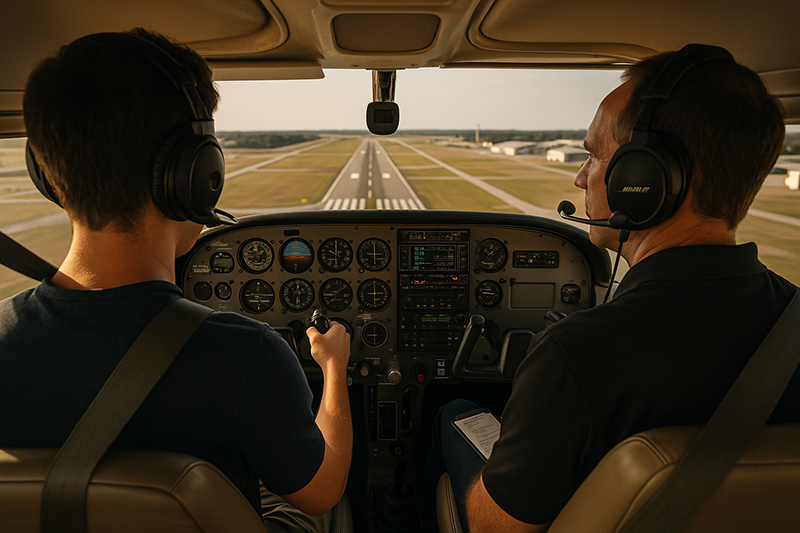
Managing distractions during critical flight phases is one of the most practical safety skills a pilot can develop. It is not only a matter of discipline or good cockpit manners. It is a core part of aircraft control, situational awareness, crew coordination, and sound aeronautical decision-making. The moments when an aircraft is close to the ground, changing configuration, communicating with air traffic control, or transitioning between flight regimes leave little room for attention to drift.
For student pilots, distractions often arrive as surprise radio calls, unexpected traffic, checklist confusion, passenger questions, or a sudden uncertainty about the next step. For experienced pilots, distractions may be more subtle: automation mode changes, a busy arrival, a late runway change, a minor equipment issue, or the temptation to solve a nonessential problem at exactly the wrong time. Instructors and aviation professionals know that distraction management is not about eliminating every interruption. It is about recognizing which tasks matter now, which tasks can wait, and how to return to the flight path without losing control of the bigger picture.
What Counts as a Critical Flight Phase?
A critical flight phase is any segment of flight where the margin for delay, inattention, or incorrect action is reduced. The exact definition can vary by aircraft type, operator, training program, and regulation, so pilots should always follow the procedures that apply to their operation. In practical terms, pilots commonly treat taxi, takeoff, initial climb, approach, landing, go-around, low-altitude maneuvering, and abnormal or emergency situations as periods requiring heightened focus.
These phases are demanding because several things happen at once. The aircraft may be close to the ground, airspeed and configuration may be changing quickly, radio frequency congestion may be high, and the pilot may need to comply with ATC instructions while maintaining obstacle clearance, runway alignment, traffic awareness, and aircraft energy management. Even in a simple training aircraft, a short distraction during takeoff roll, rotation, flare, or a go-around can affect pitch attitude, directional control, airspeed, or checklist completion.
Critical phases are not limited to large airline operations or instrument flying. A local training flight in visual conditions can produce high workload when a student pilot is turning crosswind, responding to tower instructions, managing flap retraction, scanning for traffic, and correcting for wind drift. A single-pilot IFR flight may become especially vulnerable during the final minutes before an approach, when navigation setup, briefing, descent planning, and communications converge. The common thread is not aircraft size. It is task saturation at a time when precise aircraft control matters most.
Why Distractions Become Dangerous in the Cockpit
Distractions are dangerous because pilot attention is limited. A pilot can shift attention among instruments, outside references, communications, procedures, and aircraft handling, but cannot give full attention to all of them at once. Good cockpit management is therefore a constant process of prioritization. The familiar aviation principle of aviate, navigate, communicate remains useful because it reminds pilots that aircraft control comes first, orientation and flight path come next, and communication supports the operation rather than replacing it.
A distraction becomes a safety concern when it pulls attention away from the primary task at the wrong moment. The interruption may be external, such as a passenger conversation, radio call, EFB alert, traffic advisory, or unexpected ATC instruction. It may also be internal, such as confusion, stress, fatigue, overconfidence, fixation, or a strong urge to solve a minor problem immediately. Some of the most challenging distractions are legitimate aviation tasks that simply arrive at an inconvenient time.
For example, a runway change during an instrument arrival is not a meaningless interruption. It may require new briefing items, revised navigation, updated performance considerations, and different taxi planning. The problem arises if the pilot attempts to reprogram avionics, brief the approach, acknowledge ATC, descend, configure, and maintain lateral and vertical guidance all at once. The issue is not that the pilot is doing unimportant work. The issue is that the pilot is doing too much of it during a time-sensitive phase.
Distraction also affects memory. A pilot interrupted during a checklist, radio readback, or configuration change may believe the task was completed when it was only started. This is why disciplined interruption recovery is so important. When interrupted, the safest habit is to pause, fly the aircraft, then return deliberately to the last confirmed point rather than assuming the next item has already been accomplished.
Why This Matters in Real-World Aviation
Real-world aviation rarely follows the exact rhythm of a training script. Weather changes, traffic patterns compress, passengers ask questions, avionics behave differently than expected, and ATC instructions may arrive while a pilot is already managing a demanding task. The ability to manage distractions is what allows a pilot to preserve a stable flight path while adapting to those changes.
In primary training, distraction management supports basic aircraft control. A student who looks down too long during climb-out may allow pitch attitude to drift. A student who focuses on the radio during downwind may miss altitude, spacing, or traffic cues. A student who rushes a landing checklist after being asked a question may mismanage configuration. These are teachable moments because they reveal how attention moves under workload.
In instrument training, the same skill becomes even more important. Instrument flying requires pilots to interpret multiple sources of information while maintaining aircraft control without relying on natural outside horizon cues. A distraction during an approach briefing, descent clearance, or final approach segment can lead to altitude deviations, navigation errors, unstable approach conditions, or missed callouts. The solution is not simply to work faster. The better solution is to manage workload earlier, use standard flows, brief intentionally, and postpone nonessential tasks.
In commercial and crewed operations, distraction management is closely tied to crew resource management. Effective crews protect critical phases by limiting nonessential conversation, using standard callouts, cross-checking each other, and speaking up when something does not look right. Even in single-pilot operations, pilots can borrow the same mindset by using verbal briefings, written notes, and personal standard operating procedures to reduce ambiguity.
Maintenance, dispatch, and operational planning also influence distraction risk. A pilot who launches with unresolved route questions, unfamiliar avionics setup, incomplete passenger briefings, or unclear fuel planning may carry avoidable distractions into flight. Good preflight preparation reduces the number of problems that must be solved later in the cockpit when workload is higher and options are fewer.
How Pilots Should Understand Attention Management
Attention management is not the same as simply trying harder to concentrate. It is the deliberate organization of cockpit tasks so that the most important information receives attention at the right time. A disciplined pilot uses habits, flows, checklists, briefings, and communication boundaries to protect attention before the workload peaks.
One useful way to understand distraction is to divide cockpit tasks into three groups: immediate flight path tasks, time-sensitive support tasks, and deferrable tasks. Immediate flight path tasks include controlling pitch, bank, power, trim, airspeed, altitude, heading, and aircraft configuration. Time-sensitive support tasks include required radio calls, checklist items, traffic avoidance, approach setup, and runway instructions. Deferrable tasks include passenger comfort questions, nonessential avionics adjustments, photography, casual conversation, and administrative work that can wait until a lower workload period.
The challenge is that the cockpit does not label these categories for the pilot. A passenger question feels urgent because a person is waiting for an answer. A tablet alert seems important because it appears visually prominent. An avionics menu invites attention because the pilot wants the display to be perfect. Yet during takeoff, landing, approach, or go-around, those tasks may be far less important than attitude, airspeed, alignment, and configuration.
Experienced pilots often manage this by creating protected periods. Before takeoff, they brief passengers that conversation will be limited until the aircraft is safely established in climb. Before approach, they complete as much setup as practical, review the expected procedure, and establish a sterile cockpit mindset. During taxi, they avoid programming complex avionics while the aircraft is moving unless the operation and conditions allow it to be done safely. During high workload segments, they use short, standard phrases rather than long explanations.
For instructors, attention management should be taught explicitly. A student pilot may not understand why an instructor stops a conversation during base-to-final, delays a teaching point until after landing, or insists on restarting a checklist after an interruption. Explaining the reason builds judgment. The goal is not to make the cockpit silent at all times. The goal is to make attention available when the aircraft needs it most.
The Role of Sterile Cockpit Discipline
Sterile cockpit discipline is the practice of limiting nonessential activities and conversation during high-workload or safety-critical phases of flight. The concept is well established in professional aviation, and it is equally useful as a practical habit in general aviation, flight training, and single-pilot operations. Pilots should refer to the regulations and procedures applicable to their specific operation, but the operational principle is straightforward: do not allow nonessential tasks to compete with aircraft control during critical periods.
In a training aircraft, sterile cockpit discipline may be as simple as telling a passenger, "I will explain after takeoff," or telling a student, "Hold that question until we are established on downwind." In a crewed cockpit, it may involve formal callouts, briefed roles, and a shared expectation that only operationally relevant communication occurs during departure and arrival. In single-pilot IFR, it may mean silencing nonessential alerts, completing approach setup early, and refusing to troubleshoot minor equipment inconveniences below a personal workload threshold.
The important point is that sterile cockpit discipline must be planned before it is needed. A pilot who waits until a distraction appears may already be behind the aircraft. Briefing the rule in advance makes it easier to enforce without sounding abrupt. Passengers usually respond well when the pilot explains that there will be quiet periods during takeoff, landing, and busy airspace because those are the times when cockpit focus matters most.
Common Mistakes or Misunderstandings
One common mistake is treating distractions as rare events. In reality, distractions are normal in aviation. The safer mindset is to assume they will occur and build procedures to absorb them. A pilot who expects interruptions is more likely to pause, prioritize, and recover deliberately.
Another mistake is believing that only obviously irrelevant items count as distractions. Casual conversation, music, and mobile devices are easy to identify as nonessential. More subtle distractions include searching for a frequency, cleaning up an avionics display, rereading a chart detail, explaining something to a passenger, or trying to answer a question from ATC before the aircraft is stabilized. These may be aviation-related, but they can still be poorly timed.
A third misunderstanding is assuming that experience eliminates distraction risk. Experience helps a pilot recognize patterns, anticipate workload, and prioritize more effectively. It does not remove human attention limits. In some cases, experience can create a different risk: the pilot may become comfortable doing multiple tasks during phases that deserve full attention. Familiarity with an aircraft, airport, or route should not become permission to relax disciplined cockpit practices.
Pilots also sometimes confuse speed with efficiency. Rushing through a checklist after an interruption may feel efficient, but it can reduce reliability. A checklist is most valuable when it confirms the aircraft is correctly configured, not when it is completed quickly. If interrupted, it is often better to restart the affected portion or return to the last known completed item than to continue from memory.
Automation introduces another common trap. Autopilots, flight directors, GPS navigators, and electronic flight bags can reduce workload when used correctly, but they can also attract attention at a poor time. A pilot who is heads-down trying to fix a display problem during climb-out or final approach may be giving the least important screen the most important attention. Automation should support the flight path. It should not become the flight path manager while the pilot becomes a device technician.
Finally, pilots may underestimate passenger distraction. Passengers do not always know when the cockpit is busy. A question that seems harmless from the cabin may arrive during a radio call, traffic scan, or configuration change. A clear passenger briefing before engine start can prevent awkward interruptions later. The briefing does not need to be dramatic. It should simply explain when the pilot can talk freely and when quiet is expected.
Practical Example: A Busy Pattern After a Runway Change
Consider a private pilot flying a light single-engine aircraft into a towered airport on a clear afternoon. The pilot has planned for Runway 27 and has briefed the expected traffic pattern entry. Ten miles out, the tower assigns Runway 18 instead. At the same time, another aircraft reports nearby, a passenger asks whether the airport restaurant is visible, and the pilot notices the tablet has not updated the airport diagram orientation.
None of these items is unusual. Together, they create a distraction trap. The pilot now has to adjust the mental picture, identify the correct runway, maintain traffic awareness, communicate with the tower, manage descent, and keep the aircraft properly configured. If the pilot looks down to rotate the airport diagram while answering the passenger and searching visually for traffic, airspeed or altitude may drift. If the pilot becomes fixated on the restaurant question, the runway assignment may not be fully processed. If the pilot rushes the pattern entry, spacing may become uncomfortable.
A disciplined response begins with aircraft control. The pilot maintains heading, altitude or descent as appropriate, and airspeed. Next, the pilot confirms the instruction and builds a new mental picture: runway orientation, pattern direction if assigned, traffic location, and expected descent profile. The passenger question is deferred with a short response such as, "Stand by until we are parked," or "I need quiet for the arrival." The tablet adjustment can wait unless it is essential to safe navigation. If workload remains high, the pilot can request clarification, extended vectors, a delay, or another instruction that provides time to reestablish situational awareness.
This example illustrates an important point: managing distractions is not passive. The pilot does not merely endure the interruption. The pilot actively controls the sequence of attention. Fly the aircraft, manage the flight path, communicate what is necessary, and postpone what does not matter right now.
Best Practices for Pilots
Effective distraction management begins before engine start. A complete preflight, organized cockpit, reviewed route, and clear passenger briefing reduce the number of loose ends in flight. When the cockpit is cluttered, avionics are not set up, charts are difficult to reach, or passengers are unsure when to stay quiet, the pilot has created avoidable workload.
During taxi, pilots should be especially careful about dividing attention. Taxiing requires directional control, airport surface awareness, signage interpretation, radio communication, and sometimes complex clearances. Programming avionics, studying charts, or troubleshooting equipment while moving can degrade awareness. If a task requires heads-down attention, stopping at a safe and appropriate location may be the better option when conditions permit.
Before takeoff, a short briefing helps protect attention. Even in a single-pilot aircraft, a verbal briefing can cover the runway, initial heading or course, expected altitude, emergency considerations appropriate to the operation, and the point at which nonessential conversation will resume. The value of the briefing is not ceremony. It aligns the pilot's mental model before the workload increases.
On departure, the pilot should resist the urge to clean up every small detail immediately. If the aircraft is climbing normally, the priority is attitude, airspeed, runway track or assigned heading, configuration changes at the appropriate time, obstacle clearance, and compliance with relevant instructions. Nonessential display adjustments and passenger explanations can wait.
During cruise, pilots can use the lower workload period to prepare for the next high-workload segment. This includes reviewing weather, NOTAM or airport information as applicable, expected arrival procedures, frequencies, descent planning, fuel status, and alternate options. The more that is completed in cruise, the less must be solved during descent and approach.
Before approach or landing, pilots should set boundaries again. A stable approach mindset includes aircraft configuration, appropriate speed control, descent planning, runway awareness, and a willingness to discontinue the approach if conditions are not acceptable. Distractions become especially hazardous when a pilot tries to salvage an unstable situation while also handling communication, checklists, or avionics changes. A go-around is a normal maneuver and should remain available when the approach no longer meets the pilot's or operator's criteria.
The following habits are useful across aircraft types and experience levels:
- Brief quiet periods before takeoff, approach, landing, and other high-workload events.
- Complete setup tasks early, especially navigation, frequencies, charts, and approach review.
- Use standard flows and checklists, then restart or verify the affected portion after interruptions.
- Keep nonessential devices, alerts, conversations, and cockpit clutter from competing with flight path control.
- Use short phrases to defer distractions, such as "stand by," "after landing," or "I need quiet now."
- Ask for clarification, delaying vectors, or additional time when workload exceeds available attention.
- Practice go-arounds, missed approaches, and workload recovery so they remain normal tools rather than last resorts.
For instructors, one of the best training techniques is to debrief distractions specifically. Instead of only correcting the altitude or heading deviation, ask what captured the student's attention, what should have been delayed, and how the student will recover next time. This turns a simple error correction into a lasting decision-making lesson.
Managing Distractions in Single-Pilot Operations
Single-pilot operations require special discipline because there is no other crewmember to monitor the flight path, handle radios, or challenge a poor sequence of tasks. The single pilot must create structure through preparation, personal minimums, and self-briefing. This is especially important in instrument conditions, at night, in unfamiliar airspace, or when operating into busy airports.
A single pilot can reduce distraction by using conservative task timing. If an approach needs to be loaded, briefed, and checked, doing it early is usually better than waiting until the aircraft is descending into a terminal area. If a passenger needs an explanation, it is better to provide it before engine start or during cruise rather than during final approach. If an avionics setting is not essential, it can wait until the aircraft is stabilized or parked.
Self-talk can be helpful. Quietly stating "airspeed, centerline, power," or "heading, altitude, traffic" may feel simple, but it directs attention back to the primary task. Verbalizing the plan also helps pilots catch inconsistencies before they become errors. In high workload moments, a simple phrase such as "fly the airplane first" can interrupt fixation and restore priority.
Single pilots should also be willing to use the system. Asking ATC for a repeat, a vector, a delay, or a less demanding clearance when available is not a sign of weakness. It is workload management. When operating without ATC services, the same principle applies through conservative choices: widen the pattern, depart the area, climb to a safer altitude, or discontinue an approach if attention is saturated.
Managing Distractions with Passengers
Passenger management is part of pilot-in-command responsibility in practical terms, even when the passengers are friends, family, customers, or colleagues. Passengers may be excited, nervous, talkative, or unfamiliar with cockpit workload. They may point out traffic, ask about noises, request photos, or become concerned during turbulence. The pilot should welcome useful communication while still protecting critical phases.
A good passenger briefing includes when the pilot needs quiet, how passengers should point out traffic, what to do with loose items, and when questions are welcome. The briefing should be calm and confident. For example: "During taxi, takeoff, approach, and landing I may be quiet because I am focusing on flying and radio calls. If you see traffic or something that concerns you, point it out briefly. I will answer general questions once we are in cruise or after landing."
This type of briefing prevents passengers from interpreting silence as rudeness or alarm. It also gives them a useful role without making them part of the flight crew. Instructors should teach students to deliver this briefing early in training because passenger expectations can strongly affect cockpit discipline after certification.
Technology, EFBs, and Automation Distractions
Electronic flight bags and modern avionics have improved access to charts, weather, traffic, terrain, and aircraft information. They can also create a new category of distraction: highly useful information presented at a time when the pilot should be looking outside, monitoring instruments, or flying manually. The presence of information does not automatically make it timely.
Pilots should configure devices before high-workload phases when practical. This includes screen brightness, chart selection, route display, frequencies, approach plates, and battery or power arrangements. Alerts should be understood and managed so they support awareness rather than startle the pilot. If a device freezes or displays something unexpected, the pilot should decide whether the issue is essential to immediate safety. If it is not, the aircraft comes first.
Automation requires the same discipline. Pilots should understand the active mode, intended flight path, and expected next action. Mode confusion can become a distraction when the pilot spends valuable time asking, "What is it doing now?" The answer is to maintain basic flying proficiency, monitor automation actively, and be ready to disconnect or simplify when automation no longer reduces workload.
Training Distraction Management Deliberately
Distraction management should not be left to chance. Instructors can build it into training with realistic scenarios that respect safety margins and student readiness. The purpose is not to overwhelm the student for entertainment. The purpose is to help the student recognize workload, prioritize tasks, and recover correctly after an interruption.
Early lessons can include simple interruptions during checklists, followed by a discussion about returning to the correct checklist point. Later lessons can include radio frequency changes, simulated passenger questions, unexpected runway assignments, or avionics setup changes during appropriate phases of flight. Advanced training can include single-pilot IFR workload, missed approach transitions, and abnormal situations that require the pilot to decide what must be done now and what can wait.
Debriefing should focus on process, not just outcome. A student may maintain altitude but use a poor priority sequence, or may make a small deviation while demonstrating excellent recognition and recovery. Instructors should ask: What captured your attention? What did you stop monitoring? What could have been delayed? What phrase or habit would help next time? This develops judgment that transfers beyond the specific scenario.
Frequently Asked Questions
What are the most distracting phases of flight?
The most distraction-sensitive phases are typically those with high workload and reduced margins, such as taxi, takeoff, initial climb, approach, landing, go-around, and abnormal or emergency situations. The exact risk depends on the aircraft, environment, pilot experience, traffic, weather, and operational procedures.
Is sterile cockpit discipline only for airline pilots?
No. Formal requirements and company procedures vary by operation, but the underlying concept is useful for every pilot. Limiting nonessential conversation and tasks during critical phases helps protect attention in training aircraft, personal aircraft, charter operations, and crewed flight decks.
How should a pilot handle a passenger who talks during takeoff or landing?
The best solution is prevention through a preflight passenger briefing. If a passenger interrupts during a critical phase, use a short, calm response such as "stand by" or "I need quiet until we land." After the workload decreases, explain why quiet periods are part of safe cockpit management.
Can ATC instructions become a distraction?
Yes. ATC communication is important, but the pilot still must fly the aircraft first. If an instruction is unclear, arrives at a high-workload moment, or creates excessive task saturation, the pilot can request clarification, a repeat, or additional time when appropriate.
What should I do if I am interrupted during a checklist?
First, maintain aircraft control and situational awareness. Then return deliberately to the checklist, preferably from the last confirmed completed item or by restarting the affected portion. Avoid assuming an item was completed simply because you remember thinking about it.
How can instructors teach distraction management without overwhelming students?
Introduce distractions gradually and only when they support a clear training objective. Start with simple checklist interruptions and cockpit organization habits, then progress to realistic workload scenarios. Always debrief the student's prioritization, recovery, and decision-making.
Key Takeaways
- Managing distractions during critical flight phases starts with protecting attention for aircraft control, flight path, configuration, and situational awareness.
- Many cockpit distractions are legitimate aviation tasks that become unsafe when attempted at the wrong time.
- Sterile cockpit habits, early preparation, passenger briefings, standard flows, and deliberate interruption recovery are practical tools for safer flying.
- When workload exceeds available attention, pilots should simplify, defer nonessential tasks, request help or clarification when available, and be willing to go around or delay.
- Flight instructors should teach distraction management as a decision-making skill, not merely as a reminder to pay attention.