
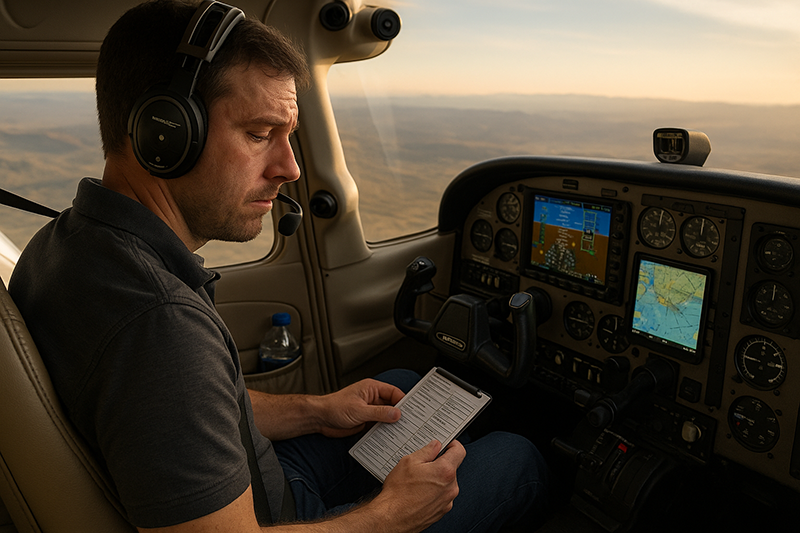
Long-distance pilot fatigue is one of the most practical human factors challenges in aviation because it often builds gradually, quietly, and at exactly the point in a flight when judgment matters most. A pilot may begin a trip alert, well prepared, and fully capable, then face hours of workload, weather decisions, radio communication, vibration, altitude, dehydration, meal disruption, and the simple mental effort of staying ahead of the airplane. By the time the destination is in sight, fatigue may be influencing attention, scan discipline, communication, and decision-making without announcing itself clearly.
Managing pilot fatigue is not only an airline or military concern. It matters in general aviation cross-country flying, ferry flights, business aviation, flight instruction, repositioning flights, and personal travel. Student pilots need to understand fatigue before their first long solo cross-country. Flight instructors need to recognize how fatigue affects both teaching and evaluation. Experienced pilots need realistic strategies for long trips where the schedule, weather, passengers, and personal pride can create pressure to continue. This article focuses on practical fatigue management for long-distance flying, using conservative aeronautical decision-making rather than unsupported promises, shortcuts, or one-size-fits-all rules.
What Long-Distance Pilot Fatigue Really Means
Fatigue in aviation is more than feeling sleepy. It is a reduction in mental or physical performance that can affect vigilance, reaction time, memory, communication, problem solving, and emotional control. In the cockpit, those changes can show up as small delays, missed radio calls, poor checklist discipline, fixation on one instrument or one problem, reluctance to replan, or a tendency to accept conditions that a rested pilot might question.
Long-distance flying adds several fatigue drivers at the same time. Flight duration is the obvious one, but it is not the only one. Early wake-up times, late arrivals, time zone changes, high workload airspace, marginal weather, turbulence, noise, heat, cold, low humidity, oxygen considerations, unfamiliar airports, and passenger expectations can all add to the fatigue picture. Even a technically simple flight can become fatiguing when the pilot has already spent several hours driving to the airport, loading the aircraft, handling delays, and managing preflight decisions.
A useful way to think about fatigue is to separate it into three overlapping categories. Acute fatigue comes from a specific period of wakefulness, workload, or inadequate rest. Cumulative fatigue develops when insufficient sleep or long duty periods stack up over several days. Circadian disruption occurs when the body’s normal sleep and alertness rhythm is disturbed by early departures, late-night flying, or crossing time zones. A long-distance pilot may experience all three on the same trip.
The important training point is that fatigue is not a character flaw. It is a human limitation. Skilled pilots do not defeat fatigue through motivation alone. They manage it by planning, monitoring, communicating, and making timely operational decisions.
Why Fatigue Matters in Real-World Aviation
Fatigue matters because flying demands sustained performance, not just brief moments of competence. A pilot may hand-fly well during climbout, navigate correctly en route, and still make a poor decision late in the flight because fatigue has narrowed attention or reduced patience. Long-distance trips are especially vulnerable because the most demanding decisions often arrive near the end: weather evaluation, fuel planning updates, descent management, approach briefing, runway selection, traffic awareness, and landing performance judgment.
In flight training, fatigue can distort learning. A tired student may appear unprepared, inconsistent, or inattentive when the real issue is reduced cognitive capacity. A tired instructor may miss teachable moments, accept imprecise performance, or become less patient. For that reason, fatigue awareness belongs in preflight risk assessment, not just postflight reflection.
For instrument pilots, fatigue deserves special respect. Instrument flying requires disciplined cross-check, procedural memory, and the ability to detect subtle deviations. A fatigued pilot may become task saturated more quickly, delay asking for help, or continue an approach without the same level of objective monitoring used earlier in the day. Fatigue does not need to produce a dramatic failure to become dangerous. It may simply reduce the margin available when weather, traffic, equipment, or communication demands increase.
For VFR pilots, fatigue can also be deceptive. Good visibility and smooth air can create a sense that little is happening, which may reduce alertness over time. Later, if weather lowers, terrain rises, fuel becomes a concern, or the destination airport is busy, the pilot may need a sharp decision-making reserve that has already been spent.
How Pilots Should Understand Fatigue Before a Long Trip
The best time to manage long-distance pilot fatigue is before the engine starts. Preflight planning should include more than fuel, weather, weight and balance, and alternates. It should include an honest evaluation of sleep, timing, workload, nutrition, hydration, route complexity, and recovery options. A flight that is safe and comfortable at 0900 after a normal night of sleep may be a poor choice at 1700 after a short night, a stressful workday, and a forecast that requires constant attention.
A practical fatigue assessment begins with recent sleep. Pilots should be cautious about launching on demanding long-distance flights after shortened or poor-quality sleep, especially if the flight will extend into a normal sleep period. The question is not simply, “Can I legally go?” It is, “Will I be able to make conservative decisions at the most demanding point of the flight?”
Time of day matters. Many pilots feel a natural dip in alertness during late night and, for some people, in the early afternoon. Personal patterns vary, so each pilot should learn when he or she is most alert and when performance tends to decline. Long-distance planning should place the highest workload segments, when possible, during periods of better alertness. That may mean departing after proper rest rather than accepting a very early launch just to preserve a schedule.
Workload also matters. A three-hour flight in smooth air across familiar terrain may be less fatiguing than a two-hour flight through busy airspace, changing weather, and unfamiliar procedures. Pilots sometimes focus on clock time and underestimate workload intensity. For fatigue planning, both time and task complexity count.
Finally, fatigue management should include an escape plan. Good planning answers the question, “What will I do if I am more tired than expected?” That answer might include a planned fuel stop, an overnight option, a second pilot, a different departure time, an earlier diversion decision, or a passenger briefing that makes schedule flexibility clear before pressure builds.
Fatigue Warning Signs Pilots Should Take Seriously
Fatigue rarely presents as a single obvious alarm. More often, it appears as a pattern of small changes. A pilot may reread the same chart several times, miss a frequency change, delay a descent calculation, forget to switch fuel tanks when appropriate for that aircraft and procedure, or feel unusually irritated by minor passenger questions. These are not just annoyances. They can be early indications that mental bandwidth is shrinking.
Common cockpit warning signs include difficulty maintaining a normal instrument scan, repeated small altitude or heading deviations, slower checklist flow, trouble remembering a clearance, fixation on one task, and reduced willingness to communicate. Emotional signs matter too. Irritability, overconfidence, resignation, and get-there thinking can all become more pronounced when a pilot is tired.
Physical signs may include yawning, heavy eyelids, dry eyes, neck or back discomfort, reduced coordination, or a strong desire to “just get it over with.” On long flights, pilots may normalize discomfort and treat it as part of the trip. That attitude can be risky if it prevents a timely fuel stop, stretch break, diversion, or decision to discontinue the day’s flying.
The goal is not to diagnose fatigue perfectly in flight. The goal is to recognize enough evidence to act conservatively. If a pilot notices two or three fatigue indicators at the same time, especially late in a flight or before an approach, it is time to reduce workload and increase margins.
Planning Long-Distance Flights Around Human Performance
Good fatigue management begins with trip design. Pilots often plan aircraft performance carefully while treating human performance as fixed. In reality, the pilot is part of the operating system. A safe long-distance plan should account for the endurance of both the airplane and the person flying it.
One of the most effective strategies is to plan shorter legs than the aircraft can technically fly. A long fuel endurance does not mean the pilot should always use it. A planned stop can provide fuel margin, weather reassessment, food, hydration, movement, restroom access, and a mental reset. The stop also creates a natural decision point where continuing, delaying, or overnighting can be evaluated without the pressure of being airborne.
Route selection can reduce fatigue. A slightly longer route with better weather options, more suitable alternates, easier terrain, or more familiar airports may be safer than a direct route that demands constant high workload. For instrument pilots, choosing airports and approaches that fit the pilot’s recent proficiency and the aircraft’s equipment can reduce late-flight stress. For VFR pilots, route planning should consider terrain, airspace, daylight, and weather trends, not just distance.
Preflight organization is another fatigue control. Loading avionics data, reviewing expected procedures, organizing charts, setting up kneeboards or tablets, and briefing passengers before departure all reduce in-flight workload. A tired pilot who must solve administrative problems in the cockpit has less capacity for flying the aircraft.
Food and hydration should be planned, not improvised. Dehydration and poor nutrition can worsen how a pilot feels and may contribute to reduced alertness or discomfort. Pilots should avoid creating new problems by relying on unfamiliar supplements, excessive caffeine, or heavy meals immediately before demanding flying. Caffeine can be useful for some people, but it is not a substitute for sleep and can have timing and hydration implications. Each pilot should understand personal tolerance and avoid experimenting during an important flight.
In-Flight Strategies for Managing Fatigue
Once airborne, fatigue management becomes a continuous part of cockpit resource management. The pilot should not wait until exhaustion is obvious. Small habits can help preserve attention and reduce workload throughout the flight.
Use automation appropriately if the aircraft is equipped for it and the pilot is proficient with it. Autopilots and flight directors can reduce physical workload and help maintain stable flight, but they do not remove the need for monitoring. A fatigued pilot can become overly passive, so automation use should be paired with active cross-checking, position awareness, fuel monitoring, and regular review of the next phase of flight.
Maintain a steady cockpit rhythm. Periodically review fuel status, weather updates, destination conditions, alternates, terrain, and arrival planning. Avoid saving all decisions for the last 30 minutes. Descent, approach, and landing planning should begin early enough that the pilot is not rushed when fatigue may already be present.
Communication can also reduce fatigue risk. If workload is increasing, pilots should use available resources. That may include asking air traffic control for clarification, requesting delay vectors when appropriate, slowing down if safe and approved, or choosing a simpler clearance or approach option when available. In a two-pilot environment, verbalizing fatigue concerns early allows tasks to be redistributed before performance declines further.
Movement and comfort matter within the limits of safe aircraft operation. Adjusting seating position, maintaining ventilation, using sunglasses appropriately, and managing cockpit temperature can help reduce discomfort. On the ground, a proper stop with walking, stretching, food, water, and a real pause is often far more effective than a rushed fuel-and-go.
Common Mistakes and Misunderstandings
One common mistake is treating legal compliance as the same thing as fitness to fly. Regulations and company policies, when applicable, establish important boundaries, but they do not guarantee that a particular pilot is rested enough for a specific flight on a specific day. Personal fatigue risk assessment is still necessary.
Another mistake is assuming experience eliminates fatigue risk. Experienced pilots may manage workload better, but they are not immune to human physiology. In fact, experience can create confidence that masks subtle performance decline. A pilot who has completed many long trips may be tempted to dismiss warning signs because “I have done this before.” That reasoning can be especially hazardous when weather, darkness, unfamiliar terrain, or passengers add pressure.
A third misunderstanding is believing that caffeine solves fatigue. Caffeine may temporarily improve alertness for some individuals, but it does not restore the full benefits of sleep. It can also create a false sense of capability if the underlying need for rest remains. Used carefully, it can be part of a broader plan. Used as the plan, it is weak risk management.
Pilots also underestimate the fatigue cost of non-flying tasks. Driving to the airport, working a full day before departure, loading baggage, resolving maintenance questions, waiting through delays, and managing passengers all consume energy. The flight begins before takeoff from a human performance standpoint.
Finally, pilots sometimes delay diversion or overnight decisions because the destination is close. The last segment of a long trip can feel psychologically difficult to abandon. That is exactly why fatigue planning should include pre-briefed decision points. If the pilot waits until tired, hungry, and near the destination to invent a new plan, the safer choice may feel harder than it should.
Practical Example: A Long Cross-Country That Changes Late
Consider a private pilot flying a normally aspirated single-engine airplane on a long personal cross-country. The planned route includes two legs of roughly three hours each, with a fuel stop at a familiar airport. The pilot slept reasonably well but woke earlier than usual to drive to the departure airport. The first leg is smooth and uneventful. During the stop, the pilot notices a mild headache, drinks water, eats a light meal, and reviews weather. The forecast at the destination still looks acceptable, but winds are increasing and the arrival will be near sunset.
On the second leg, headwinds are stronger than expected. The pilot is still within fuel planning limits, but the arrival is later than planned. The destination area is busier than expected, and the pilot misses one radio call while reviewing airport information. A few minutes later, the pilot has to reread the same arrival note twice and realizes that the normal mental flow is not as sharp as it was earlier.
This is a classic fatigue decision point. The aircraft may be operating normally. The weather may still be legal for the type of operation. The pilot may be capable of continuing. But the risk picture has changed. A conservative response could include slowing the pace, asking for assistance or clarification as needed, reviewing alternates early, and choosing a nearby airport with a simpler arrival, better lighting, or less traffic if that provides a wider margin. If landing short and completing the trip the next morning is the safer decision, it should be treated as good airmanship rather than failure.
The lesson is not that every long flight must be stopped at the first sign of tiredness. The lesson is that fatigue indicators should trigger deliberate risk management. Long-distance flying is successful when the pilot manages the whole trip, including the human performance limits that appear late in the day.
Best Practices for Pilots
Managing long-distance pilot fatigue is most effective when it becomes part of normal operating discipline. The following practices are useful because they are simple, realistic, and adaptable to many types of flying.
- Plan the pilot, not just the airplane. Consider sleep, time of day, duty length, workload, meals, hydration, and recovery options during preflight planning.
- Build decision points into the trip. Use fuel stops, weather updates, and arrival planning checkpoints to reassess whether continuing still makes sense.
- Keep workload low when fatigue risk is high. Favor familiar airports, reasonable leg lengths, simple routing, and early arrival planning when possible.
- Brief passengers before departure. Make it clear that stops, delays, diversions, or overnight stays are normal safety decisions, not inconveniences caused by poor planning.
- Use personal minimums that account for fatigue. A tired pilot should not use the same margins for weather, fuel, darkness, and runway conditions as a rested pilot at peak performance.
- Recognize warning signs early. Missed calls, repeated chart reviews, irritability, fixation, and sloppy checklist habits are reasons to reduce workload and reassess.
- Avoid schedule-driven flying. Long-distance trips should include realistic flexibility, especially when weather, darkness, or passenger expectations are involved.
For instructors, fatigue management should be taught through scenario-based discussion, not only as a preflight acronym. Ask students how they would handle a delayed departure, an unexpected headwind, a passenger pushing to continue, or a destination arrival after a long day. These conversations help students build judgment before they face the pressure alone.
For professional pilots and aviation organizations, fatigue management should be integrated with standard operating procedures, crew communication, and company policy. Any operation subject to specific flight, duty, or rest requirements must follow the applicable rules and approved procedures. Even where formal requirements apply, cockpit-level awareness and conservative decision-making remain essential.
How Instructors Can Teach Fatigue Management
Flight instructors have a unique opportunity to make fatigue visible before it becomes a hazard. Many students think of fatigue as something that happens only after extreme sleep loss. Instructors can broaden that understanding by discussing ordinary situations: a student arriving after school or work, a morning lesson after a late night, a long cross-country on a hot day, or an instrument lesson scheduled after a demanding week.
A useful instructional technique is to include fatigue in every cross-country risk discussion. Instead of asking only whether the weather and aircraft are acceptable, ask whether the pilot will still be sharp at the destination. Have the student identify the highest workload portion of the flight and describe what fatigue might change. This turns fatigue from an abstract human factors topic into a practical planning item.
Instructors should also model good behavior. Canceling or modifying a lesson because the instructor is not fit to teach sends a powerful safety message. So does encouraging a student to speak up when tired. Training culture matters. If students learn that fatigue is something to hide, they may carry that habit into future flying.
Frequently Asked Questions
How do I know if I am too tired to fly?
There is no single cockpit test that proves fitness to fly. A conservative decision should consider recent sleep, time awake, illness, stress, workload, time of day, and the complexity of the planned flight. If you are already questioning whether you are too tired, treat that as meaningful information and consider delaying, shortening, or simplifying the flight.
Is a long fuel endurance a good reason to fly longer legs?
Not necessarily. Aircraft endurance and pilot endurance are different. Longer legs may be efficient, but planned stops can improve fuel margin, comfort, hydration, weather awareness, and decision quality. The best leg length is the one that supports both aircraft performance and pilot performance.
Can caffeine be part of a fatigue management plan?
For some pilots, caffeine can help alertness for a limited period, but it is not a replacement for sleep and should not be used to justify launching when rest is inadequate. Pilots should understand their own tolerance and avoid relying on caffeine as the primary fatigue control.
Should fatigue change my personal minimums?
Yes. If you are tired, your margins should become more conservative. That may mean higher weather minimums, more fuel reserve, shorter legs, more daylight margin, simpler airports, or a decision to stop early. Personal minimums should reflect the pilot’s actual condition, not just certificate level or aircraft capability.
What should I tell passengers about fatigue-related delays?
Tell passengers before the trip that aviation decisions may change for weather, aircraft, airport, or pilot fitness reasons. Framing stops and delays as normal safety decisions reduces pressure later. A calm preflight passenger briefing can make it much easier to choose the safest option when fatigue appears.
Does using an autopilot eliminate fatigue risk?
No. Automation can reduce workload when used correctly, but it does not remove the need for monitoring, navigation awareness, communication, fuel management, and decision-making. A fatigued pilot can still make poor choices while the airplane is flying precisely.
Key Takeaways
- Long-distance pilot fatigue should be managed before departure through realistic planning for sleep, workload, timing, route complexity, and rest options.
- Fatigue risk often increases late in a trip, when arrival, approach, weather, fuel, and passenger pressures demand the pilot’s best judgment.
- Good fatigue management is a decision-making skill: recognize warning signs, reduce workload, use available resources, and be willing to stop short when margins shrink.