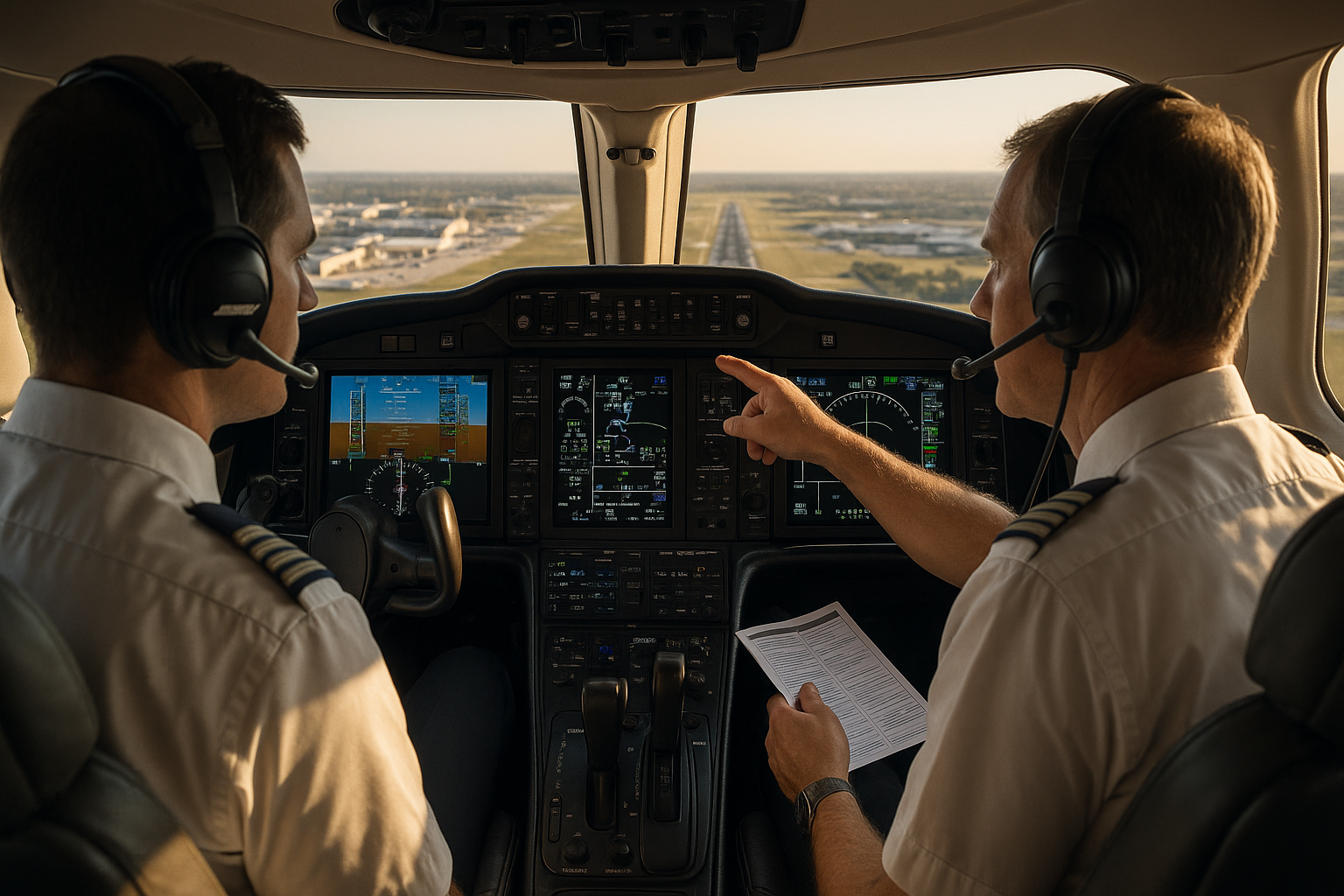
Jet transition training is the focused process pilots use to move from flying piston or turboprop airplanes to operating turbine-powered jets. For pilots, instructors, and operators the core objective is consistent: learn the airplane, master energy and automation management, and internalize the judgment required to operate safely at higher speeds and altitudes. That phrase, jet transition training, appears early in every lesson plan because it captures a shift in flying mindset rather than only new procedures.
This article explains why jet transition training matters, what it teaches beyond basic handling, and how pilots should interpret the differences in the cockpit. The goal is practical: give flight crews and students clear, operationally useful guidance that improves safety, proficiency, and decision-making when moving into jets. Expect explanations of aerodynamics, engine and systems differences, automation practices, human factors, common mistakes, a realistic scenario, and concrete best practices you can use in training or operations.
What Jet Transition Training Actually Covers
At its heart, jet transition training covers three domains: aircraft systems and limitations, aerodynamic and performance differences, and human-machine interaction with automation and crew coordination. Systems training includes pressurization, bleed air, environmental control, fuel management, thrust reversers, anti-ice systems, and jet-specific electrical and pneumatic arrangements. Performance training focuses on the jet's speed regimes, energy management, approach profiles, and how weight and altitude change performance. The final domain covers how pilots use autopilots, flight management systems, and cockpit workflows in single-pilot or multi-crew environments.
Transition training is not a shift to 'faster small airplane flying' only. It involves a different relationship between pitch and thrust. In many jets, pitch controls airspeed and thrust mainly controls acceleration and descent recovery. Engines have greater inertia compared with piston or turboprop engines, so spool-up time affects how you manage go-arounds, missed approaches, and sudden power demands. Transition training teaches pilots to plan for that response time, and to manage energy so that power is available when needed.
Why This Matters in Real-World Aviation
Jets operate in environments that magnify small mistakes if pilots rely on habits formed in slower aircraft. Higher true airspeeds reduce time to analyze and correct a developing problem. A small misjudgment of approach energy becomes a larger problem when speeds and landing distances increase. Pressurized cabins enable higher altitude operations, which change engine performance, fuel planning, and weather avoidance strategies. Jets also tend to operate in regulated commercial or corporate environments where schedule pressure, passenger expectations, and single-pilot workload can influence decision-making.
From a safety standpoint, jet transition training reduces the risk that pilots will treat jet flying as simply scaled-up piston flying. It trains crews to recognize performance margins, to use automation appropriately, and to maintain manual flying skills for critical phases of flight. For flight instructors and training managers, effective transition training translates into measurable changes in pilot behavior: better energy management on approach, more conservative go-around decisions, and tighter cockpit procedures when automation fails or behaves unexpectedly.
How Pilots Should Understand Jet Differences Practically
Break the differences into a few practical categories you can train and measure.
Speed and Energy Management
Jets fly faster, and because drag and lift relationships change with speed, the margins between stabilized approach and an unstable approach are narrower. Use approach planning that starts earlier. Anticipate that a correction for excess speed will require time and distance, and that flap and gear schedules alter pitch attitudes in ways that can surprise pilots who are not current in the type.
Thrust Response and Engine Characteristics
Turbofan engines have spool-up lag. That means when you advance the thrust levers, thrust does not arrive instantaneously. Transition training emphasizes anticipating power needs earlier than you would in a piston airplane, especially during go-arounds or when recovering from a low-energy state. Understanding the transient behavior of the engines reduces the likelihood of late power applications and hard recoveries.
Systems Complexity and Management
Jets carry more systems that impact flight management. Fuel transfer between tanks, multiple electrical busses, pressurization schedules, bleed air sources, and anti-ice regimes all require planned actions. Training should include normal flows and non-normal procedures that focus on decision points, not memorized checklists. Knowing when a system state requires diversion, rather than troubleshooting in flight, is an important judgment skill developed in transition training.
Automation and Flight Management Systems
Jets often include sophisticated autopilots, flight directors, and FMS capabilities. Transition training teaches how to manage automation as a tool, to verify automation behavior continually, and to avoid mode confusion. Automation can change the flying task from hands-on control to monitoring and managing. That shift creates different vulnerabilities, so training builds habits of cross-checking flight guidance against raw data, and maintaining manual flying proficiency.
Human Factors and Crew Coordination
Single-pilot jet operations require a different cockpit flow than single-pilot piston flying because operating the jet systems and managing automation increase workload. Multi-crew operations require strict division of tasks, callouts, and sterile cockpit discipline. Transition training stresses communication, task sharing, and the use of briefings to anticipate critical phases and contingencies.
Common Mistakes and Misunderstandings
Pilots transitioning to jets commonly make a few predictable mistakes. Recognizing these errors helps instructors design focused lessons and helps transitioning pilots anticipate the hard parts.
First, pilots often underappreciate engine lag. Treating thrust as immediate power leads to late, aggressive thrust applications that can destabilize the airplane during critical phases. Second, pilots sometimes rely on automation without understanding its limitations, resulting in mode confusion or surprise when the system behaves differently than expected. Third, some pilots do not sufficiently plan for winds aloft and high-altitude performance effects, leading to fuel or range miscalculations. Fourth, a common misunderstanding is assuming jets always stop faster; in reality higher landing speeds increase landing distance and bring different touchdown technique requirements. Finally, insufficient attention to checklist discipline and cross-checking systems during abnormal situations can turn a manageable malfunction into a significant event.
Practical Example: Transition Flight from Turboprop to Light Jet
Imagine a turboprop captain who has logged substantial instrument time and is about to begin a supervised transition to a light business jet. The training day begins with a ground brief that focuses on the jet's performance tables, flap schedule, and thrust behavior. The instructor emphasizes energy management during approach and the expected time for engines to respond from idle to takeoff thrust.
On the first flight, the trainee practices climbs and descents, paying attention to how the jet accelerates in clean configuration versus with flaps extended. The trainee observes that small pitch changes produce larger speed variations at higher airspeeds. During an approach to a runway with a 10 knot tailwind, the instructor simulates a late power request by delaying the go-around. The trainee must anticipate and apply thrust early, and adjust pitch to prevent a high sink rate while engines spool up. The scenario reinforces the training point: in a jet, you plan go-arounds earlier and maintain a slightly higher approach energy cushion than you might in a slower airplane.
Later in the day, the trainee practices an approach with partial automation. The exercise focuses on verifying the flight director and autopilot modes, setting appropriate vertical path angles in the FMS, and recognizing when to disconnect automation and hand fly to maintain situational awareness. By the end of the sortie, the trainee has a felt understanding of how the jet's systems and aerodynamics combine, and how that changes decision timing.
Best Practices for Pilots Moving into Jets
Here are practical actions and habits that improve transition outcomes. These are intended to be applied in training and during early operational flights.
- Start with a structured ground brief that emphasizes energy management, engine response, and automation modes.
- Fly deliberate approaches with clear go-around criteria. Set conservative stabilized approach gates and rehearse the go-around without hesitation.
- Practice manual flying frequently. Even with capable automation, maintain the skill to hand-fly the aircraft in variable conditions.
- Use the aircraft's performance charts before every flight. Small changes in weight, temperature, or runway conditions can substantially affect takeoff and landing distances.
- Train for non-normal engine behavior and understand how to manage asymmetric thrust or failed bleeds in the context of higher speeds and altitudes.
- Develop a cockpit flow that preserves scan and cross-check, especially during single-pilot operations where task saturation is a risk.
- Emphasize conservative decision-making under pressure. Time and distance are shorter in jets; make diversion or go-around decisions earlier rather than later.
Training Design: What Effective Jet Transition Programs Include
A robust jet transition program blends classroom systems study, simulator sessions, and supervised line flying. Classroom time should give pilots an operational mental model of systems and failure modes. Simulators allow practice of abnormal procedures and boundary conditions where practicing in the airplane would be unsafe. Supervised line or transition sorties consolidate skills in real-world traffic, weather, and airport environments.
Instruction should measure learning by performance, not only by hours. Use scenario-based training to provoke decision points and evaluate how the pilot anticipates and responds. Include metrics such as stabilized approach compliance, timely go-around decisions, correct automation mode selection, and effective crew communication when applicable.
Regulatory and Operational Context
Different operations impose different regulatory and company requirements around transition and proficiency. Some jet operations require type ratings for larger jets, and others have documented transition syllabi for specific models. When planning a transition, pilots and operators should consult applicable regulatory guidance and company procedures to determine required qualifications and recurrent training elements. Avoid assuming that hours logged in a piston or turboprop automatically translate to jet competence without formal transition training and supervised line experience.
Because no source material is attached to this article, any claim about required training hours, exact regulatory wording, or company-specific policies should be verified with the applicable authority or operator manual before taking action. See the manual review notes at the end of this article for items that should be validated against official guidance.
Common Scenarios That Reveal Training Gaps
Certain operational contexts tend to expose deficiencies in jet transition training. These include single-pilot business flights into unfamiliar airports, short-field or contaminated runway operations, steep approaches that reduce margin for error, and operations at high-altitude airports where engine and aerodynamic performance changes are significant. Other revealing scenarios involve automation anomalies in busy airspace where quick mode recognition and correct intervention are necessary.
Design training episodes that reproduce these pressures, so pilots practice sound decision-making under realistic workload. Evaluate not only whether the pilot completes the task, but how they prioritized, communicated, and maintained safety margins while doing so.
Frequently Asked Questions
Do I need special certification to fly a jet?
Certification requirements depend on the aircraft type, operations, and regulatory environment. Many jets will require aircraft-specific qualifications or type ratings, especially for larger transport-category airplanes. Check your national aviation authority and company policies to confirm the credentialing necessary for the intended aircraft.
How long does effective jet transition training take?
There is no single answer. Effective training depends on a pilot's prior experience, the complexity of the jet, and the training program's scope. A focused syllabus typically includes ground systems study, simulator time for abnormal and emergency procedures, and supervised in-aircraft sorties. Rather than a fixed number of hours, assess readiness by demonstrated competence in handling normal and non-normal situations.
What are the most important piloting skills to retain from piston flying?
Fundamental airmanship remains essential: clear judgment, precise airmanship, constant cross-checking, and disciplined checklist usage. Those skills transfer directly to jets. What changes is how quickly you must apply them, and the need to pair traditional stick-and-rudder skills with systems and automation management.
How should I manage automation during transition flights?
Use automation deliberately. Before engaging an automated mode, brief its intended behavior and monitor its actual behavior after engagement. Maintain the habit of cross-checking the flight path against raw data such as airspeed, attitude, and navigation sources. When automation displays unexpected behavior, be prepared to disconnect and hand-fly the aircraft to a safe state.
Is single-pilot jet operation more risky than multi-crew?
Single-pilot jet operation increases workload and reduces redundancy compared with a two-pilot cockpit. That does not make it inherently unsafe, but it does change how pilots plan flights, manage workload, and set conservative limits. Training should address strategies to reduce single-pilot workload, including thorough preflight planning, prudent dispatch decisions, and proficiency in quick, clear decision-making during high-workload phases.
Practical Training Checklist for Instructors
Use these focal points when designing or delivering a jet transition session. They are not a regulatory checklist, but rather a set of prioritized training objectives that produce measurable improvements in safety and performance.
- Establish a clear mental model of engine response and thrust lag.
- Practice stabilized approach criteria, including conservative go-around triggers.
- Drill automation mode selection and recovery, including manual reversion.
- Include non-normal simulations that focus on decision triggers, not only checklists.
- Expose pilots to performance planning for weight, altitude, and temperature variations.
- Reinforce disciplined cockpit flows and sterile cockpit behavior during critical phases.
Key Takeaways
- Practical takeaway: Treat jet transition training as a change in flying philosophy, focusing on energy management, engine response, and automation awareness.
- Safety takeaway: Anticipate thrust response and plan go-arounds earlier to preserve margins at higher speeds and altitudes.
- Training and decision-making takeaway: Measure readiness by demonstrated performance in normal and non-normal scenarios rather than by time alone.
Jet transition training prepares pilots for more than faster speeds. It builds a different way of flying, where planning, system knowledge, and disciplined cockpit behavior reduce risk. For instructors and training managers, the most effective programs combine systems knowledge, simulator practice, and measured, scenario-based line experience. For pilots, the best preparation is deliberate practice of energy management, a conservative approach to automation, and a commitment to maintain manual flying skills.
Because official regulatory and operator requirements vary, confirm any specific credential or training-hour requirement with your regulatory authority or operator training department before assuming compliance. Validate company procedures and the aircraft flight manual for exact performance data and limitations.