
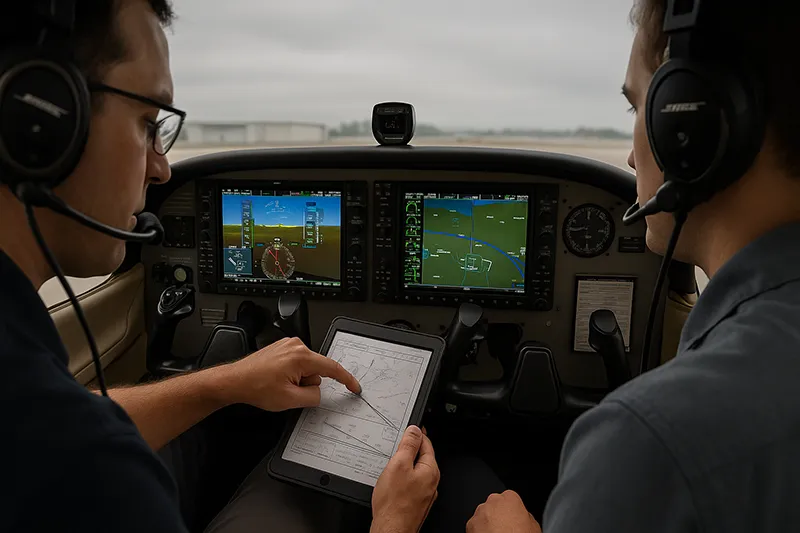
Approach plates are the language of instrument flying. For any pilot flying under instrument flight rules, understanding how to interpret approach plates correctly is essential to safe, predictable, and legal operations. This article explains the components, purpose, and practical interpretation of approach plates and shows how to use them during planning, briefing, and the actual approach.
Whether you are a student pilot learning basic instrument procedures, a newly certificated instrument-rated pilot building currency, a flight instructor teaching approach briefings, or an operations pilot preparing for complex instrument environments, this guide focuses on operational understanding, pilot decision-making, and practical safety considerations. The primary keyword, approach plates, appears here and throughout to reflect the core subject of this article.
What an Approach Plate Is and Why It Exists
An approach plate is a standardized chart product that condenses the information needed to fly a specific instrument approach procedure to an airport. Plates provide the route into the airport, the vertical profile to the final segment, critical altitudes, navigation aids, runway alignment, missed approach instructions, and the published landing minima for the procedure.
Approach plates exist to communicate a complex set of navigational and safety-critical details in a concise, visually consistent way. They are not a substitute for sound aeronautical decision-making, but they are the primary reference for executing published approaches when outside visual references are limited.
Core Components of an Approach Plate
Modern approach plates typically include several standard elements. Learning to read each component and relate it to flying tasks will reduce errors and improve situational awareness.
Plan view: The plan view shows the lateral track to the airport. It displays initial approach fixes, procedure turns, feeder routes, final approach course, and the missed approach path. Use the plan view to visualize the route, identify potential conflicts with terrain or airspace, and plan initial headings and altitudes.
Profile view: The profile view is a side-on depiction of the approach. It presents vertical guidance where available, step-down fixes, crossing altitudes, and the descent profile to the landing minima. For non-precision approaches, the profile emphasizes step-down fixes; for approaches with vertical guidance, the profile shows glidepath information when available.
Minnima block: The minima block lists the published landing minimums for the procedure. It includes categories or aircraft approach categories, minimum descent altitudes or decision altitudes, required visibility, and any specific notes, such as circling or straight-in minimums. Interpret these minima in the context of your aircraft, the approach type, and current flight conditions.
Airport diagram and runway information: Plates show runway orientation, runway length, touchdown zone markings, and elements such as displaced thresholds. Airport diagrams may include lighting, approach lighting systems, and runway surface information important for landing planning.
Missed approach instructions: Missed approach procedures are explicit and often require immediate changes in heading, climb to specific altitudes, and navigation to a holding fix. Practicing and understanding the missed approach reduces pilot workload and helps maintain positive control if the approach cannot be completed.
Notes and procedure-specific restrictions: Notes call out specific limitations, such as required equipment, altitude restrictions, altitude or speed restrictions, and airport-specific cautions. Read the notes thoroughly and integrate them into your brief and plan.
Why Approach Plates Matter in Real-World Aviation
Approach plates matter because instrument approaches are where procedural flying, ATC coordination, and pilot judgment converge. Misreading a plate or missing a critical note can produce high workload, unstable approaches, or airspace and terrain conflicts. Conversely, confident plate interpretation supports stable approaches, timely decision-making, and safer outcomes.
In training, plates are an essential teaching tool. Instructors use them to develop approach briefings, practice missed approaches, and evaluate students on procedure compliance. For operators, approach plates are part of preflight planning, dispatch decisions, and risk assessments tied to weather, aircraft performance, and crew proficiency.
From a safety perspective, approach plates communicate the boundary conditions of a published procedure. They help pilots avoid flying below protected altitudes, entering obstacles or controlled airspace incorrectly, or attempting approaches without required navigational equipment. Accurate interpretation reduces the chances of controlled flight into terrain, airspace deviations, and unstable final approaches that lead to go-arounds or runway excursions.
How Pilots Should Understand and Use Approach Plates
Interpreting an approach plate is not a passive act. Effective use requires active preparation, cross-checking, and mental mapping of the procedure to the aircraft avionics and flight environment.
Start with a thorough briefing. A standard approach briefing covers the approach name and runway, the initial and final approach fixes, inbound course and distance to the runway, key altitudes from the profile view, missed approach procedure, and the published minima for your aircraft category. Also include any notes about required navigation equipment and the presence of obstacles or unusual airport features.
Match the plate to your navigation setup. Confirm that the course on the plate corresponds to the course selected in the nav radios, the flight management system, or the GPS. If the procedure requires specific equipment, such as DME or an operational glideslope, verify that the equipment is available and tuned. For GPS approaches, confirm that your database is current and that you have the correct approach version loaded.
Use the plan and profile views together. The plan view helps orient you laterally, and the profile view shows vertical guidance and step-down altitudes. Mentally trace the approach out loud or during the briefing to create a timeline: when you will intercept the final approach course, when to start descent, and where you will be at key waypoints.
Cross-check altitudes and step-down fixes. Many approach-related incidents happen when pilots descend prematurely or miss a step-down fix. Use the altitude crossings in the profile view to create specific callouts during the approach and brief them with your pilot flying or safety pilot. For example, callouts for crossing altitude at a fix and for reaching the final approach fix keep crews synchronized.
Plan the missed approach before you need it. Know the initial heading, climb instructions, and where the missed approach routing goes. Assign responsibilities in a two-pilot cockpit so that one pilot flies the missed approach and the other communicates with ATC and configures the avionics. In single-pilot operations, be deliberate about priorities: maintain aircraft control, maintain positive climb, and call ATC as soon as workload allows.
Common Mistakes and Misunderstandings
Poor plate interpretation often stems from treating the plate like a static picture instead of a dynamic procedure. Below are common pitfalls that contribute to incidents and increased workload.
Fixating on one view only: Relying exclusively on either the plan view or the profile view can lead to missing critical information. For instance, a lateral procedure turn visible in the plan view may have associated altitude constraints visible only in the profile view.
Ignoring notes and restrictions: Plate notes can change approach usability. Examples include mandatory use of specific approach aids, runway visual range conditions, or altitude crossing restrictions. Failing to read and apply these notes can invalidate your ability to fly the approach as published.
Assuming chart symbology is identical across providers: Different chart publishers or countries may use slightly different symbols or abbreviations. Make sure you are familiar with the charting standard in use and review the chart legend when operating in unfamiliar charting domains.
Relying solely on automation: Modern avionics make flying approaches easier, but overreliance without understanding the plate can lead to automation surprises. For example, an FMS vertical path may not follow the published step-down altitudes on a non-precision approach unless manually managed. Always cross-check what the automation will do against the published procedure.
Under-planning the missed approach: Many pilots do not rehearse missed approaches as part of the approach brief. This can produce confusion during go-arounds, especially in complex airspace or at night. Practice missed approach profiles in training to lower the chances of error when they are needed for real.
Practical Example: Using an Approach Plate in Flight (Illustrative)
The following scenario is illustrative and meant to show how to apply approach plate interpretation to a real-world task. Treat the numbers as example values for training purposes and verify all details against current charts before flight.
Scenario: You are the pilot flying a single-engine IFR flight to a medium-sized airport. Weather at the destination is marginal, and ATC vectors you toward an instrument approach. You brief the approach while still on vectors.
Step 1: Identify the approach name and runway. Confirm the inbound course and the final approach fix in the plan view. Note whether the approach provides vertical guidance or is non-precision and whether the final descent is to a decision altitude or a minimum descent altitude.
Step 2: Tune and identify nav aids. If the approach requires an ILS or localizer, tune the frequency and verify identifiers. If the approach uses GPS, confirm the correct approach is loaded and that the integrity page shows no database or other warnings.
Step 3: Cross-check altitudes on the profile view. Identify key step-down fixes and the final descent point. Plan callouts such as "crossing the final approach fix" and a time or distance-based check to verify the aircraft is on profile.
Step 4: Plan the missed approach. The plate shows a missed approach climb to a specified altitude and a turn to a holding fix. Assign tasks: pilot flying will execute the climb and initial heading, pilot monitoring will call ATC and set radios. In single-pilot operations, prioritize flight path control and then call ATC as workload allows.
Step 5: Fly stabilized. Use autopilot or flight director as appropriate, but monitor the aircraft state. If the approach becomes unstable, execute a timely go-around. Stabilized means configured, on the correct flight path, and within safe speed and descent parameters for your operation.
Practical Training Exercises to Build Plate Proficiency
Consistent training produces competence. Structure recurrent practice around realistic tasks that mirror operational pressures.
Tabletop briefings: Regularly brief approaches on the ground. Use current approach plates to run through full briefings, including navigation setup, descent planning, approach and missed approach actions, and contingency plans for a go-around or diversion.
Simulated approaches in the trainer: Practice flying several approaches to the same airport using different procedures. Include partial panel or nav failure scenarios to practice identifying and adapting to equipment changes.
Missed approach rehearsals: Practice missed approaches from different segments of the approach. Use both day and night simulated conditions to build muscle memory for immediate actions and radio calls.
Cross-country IFR flights with multiple approaches: Incorporate a variety of approach types during cross-country training. Expose pilots to RNAV, VOR, localizer, and ILS procedures so they learn the nuances of each plate type.
Best Practices for Pilots
Brief every approach, even if you think the route is simple. A brief aligns mental models and reduces errors.
Verify navigation setup early. Tune and identify nav aids before intercepting the final approach course. For GPS approaches, confirm database cycle currency and approach identifier.
Use callouts and altitude cross-checks. Explicit callouts at step-down fixes and the final approach fix help maintain crew coordination and reduce the chance of premature descent.
Plan for the missed approach and rehearse it. Be ready to execute the published missed approach without hesitation if visual references or approach stability are not achieved by the decision point.
Monitor automation closely. Know how the autopilot, flight director, and FMS will interpret the published procedure and be ready to hand-fly if automation does not match the plate.
Keep charts current and know the publisher’s symbology. Chart updates can change critical items. Ensure electronic or paper charts are current and that you understand abbreviations and symbols used by your chart supplier.
Common Chart Notes and How to Interpret Them
Approach plates often include short notes that are operationally significant. Learning how to interpret these notes is essential.
Minimum equipment notes: These notes indicate that specific navigation or approach equipment must be operational for the approach to be used. Confirm your aircraft meets those requirements before accepting the approach.
Procedure not authorized notes: Some approaches may be unusable under certain conditions, such as when specific components are unserviceable. If a plate includes this note, treat the procedure as unavailable unless alternate wording or ATC clearance explicitly authorizes a different action.
Obstacle or terrain cautions: Notes can identify areas of hazardous terrain or obstacles near the final approach path. Use extra caution and confirm that obstacle clearance altitudes are observed in descent planning.
Using Technology with Approach Plates
Today’s avionics give pilots several ways to fly an approach. Each has strengths and weaknesses relative to a paper plate.
Electronic flight bags and charting apps: These products provide high-resolution plates and shortcuts for briefing. They often integrate with GPS and can highlight approach segments. Still, pilots must not rely on an app alone. Confirm that the app’s procedure matches the current published plate and that database updates are current where applicable.
Flight management systems: An FMS can sequence waypoints and provide lateral navigation to the runway. However, verify that the vertical path it creates for non-precision procedures matches the published step-down altitudes. Do not assume the FMS will follow the plate exactly without pilot oversight.
Autopilot coupling: When available, coupling the autopilot to the approach course reduces workload. Confirm the autopilot is set to the correct mode and will capture the final approach course in a manner consistent with the plate, especially when flying procedures with procedure turns or step-down altitudes.
Regulatory and Safety Considerations
Approach plates convey published procedures, but regulations and operator procedures shape when and how an approach may be flown. Do not treat the chart alone as the full legal or operational authority. Consult applicable operating rules, company procedures, and ATC instructions where relevant.
Safety best practice is to use the plate as an operational checklist of the procedure’s limits and requirements. If any plate note, equipment requirement, or restriction conflicts with your aircraft capability or current conditions, do not attempt the approach without an appropriate authorization or mitigation.
Note: This article explains practical interpretation and common safety considerations. It does not substitute for regulatory documents or operator manuals. Any statement that may imply specific regulatory requirements should be cross-checked with appropriate official sources before operational use.
Frequently Asked Questions
How do I know which minima apply to my aircraft?
Approach plates list minima by aircraft approach category or type of approach. Use the category that matches your aircraft’s approach speed at the threshold and consider any operator-specific limits. If you are unsure which category applies, consult your operating handbook or flight instructor before relying on a specific minima for decision-making.
What if the plate and what ATC vectors me to do are different?
ATC clearances take priority over a published lateral route, but they do not relieve the pilot of maintaining terrain and obstacle clearance or compliance with procedural altitude restrictions unless ATC explicitly provides an alternate and safe clearance. If an ATC vector or instruction would place you in conflict with terrain or published restrictions, immediately query ATC for clarification or a different clearance.
Can I fly the approach if the required navigation equipment is inoperative?
If the plate specifies required equipment, that note means the approach was published assuming that equipment is operational. Operating without required equipment may render the procedure unusable. If in doubt, do not attempt the approach and coordinate a different arrival or a diversion.
How do I handle a missed approach in a single-pilot environment?
In single-pilot operations, prioritize flying the missed approach. Climb and configure for the missed approach first. Make the radio call to ATC as soon as you have positive control and can safely manage the communications. Practice single-pilot missed approaches in training so the immediate actions become second nature.
Are chart symbols the same for all publishers and countries?
Chart publishers and aviation authorities use similar conventions, but symbols and abbreviations can vary. Always review the chart legend for the provider you are using, especially when operating in foreign countries or with unfamiliar charting products.
Key Takeaways
- Practical takeaway: Brief the approach, match the plate to your avionics, and visualize the flight path before descent.
- Safety takeaway: Respect notes, minima, and missed approach instructions; rehearse missed approaches so you can execute them without hesitation.
- Training/decision-making takeaway: Use tabletop briefings, simulator practice, and cross-checks to build plate proficiency and reduce operational risk.
Developing the skill to interpret approach plates correctly takes deliberate practice. Build a habit of thorough briefings, consistent cross-checks, and rehearsed missed approaches. Those habits reduce error, improve safety margins, and enhance the ability to make sound decisions under workload and stress.
If you are an instructor, integrate plate interpretation into scenario-based training that includes partial panel work, automation surprises, and missed approach execution. If you are a student or a pilot refreshing instrument skills, use a stepwise progression from tabletop briefings to simulator practice to live approaches under supervision.
In the cockpit, approach plates are a tool. When used proactively and combined with sound judgment and training, they make instrument flying safer and more predictable. When ignored or misunderstood, they increase the chance of unstable approaches, missed procedures, and high-workload surprises. Make plate proficiency a foundational part of your instrument flying skill set.