
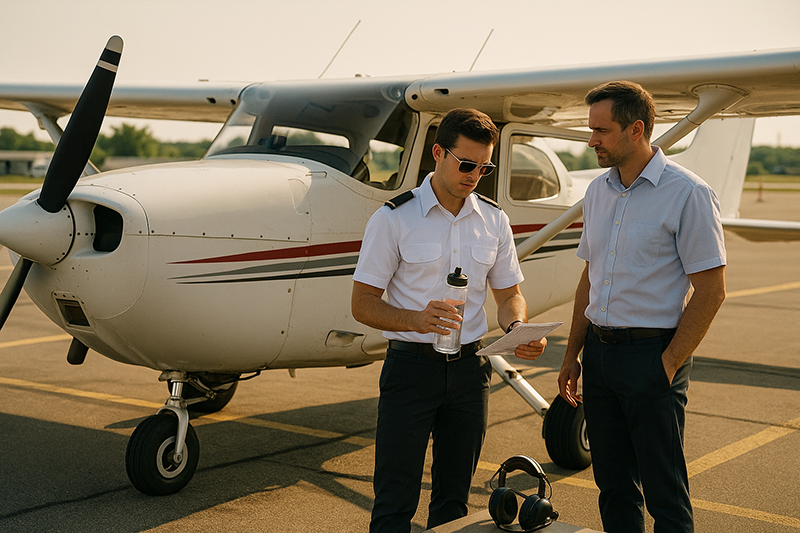
Hydration and pilot performance are closely connected because flying demands clear thinking, steady hands, disciplined communication, and sustained attention. A pilot does not need to be in extreme conditions to become mildly dehydrated. Long preflight routines, early report times, hot ramps, dry cabin air, caffeine, workload, and the natural tendency to avoid drinking before a flight can all work against good hydration habits.
For pilots, hydration is not just a wellness topic. It is part of personal readiness and aeronautical decision-making. A well-hydrated pilot is better positioned to manage workload, monitor aircraft systems, communicate clearly, recognize developing threats, and make conservative decisions when conditions change. This article explains hydration in practical aviation terms, with emphasis on flight training, cross-country planning, cockpit workload, heat stress, fatigue, and the human factors that affect pilot performance.
Why Hydration Matters to Pilot Performance
Flying is a cognitive task supported by physical endurance. Even in a simple training airplane on a clear day, a pilot is continuously processing information. Airspeed, altitude, heading, traffic, weather, radio calls, navigation, aircraft configuration, engine indications, checklist flow, and instructor feedback all compete for attention. When hydration is poor, the pilot may still be legal to fly and may feel generally functional, but small degradations in alertness, comfort, and concentration can matter.
Dehydration can contribute to symptoms such as thirst, dry mouth, headache, reduced energy, irritability, lightheadedness, and difficulty concentrating. These symptoms are not unique to dehydration, and they may also come from fatigue, illness, heat exposure, stress, medication, poor nutrition, or lack of sleep. That is exactly why pilots should pay attention to hydration early. Once a pilot is already uncomfortable in flight, troubleshooting the body becomes one more task in a cockpit that may already be busy.
The aviation environment can accelerate fluid loss or reduce a pilot’s willingness to drink. General aviation cockpits may become hot during preflight, taxi, and climb. High-altitude operations can expose crews to lower humidity. Training flights often include intense mental workload, repeated maneuvers, and extended time on the ramp. Commercial and business aviation operations can involve long duty days, irregular schedules, and limited access to normal meals and fluids. None of these factors automatically makes a flight unsafe, but they all deserve planning.
Hydration should be understood as part of a broader fitness-to-fly picture. It does not replace sleep, nutrition, medical fitness, oxygen awareness, or sound judgment. It supports them. The best pilots treat personal condition with the same seriousness they apply to fuel, weather, aircraft status, and performance calculations.
What Dehydration Looks Like in the Cockpit
One challenge with dehydration is that it often develops gradually. Pilots may not notice the change until they are already behind the aircraft. In early stages, a pilot may simply feel less sharp. Radio calls may require more effort. A clearance may need to be written down twice. A student may become more task-saturated during pattern work than usual. An instructor may notice that a normally capable learner is missing small cues, fixating on one instrument, or becoming unusually frustrated.
Physical discomfort can also become a distraction. A headache during a cross-country flight can pull attention away from weather evaluation or fuel management. Dry eyes can be more noticeable in a ventilated cockpit or while scanning for traffic. A dry mouth can make radio communication less comfortable. Heat exposure combined with limited fluid intake can make a pilot feel sluggish or impatient, which may affect decision-making before engine start as much as during flight.
Instructors should be especially alert to these subtle signs during training. Student pilots may assume that fatigue, stress, and discomfort are simply part of learning to fly. Some students do not want to mention that they feel unwell because they do not want to cancel a lesson, disappoint an instructor, or lose money. A good training culture makes it normal to discuss physical readiness before flight, including hydration, food, sleep, and heat exposure.
Professional pilots face a different version of the same challenge. They may be used to operating while tired, time-pressured, or away from normal routines. That experience can be valuable, but it can also normalize poor self-care. Hydration discipline is not a sign of weakness. It is a small operational habit that helps protect performance during long duty periods and demanding phases of flight.
Why This Matters in Real-World Aviation
Hydration matters most when the flight is already asking more of the pilot. A cool morning local flight with light winds and a short lesson profile may offer plenty of margin. A hot afternoon departure, a busy Class C transition, moderate turbulence, a reroute around weather, or a long VFR cross-country with changing winds requires more sustained attention. Personal readiness becomes part of the safety margin.
Heat is one of the most obvious connections. A pilot may spend considerable time outside during preflight, fueling, loading baggage, checking oil, inspecting tires, and briefing passengers. On a summer ramp, the aircraft cabin can become uncomfortable before the engine is even started. If the pilot began the day under-hydrated, skipped breakfast, and avoided drinking to reduce the chance of a restroom stop, the flight may start with reduced personal reserves.
Altitude and cabin environment also matter. Many aircraft cabins have low humidity, and pilots may not feel sweaty even while losing fluid through normal breathing and dry air exposure. Oxygen use, ventilation, and environmental control can affect comfort. In unpressurized aircraft, altitude introduces additional physiological considerations, including hypoxia awareness. Hydration does not prevent hypoxia, and it should never be treated as a substitute for proper oxygen planning, but poor physical condition can make it harder for a pilot to recognize and manage other stressors.
Hydration also intersects with fatigue. A tired pilot who is also thirsty, hungry, overheated, or uncomfortable has fewer reserves for decision-making. In aviation, decisions rarely occur in isolation. The choice to continue, divert, delay, refuel, ask ATC for help, or discontinue a training maneuver is influenced by the pilot’s mental state. Small human factors can push a pilot toward impatience or continuation bias, especially when the flight is close to completion.
For flight instructors, hydration has direct teaching value. It gives students a practical example of human factors. Students can understand aircraft fuel planning quickly because fuel is visible, measurable, and procedural. Personal energy and hydration are less visible, but they still affect performance. Connecting the two helps students see that risk management includes both the machine and the pilot.
How Pilots Should Understand Hydration
Pilots do not need to turn hydration into a complicated medical formula. The better approach is to treat it as a normal part of flight preparation. Just as a pilot asks whether the aircraft has enough fuel for the planned flight and reserves, the pilot should also ask whether the body has enough margin for the expected workload, temperature, duration, and complexity.
Hydration begins before the day’s first flight. Waiting until engine start or cruise flight to begin drinking is usually too late to be useful for that flight segment. A pilot who starts the day reasonably hydrated, drinks steadily, and avoids extremes is generally better prepared than a pilot who ignores fluids for several hours and then tries to compensate quickly.
The goal is not to drink excessive amounts. Overdoing water intake can create its own problems, including discomfort and frequent restroom needs. Pilots should follow sensible personal habits, consider medical guidance when applicable, and plan around the realities of the flight. For most aviation operations, the best habit is steady, moderate fluid intake before and during the duty period, adjusted for heat, exertion, flight duration, and individual health needs.
Electrolytes may be useful for some pilots during heat exposure, heavy sweating, or long days, but they are not a magic solution. Many routine flights do not require special drinks. Water and normal meals are often adequate for ordinary flying days. Pilots with medical conditions, dietary restrictions, kidney concerns, blood pressure issues, or medication considerations should follow professional medical advice rather than cockpit folklore.
Caffeine deserves a balanced discussion. Many pilots use coffee or tea as part of their normal routine, and caffeine can improve alertness for some people. The concern is not that caffeine is always incompatible with flying. The concern is using caffeine as a substitute for sleep, food, water, or honest self-assessment. Caffeine may also affect individuals differently. A pilot who becomes jittery, anxious, or dehydrated after excessive caffeine has created a performance problem, not solved one.
Hydration, Human Factors, and Aeronautical Decision-Making
Aeronautical decision-making is not only about knowing rules and procedures. It is about recognizing the condition of the pilot, aircraft, environment, and external pressures. Hydration fits naturally into that framework because it affects the pilot component. A pilot who feels unwell may be more likely to rush, accept a marginal plan, miss a checklist item, or delay asking for assistance.
One useful way to think about hydration is through workload management. During low workload phases, pilots can correct small issues. During high workload phases, small issues become more expensive. It is easy to take a sip of water during cruise when the aircraft is trimmed, traffic is light, and navigation is stable. It is not practical to solve hydration, heat stress, hunger, and fatigue during a busy approach, a diversion, or an abnormal situation.
Hydration also affects crew resource management, even in single-pilot operations. In a two-pilot cockpit, one pilot may notice that the other is unusually quiet, irritable, slow to respond, or making small errors. In a single-pilot cockpit, there is no second crewmember to catch those changes. That means the pilot must build self-monitoring into the routine. If the pilot notices headache, unusual fatigue, reduced concentration, or irritability, the safe response may be to reduce workload, land, delay, or ask for help.
External pressure can make hydration decisions worse. A pilot may avoid drinking because passengers do not want to stop, because a schedule is tight, or because the destination has limited facilities. That reasoning should sound familiar. It is the same kind of pressure that can influence fuel decisions, weather decisions, and maintenance decisions. Professionalism means recognizing when convenience is quietly eroding safety margin.
Common Mistakes and Misunderstandings
One common mistake is intentionally restricting fluids before flight. The reason is understandable: pilots do not want discomfort or unscheduled stops. But starting a flight under-hydrated can reduce comfort and performance, especially on hot days or longer legs. The better solution is planning, not avoidance. Choose realistic leg lengths, know airport facilities, brief passengers, and build time into the day for human needs.
Another mistake is assuming that thirst is the only useful signal. Thirst is important, but pilots should also consider context. A pilot who has spent an hour on a hot ramp, skipped breakfast, had multiple cups of coffee, and is now beginning a long flight should not wait for severe thirst before acting. Good aviation habits anticipate problems before they become obvious.
A third misunderstanding is treating hydration as separate from nutrition. Fluids matter, but food matters too. A pilot who drinks water but has not eaten appropriately may still experience low energy, irritability, or difficulty concentrating. For student pilots, this often appears during lessons scheduled around school, work, or early morning commitments. For professional pilots, it may appear during irregular duty days when meals are delayed.
Some pilots also underestimate the workload of training flights. Pattern work, simulated emergencies, instrument practice, and checkride preparation can be mentally demanding. A one-hour lesson may feel more tiring than a longer cruise flight because the workload is compressed. Hydration and nutrition should match the intensity of the operation, not just the time recorded in the logbook.
Another risk is relying on energy drinks or stimulants without considering side effects. Products marketed for energy can contain caffeine and other ingredients that affect people differently. Pilots should be cautious with anything that changes alertness, heart rate, anxiety level, sleep, or hydration habits. If a product is unfamiliar, the cockpit is not the place to discover how the body responds.
Finally, pilots sometimes dismiss personal discomfort as unprofessional to mention. In reality, the professional response is to identify and manage the risk. Saying, “I need five minutes for water and shade before we brief the departure,” is not poor discipline. It is good risk management.
Practical Example: A Hot-Day Training Flight
Consider a student pilot scheduled for a late afternoon lesson in a single-engine training airplane. The plan is to practice short-field takeoffs, power-off approaches, and emergency procedures. The student arrives from work, has eaten little, and drank only coffee during the day. The ramp is hot, the airplane has been sitting in the sun, and the preflight takes longer than expected because the student is reviewing each inspection item carefully.
During taxi, the student feels warm but wants to continue. In the pattern, the first takeoff is acceptable, but the student begins missing altitude callouts and needs repeated reminders to correct airspeed. On downwind, the student seems irritated by normal instructor coaching. After two laps, the instructor asks a few questions and learns that the student has a headache and has not had much water.
A productive instructor does not turn this into a character issue. The instructor treats it as a human factors lesson. They taxi back, take a break, get water, cool down, and discuss how personal condition affects workload. The lesson can still be valuable, even if the original maneuvers are delayed. The student learns that a safe pilot evaluates the person in the left seat just as carefully as the airplane.
The same concept applies to cross-country flying. Suppose a private pilot plans a long VFR leg to avoid an intermediate stop. The weather is legal, the airplane has adequate fuel, and the route is familiar. But the pilot is already uncomfortable, has been limiting fluids, and knows the destination will require a busy arrival. A conservative pilot might choose a shorter leg with a planned stop. That decision may cost a little time, but it preserves attention and comfort for the arrival, when workload increases.
Best Practices for Pilots
Good hydration habits should be simple enough to survive real flying. Pilots do not need a perfect system. They need a repeatable routine that fits training, personal flying, and professional operations. The best practices below are intentionally practical rather than medical.
- Start before the flight day becomes busy. Drink normally before arriving at the airport instead of waiting until preflight or cruise.
- Plan human stops with the same seriousness as fuel stops. For longer flights, consider restrooms, shade, food, and water when selecting airports.
- Carry water where it is accessible and secure. A sealed bottle should not interfere with flight controls, rudder pedals, avionics, charts, or emergency egress.
- Account for heat and ramp time. Preflight, loading, fueling, and delays can create significant heat exposure before takeoff.
- Use cruise wisely. When workload is low and the aircraft is stable, take care of small personal needs before the next high-workload phase.
- Be careful with unfamiliar products. Do not experiment with new supplements, energy drinks, or strong caffeine habits before or during flight.
- Normalize the conversation in training. Instructors should make hydration, food, sleep, and stress part of routine preflight risk discussion.
For flight instructors, one of the most effective techniques is modeling. If instructors mention water, shade, food, and fatigue in a matter-of-fact way, students learn that personal readiness is part of professional aviation behavior. If instructors push through discomfort without discussion, students may learn the wrong lesson.
For pilots flying with passengers, briefing is useful. A simple statement before departure can set expectations: “We may make a short stop if anyone needs a break, and that includes me.” This reduces pressure later. Passengers generally accept stops more readily when they are framed as part of a safe, comfortable flight rather than an inconvenience.
Hydration Planning for Different Types of Flying
Student pilots should pay special attention to hydration because training already creates high mental workload. New pilots are building motor skills, radio skills, traffic awareness, and procedural discipline at the same time. A dehydrated or underfed student may interpret poor performance as lack of ability when the real issue is readiness. Before a lesson, students should consider sleep, food, water, medication, stress, and heat exposure. If the answer is not acceptable, the lesson may need to be adjusted.
Private pilots should think about hydration during cross-country planning. The desire to complete a trip nonstop can be strong, especially when the aircraft has enough fuel and the weather is favorable. But aircraft endurance and pilot endurance are not the same thing. A planned stop can improve comfort, provide a weather update opportunity, reduce passenger stress, and reset the pilot’s attention before the next leg.
Instrument pilots should be particularly conservative because instrument flying demands sustained concentration and precise task management. A pilot in instrument conditions or under the hood must manage aircraft control, navigation, communication, approach setup, briefings, and missed approach planning. Small reductions in cognitive performance can show up as slower scan, missed altitude assignments, or delayed checklist use. Hydration will not make an instrument pilot proficient, but poor hydration can make proficiency harder to demonstrate.
Commercial pilots, corporate crews, and flight instructors often face schedule pressure. They may fly multiple legs or multiple lessons in a day, sometimes with limited breaks. In these environments, hydration planning is a professional habit. It belongs in the same mental category as food planning, fatigue management, and realistic turn times.
High-performance and technically advanced aircraft add another layer. Faster aircraft reduce the time available to correct planning errors. Avionics can reduce workload when used properly, but they also require attention, setup, and monitoring. A pilot who is uncomfortable or mentally dulled may be more likely to make data-entry errors, miss mode changes, or accept an unstable plan.
When Hydration Is Not the Whole Answer
It is important not to attribute every symptom to dehydration. Headache, dizziness, nausea, confusion, unusual fatigue, visual disturbance, chest discomfort, shortness of breath, or weakness can have many causes. Some may be serious. A pilot who feels unwell should not simply drink water and continue without judgment. The correct aviation response is to reduce risk, consider landing or delaying, and seek medical help when appropriate.
Hydration also does not cancel the effects of alcohol, medication, illness, poor sleep, hypoxia, carbon monoxide exposure, heat illness, or emotional stress. These are separate hazards that may overlap. For example, a pilot who feels unusually sleepy and has a headache in flight should not assume dehydration without considering other possibilities, including environmental and medical factors. Good pilots avoid single-cause thinking when personal symptoms appear.
Instructors should teach students to use conservative language with themselves. Instead of saying, “I am probably fine,” a safer question is, “What is the lowest-risk way to handle this?” That may mean delaying a flight, shortening a lesson, choosing an easier profile, landing at a nearby airport, or asking air traffic control for assistance if workload or symptoms become concerning.
Frequently Asked Questions
Can mild dehydration really affect flying performance?
It can. Flying requires attention, memory, communication, coordination, and judgment. Mild dehydration may contribute to headache, fatigue, irritability, or reduced concentration. Even small changes can matter when workload is high, such as during training, instrument procedures, weather deviations, or busy arrivals.
How much water should a pilot drink before flying?
There is no single cockpit number that fits every pilot, climate, aircraft, and medical condition. A practical approach is to begin the day normally hydrated, drink steadily rather than suddenly, and adjust for heat, exertion, flight duration, and personal health needs. Pilots with medical concerns should follow qualified medical advice.
Should pilots avoid drinking water to prevent restroom stops?
Intentionally restricting fluids can create its own risk, especially before hot-day flights or long legs. It is better to plan realistic legs, know airport facilities, and brief passengers that comfort stops may be part of safe flight planning.
Are coffee and caffeinated drinks a problem for pilots?
Caffeine affects individuals differently. Moderate, familiar caffeine use may be part of a normal routine for some pilots, but it should not be used to cover up fatigue, poor sleep, illness, or inadequate hydration. Pilots should be cautious with excessive caffeine or unfamiliar energy products before flying.
What should an instructor do if a student seems affected by heat or dehydration?
The instructor should treat it as a safety and learning issue, not a personal failure. Reduce workload, take a break, cool down, hydrate, and discuss how personal readiness affects performance. If symptoms are significant or unusual, the flight should not continue without appropriate caution.
Is hydration part of preflight risk management?
Yes. Hydration fits within the pilot portion of risk management. A pilot’s physical and mental condition affects the ability to operate safely, especially when workload, weather, traffic, heat, or time pressure increases.
Key Takeaways
- Hydration and pilot performance should be considered before flight, not after symptoms appear in the cockpit.
- Heat, dry cabin air, long duty days, training workload, caffeine habits, and schedule pressure can all reduce a pilot’s personal safety margin.
- Good pilots plan for human needs just as deliberately as they plan fuel, weather, aircraft performance, and alternates.