
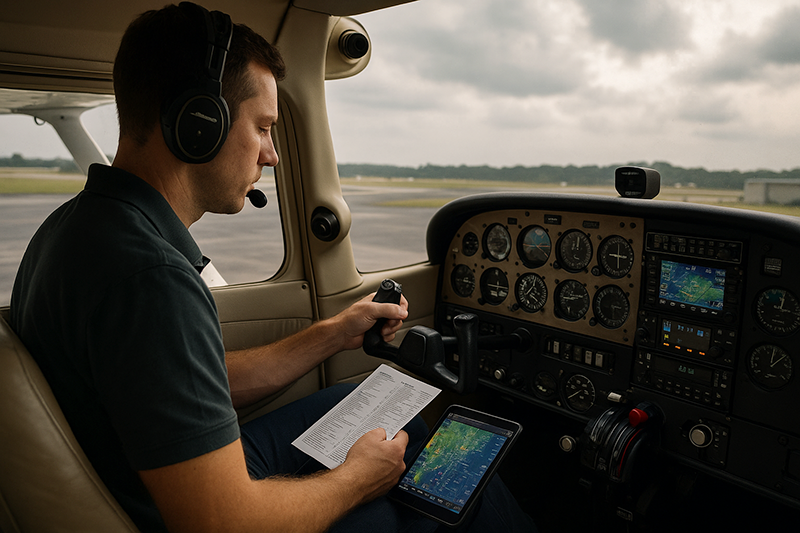
General aviation accident decision-making is one of the most important subjects a pilot can study because it connects aeronautical knowledge, cockpit discipline, risk management, and personal judgment. Aircraft accidents are often discussed in terms of weather, fuel, terrain, maintenance, runway performance, or loss of control, but behind many of those categories is a sequence of human decisions. A pilot chooses whether to depart, continue, divert, land, troubleshoot, press on, or ask for help. Those choices can either build a safety margin or quietly remove it.
This article looks at decision-making lessons pilots can learn from general aviation accidents without relying on dramatic storytelling or unsupported accident details. The goal is practical: help pilots, student pilots, flight instructors, and aviation professionals recognize common decision traps before they become airborne problems. Good decision-making is not about being fearless or perfectly analytical under pressure. It is about building habits, boundaries, and cockpit routines that make the safer choice easier to see and easier to act on.
Accidents Are Usually Sequences, Not Single Moments
A common misunderstanding in aviation safety is the belief that accidents begin at the point where the airplane is obviously in trouble. In real-world flying, the critical decisions often happen much earlier. A pilot accepts a marginal weather forecast. A fuel stop is skipped because the destination is close. A passenger expectation becomes pressure. A crosswind that looked manageable during planning becomes more demanding on final. A small maintenance concern is mentally downgraded because the flight is short.
None of those decisions automatically causes an accident. In fact, most pilots have made imperfect choices and still completed flights safely. That is precisely why decision-making can be difficult to improve. The absence of a bad outcome can train a pilot to believe the decision was sound, when the flight may simply have benefited from favorable conditions, excess performance, or luck.
Effective accident learning requires pilots to look beyond the final event. If an airplane runs low on fuel, the lesson is not only “carry more fuel.” It may also involve planning discipline, passenger management, weather deviation planning, fuel burn monitoring, and willingness to stop early. If a pilot continues into deteriorating visibility, the lesson is not only “avoid bad weather.” It may involve overconfidence, plan continuation bias, inadequate escape options, and a failure to define a turn-around point before departure.
Flight instructors can use this sequence-based view to teach students that aeronautical decision-making begins long before engine start. The preflight briefing, performance planning, route selection, fuel planning, weather evaluation, and personal readiness assessment are all parts of the accident prevention chain. Once the aircraft is moving, workload rises and options may narrow. The best decisions are often the ones made while the pilot still has time, altitude, runway, fuel, and mental bandwidth.
Why This Matters in Real-World Aviation
General aviation includes a wide range of operations: primary training, personal transportation, business flying, backcountry operations, aircraft rental, owner-flown aircraft, and advanced avionics aircraft operated by pilots with varying experience levels. This diversity is one of general aviation’s strengths, but it also creates decision-making challenges. A training flight, a weekend trip, and a complex cross-country may all be conducted under different pressures even when the aircraft type is familiar.
Real-world aviation rarely presents decisions in a classroom format. The pilot may be tired, running late, trying to satisfy passengers, dealing with changing weather, communicating with air traffic control, or troubleshooting a system abnormality. The decision is not always obvious. The safe option may be inconvenient, expensive, embarrassing, or disruptive. A diversion may require explaining the decision to family members. A canceled flight may affect a business commitment. A go-around may feel like a public admission that the approach was not working.
That emotional component matters. Pilots are trained to evaluate facts, but they also operate in social and psychological environments. A pilot who would easily recommend a diversion to another pilot may resist making the same decision when personally invested in completing the flight. This is why decision-making training must go beyond memorizing acronyms. Practical aeronautical decision-making requires self-awareness, personal minimums, scenario practice, and a cockpit culture that treats conservative choices as professional choices.
For student pilots, accident decision-making lessons help connect training maneuvers to real missions. Slow flight and stalls are not just checkride tasks; they relate to aircraft control close to the ground. Weather briefings are not paperwork; they shape route and go/no-go decisions. Diversion practice is not an artificial exercise; it prepares a pilot to abandon the original plan when conditions change. For certificated pilots, the same lessons help prevent complacency, especially when flying familiar aircraft on familiar routes.
How Pilots Should Understand Decision-Making
Pilot decision-making should be understood as an active flight skill, not a personality trait. Some pilots are naturally cautious, and some are naturally confident, but both groups need structure. The cautious pilot may delay decisions because of uncertainty. The confident pilot may continue because previous flights worked out. A structured decision process gives both pilots a way to evaluate risk before emotion takes over.
A practical way to think about decision-making is to divide it into three time periods: before the flight, during normal operations, and during abnormal or emergency conditions. Before the flight, the pilot has the most time and the least pressure. This is when personal minimums, weather alternatives, fuel stops, aircraft performance, runway suitability, and passenger expectations should be considered. During normal operations, the pilot monitors whether the flight is still matching the plan. During abnormal conditions, the pilot must manage the aircraft first, then diagnose, communicate, and decide.
Good decision-making also depends on recognizing risk categories. The aircraft may be airworthy and legal, yet still not ideal for the mission. The pilot may be certificated and current, yet not rested or proficient for the conditions. The environment may be legal for the operation, yet still challenging because of terrain, wind, temperature, visibility, or night conditions. External pressure may not appear on a weather chart, but it can influence every judgment made in the cockpit.
Personal minimums help translate risk awareness into action. A personal minimum is not a replacement for regulations, aircraft limitations, or instructor guidance. It is a personal operating boundary that is normally more conservative than the minimum legal standard. For example, a pilot might set higher weather minimums for night cross-country flights, require larger fuel reserves for unfamiliar destinations, or choose a lower crosswind limit until recent practice supports a higher one. The value of personal minimums is that they are set before the pilot is emotionally committed to the flight.
Decision-making tools such as PAVE, 3P, DECIDE, and IMSAFE can be useful because they prompt the pilot to consider pilot, aircraft, environment, external pressures, physical condition, and changing risk. These tools should not be treated as check-the-box exercises. Their purpose is to slow the pilot down enough to identify the hazard, evaluate the risk, choose a control, and reassess whether the control is working. The best tool is the one the pilot actually uses consistently and honestly.
The Role of Plan Continuation Bias
Plan continuation bias is the tendency to keep following the original plan even when conditions suggest a change is needed. It is one of the most important concepts in accident decision-making because it can affect capable, careful pilots. The more time, money, emotion, or expectation invested in a flight, the harder it can be to abandon the plan.
In the cockpit, plan continuation bias may sound reasonable. “The airport is only twenty minutes away.” “The weather was forecast to improve.” “We can probably get through this area.” “I have landed here in similar wind before.” The danger is not that any single statement is always wrong. The danger is that the pilot begins defending the plan instead of evaluating the current situation.
One practical defense is to make alternative plans normal, not exceptional. A pilot who briefs a diversion airport, fuel stop, turn-around point, and weather escape option before departure is less likely to view a change of plan as failure. Instructors should teach students to verbalize triggers: “If the ceiling drops below my planned minimum, I will turn around or divert.” “If the fuel at this checkpoint is below my planned value, I will land for fuel.” “If the approach is not stable by my chosen point, I will go around.”
Those triggers are powerful because they convert a vague feeling into a decision point. Without a defined trigger, the pilot may keep adjusting the standard as the flight progresses. With a trigger, the decision has already been made in a lower-pressure environment. The pilot simply executes the plan.
Weather Decisions: The Trap of Gradual Deterioration
Weather-related decision-making is especially challenging because weather can change gradually, unevenly, and differently than expected. A pilot may depart with a reasonable plan and then encounter lowering ceilings, reduced visibility, stronger winds, convective activity, turbulence, or conditions that are simply more demanding than anticipated. The decision is not always between obviously safe and obviously unsafe. Often it is a series of small compromises.
For pilots operating under visual flight rules, maintaining appropriate visual references and remaining clear of conditions beyond the operation and pilot’s capability are essential. The decision lesson is to avoid allowing a VFR flight to become a negotiation with the weather. If the pilot is descending to stay below clouds, narrowing route options, losing terrain clearance comfort, or relying on hope that conditions will improve ahead, the flight has already become a risk management problem.
Instrument-rated pilots face different decision traps. An instrument rating adds capability, but it does not eliminate risk. Weather decisions still involve aircraft equipment, pilot proficiency, icing potential, convective weather, alternates, fuel, approach minimums, terrain, and workload. A pilot who is legal but not recently proficient in actual instrument conditions may need more conservative limits than a pilot who flies in the system regularly.
The best weather decision-making begins with an honest preflight question: “What will cause me to stop, turn around, or divert?” If the answer is not clear before takeoff, it will be harder to find under pressure. Weather avoidance is not only a planning skill. It is a willingness skill.
Fuel Decisions: Planning, Monitoring, and Humility
Fuel management is a decision-making subject as much as a calculation subject. Pilots learn to compute fuel requirements, but safe fuel decisions require more than planned burn and distance. Wind may differ from forecast. Routing may change. Taxi time may be longer than expected. Weather deviations, holding, missed approaches, or traffic delays may increase fuel use. A fuel plan that is technically adequate may still leave little flexibility if the flight does not unfold as expected.
The accident-prevention lesson is to treat fuel as decision-making time. Extra usable fuel gives the pilot more options, but only if the pilot is willing to use those options early. Continuing toward a destination while hoping the fuel situation remains acceptable is poor risk control. A fuel stop that feels unnecessary early in the flight may become the best decision of the day when weather, wind, or air traffic conditions change.
In practical training, instructors should emphasize fuel monitoring during the flight, not only fuel planning before the flight. Compare actual fuel burn and groundspeed against the plan. Recalculate expected fuel at destination. Decide in advance what fuel state will trigger a stop. Teach students that landing for fuel is not an inconvenience to be avoided at all costs. It is a normal operational decision.
Approach and Landing Decisions
Approach and landing accidents are often associated with airspeed control, aircraft configuration, runway alignment, wind correction, and go-around judgment. From a decision-making perspective, the key lesson is that pilots must be willing to discontinue an approach that is not working. A go-around is not a failed landing. It is a normal maneuver that preserves options.
A stable approach concept is useful in many general aviation operations, even when not formalized in the same way as larger flight operations. The pilot should have a clear sense of what “ready to land” looks like: proper airspeed, appropriate descent rate, correct configuration, runway alignment, wind correction, and touchdown planning. If the airplane is too fast, too high, drifting, not configured, or the pilot feels rushed, a go-around should be readily available.
One common decision trap is trying to salvage an approach late. The runway is visible, the flight is nearly complete, and the pilot wants to finish. But landing is not inevitable simply because the aircraft is close to the runway. A safe landing still requires energy control, alignment, and runway remaining. The discipline to go around often depends on having practiced go-arounds recently and having briefed the possibility before entering the pattern or beginning the approach.
Common Mistakes and Misunderstandings
One common mistake is confusing legality with good judgment. A flight may be legal and still unwise for a particular pilot, aircraft, mission, or environment. Legal minimums are not personal proficiency standards, and they do not guarantee that a flight is a good idea. A pilot must consider whether the operation is within both the rules and the realistic safety margin for that day.
Another misunderstanding is believing that experience automatically protects against poor decisions. Experience is valuable, but it can cut both ways. A pilot who has successfully handled marginal conditions before may become more comfortable accepting them again. The lesson is not to distrust experience, but to use it carefully. Good experience should improve judgment, not justify shortcuts.
A third mistake is treating passengers as passive participants. Passengers can create pressure without intending to. They may be excited, anxious, time-sensitive, or unfamiliar with aviation limitations. A pilot who does not brief passengers on the possibility of delay, diversion, or cancellation may feel trapped later by expectations that were never managed. A simple preflight conversation can reduce that pressure: “We will go only if conditions support it, and we may stop or return if needed.”
A fourth mistake is delaying decisions until the margin is nearly gone. Turning around at the first sign of concern may feel overly conservative, but waiting until the situation is clearly unsafe can leave fewer options. The safest pilots tend to act while they still have choices. They do not wait for the airplane, weather, fuel, or runway to force the decision.
Finally, pilots sometimes underestimate fatigue, stress, illness, dehydration, or distraction. These factors do not need to be dramatic to matter. A pilot who is tired after a long workday may still be able to fly the airplane, but may be less effective at planning, monitoring, communicating, and recognizing subtle cues. Decision-making quality depends on the pilot’s condition, not only the pilot’s certificate.
Practical Example: The Weekend Cross-Country
Consider a private pilot planning a weekend cross-country in a familiar single-engine airplane. The route is within the pilot’s experience, the aircraft is available, and the passengers are looking forward to the trip. The forecast is acceptable, but there is a possibility of lower ceilings along part of the route later in the day. Winds are stronger than expected, which may reduce groundspeed and increase fuel planning pressure.
A weak decision chain might begin with optimism. The pilot decides to depart because the destination weather is still reporting acceptable conditions. During the flight, groundspeed is lower than planned. The passengers ask if they will still arrive on time. Clouds appear lower ahead, and the pilot descends slightly to maintain visual conditions. The fuel at the next checkpoint is lower than expected, but the destination is not far. Each individual decision feels manageable, yet the safety margin is shrinking.
A stronger decision chain begins before departure. The pilot reviews weather trends, identifies a fuel stop, selects a diversion airport before the area of lower ceilings, and briefs passengers that the trip may stop early or be delayed. The pilot also sets decision triggers: if groundspeed drops below the planned value by a meaningful amount, land for fuel; if ceilings lower along the route, divert before entering the narrowing weather area; if passenger pressure increases, restate that safety decisions are not negotiable.
In flight, the pilot compares actual progress to the plan. When the groundspeed remains lower than expected and the weather ahead looks less comfortable, the pilot lands at the planned fuel stop. On the ground, the pilot reassesses the weather and decides whether to continue, wait, return, or end the trip. Nothing dramatic happens. That is the point. Many of the best aviation decisions are invisible because they prevent the situation from becoming exciting.
Best Practices for Pilots
Strong decision-making is built through repeated habits. It is not enough to tell pilots to “use good judgment.” Pilots need specific behaviors that turn judgment into action. The most effective behaviors are simple enough to use on ordinary flights and strong enough to support the pilot under pressure.
- Set personal minimums before the flight. Include weather, wind, fuel, runway, night, terrain, and proficiency considerations that fit your experience and aircraft.
- Brief decision triggers. Decide what conditions will cause a diversion, fuel stop, turn-around, delay, or go-around.
- Monitor the flight against the plan. Compare actual weather, fuel, groundspeed, aircraft performance, and pilot workload to what you expected.
- Normalize conservative choices. Diversions, cancellations, and go-arounds are professional decisions, not embarrassments.
- Manage passengers early. Explain that aviation plans may change and that safety decisions belong to the pilot in command.
- Practice abnormal scenarios. Use flight reviews, instructor sessions, simulators, or chair-flying to rehearse decision points before they occur in flight.
Flight instructors play a major role in shaping these habits. Instead of presenting decision-making as a final lesson before a checkride, instructors can integrate it into every flight. Ask students why a runway was selected, what would cause a go-around, when they would divert, or how fuel status affects options. The goal is to develop pilots who think ahead rather than simply react.
Aircraft owners and experienced pilots should also guard against normalization of deviance, which occurs when repeated acceptance of small risks begins to feel normal. Examples might include routinely launching with minimal schedule flexibility, accepting marginal fuel planning because it has worked before, or continuing approaches that should have been discontinued. The antidote is regular self-review, recurrent training, and honest conversations with instructors or trusted pilots.
Using Accident Lessons Without Becoming Fearful
Studying general aviation accidents should not make pilots fearful. It should make them more precise, more humble, and more prepared. Fear can lead to avoidance, but disciplined learning leads to better choices. The purpose of reviewing accident themes is not to conclude that flying is unmanageable. It is to identify where ordinary decisions can create extraordinary consequences if left unexamined.
A healthy safety mindset respects risk without being paralyzed by it. Pilots manage risk every time they evaluate weather, inspect an aircraft, calculate performance, brief a takeoff, choose an altitude, or decide whether to continue. The key is to make those decisions intentionally. When pilots understand how accident chains develop, they become better at interrupting them early.
For professional aviation educators, the strongest teaching approach is scenario-based discussion. Rather than asking, “Is this legal?” ask, “What are your options?” “What information would change your decision?” “Where is the escape route?” “What pressure are you feeling?” “What will you do if the next checkpoint is worse than expected?” These questions teach pilots to think dynamically, which is how real flights unfold.
Frequently Asked Questions
What is the most important decision-making lesson from general aviation accidents?
The most important lesson is that accidents often develop through a sequence of decisions rather than a single obvious mistake. Pilots can improve safety by recognizing early warning signs, setting decision triggers, and changing the plan before margins become tight.
Are aeronautical decision-making models only for student pilots?
No. Decision-making models are useful for pilots at every experience level when they are used practically. Their value is not in memorizing acronyms, but in helping pilots identify hazards, evaluate risk, choose controls, and reassess conditions during the flight.
How can a pilot avoid pressing on into worsening conditions?
The best defense is to decide in advance what conditions will require a turn-around, diversion, fuel stop, or delay. When those triggers are briefed before departure, the pilot is less likely to negotiate with deteriorating weather, fuel status, or passenger pressure in flight.
Why do good pilots still make poor decisions?
Good pilots are still human. Fatigue, familiarity, confidence, passenger expectations, schedule pressure, and gradual changes in conditions can affect judgment. Recurrent training, personal minimums, and honest self-assessment help reduce those vulnerabilities.
Is a go-around a sign of poor landing skill?
No. A go-around is a normal and professional maneuver when an approach is unstable, the runway environment is not suitable, spacing changes, wind correction is inadequate, or the pilot is not satisfied with the landing setup. Practicing go-arounds builds confidence to use them when needed.
How should flight instructors teach accident decision-making?
Instructors should use realistic scenarios, not just lectures. Discuss weather changes, fuel surprises, passenger pressure, runway selection, diversions, and go-around decisions during ordinary training flights. The goal is to make risk management part of normal cockpit thinking.
Key Takeaways
- General aviation accident decision-making improves when pilots set clear personal minimums and decision triggers before pressure builds.
- Weather, fuel, approach stability, passenger expectations, and pilot condition should be monitored continuously, not only during preflight planning.
- Diversions, delays, cancellations, and go-arounds are normal safety tools that protect options and interrupt accident chains early.