
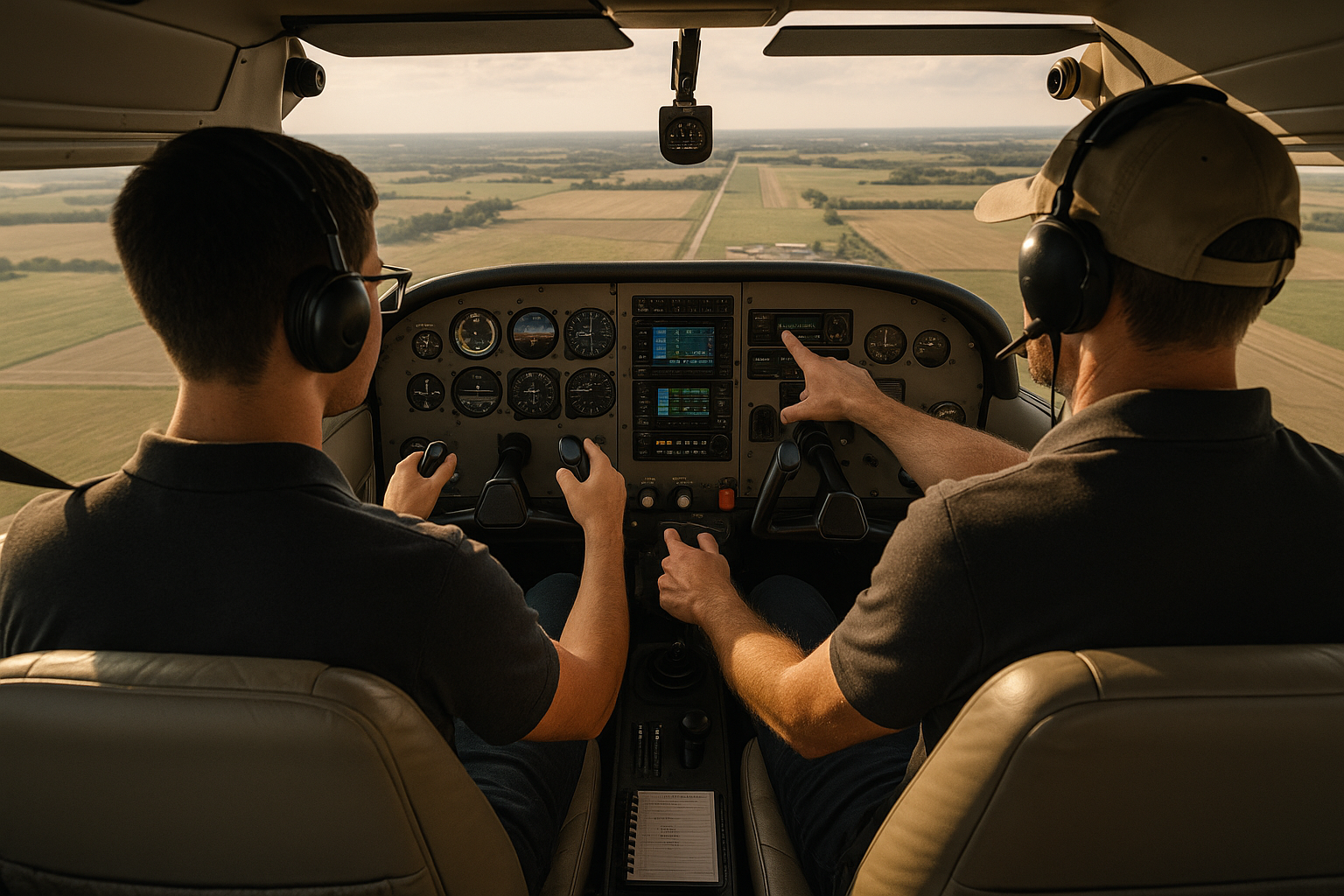
Engine failure training matters because rare, high-consequence events demand fast, correct pilot responses. Engine failure training is the deliberate practice of recognition, aircraft control, and decision-making for partial or complete engine power loss. For pilots, student pilots, and instructors, well-constructed engine failure training shortens the path to operational competence by exposing learners to the key cognitive and motor skills they must execute under pressure.
This article explains why targeted engine failure training accelerates skill development, how to design effective exercises, common mistakes instructors and students make, and practical ways to apply lessons in the aircraft, simulator, and briefing room. The primary keyword "engine failure training" appears early because pilots searching for training guidance want actionable, safety-focused approaches they can use in flight lessons and recurrent practice.
What engine failure training really is
At its core, engine failure training blends three elements: aircraft control, system management, and pilot judgment. Aircraft control covers maintaining safe airspeed, configuration, and flight path while the engine is not producing expected thrust. System management is the logical, prioritized set of actions to try to diagnose and recover power when possible. Pilot judgment is the recognition of environmental, performance, and operational constraints that determine whether a landing, restart attempt, or continued flight is the safest option.
Effective engine failure training is not a single maneuver or checklist recital. It is scenario-based practice that intentionally integrates stress, imperfect information, and real-time decision points so students learn how to prioritize control, keep options open, and avoid common errors under time pressure.
Why this matters in real-world aviation
Engine failures are uncommon compared with routine flying tasks, but their consequences can be severe when pilots are unprepared or fixated. Real-world operations place pilots in varying weather, traffic, and terrain environments where time and options are limited. Training that translates to these environments reduces cognitive overload and improves the likelihood of safe outcomes when power is lost or degraded.
From an operational standpoint, engine failure training improves safety by reinforcing three practical elements: automatic prioritization of control over troubleshooting, maintaining energy and airspeed so the aircraft remains controllable, and systematic decision-making about landing or restart attempts. These elements are relevant whether you fly single-engine pistons, light twins, turboprops, or jets. The specifics differ by aircraft, but the mental model and decision priorities remain consistent.
How pilots should understand engine failure training
Pilots should view engine failure training as deliberate, progressive exposure to difficulty rather than one-off demonstrations. Training progresses across three dimensions: context, complexity, and consequence. Context means practicing in representative environments—traffic pattern, cruise, climb, or IMC-capable conditions. Complexity means varying the type of failure: sudden full power loss, partial power loss, fluctuating power, or electrical/indication failures that mimic engine problems. Consequence refers to the level of risk built into the exercise, with simulators handling the highest-risk scenarios so in-air training remains safe.
Key learning objectives for any engine failure training lesson include:
- Immediate maintenance of aircraft control and safe airspeed.
- Formation of a simple, repeatable action sequence that can be executed under stress.
- Rapid assessment of landing options and trajectory management.
- Appropriate use of checklists and memory items without sacrificing control or options.
- Decision discipline about when to attempt a restart and when to commit to landing.
Developing these abilities requires instructors to balance guided practice with performance challenges so students build both correct habits and adaptive judgment.
Training methods that accelerate skill development
There are several training modalities that, when used thoughtfully, accelerate learning for engine failure response:
- In-flight simulated failures. With careful safety margins and thorough briefings, instructors can simulate power loss by reducing throttle or introducing simulated engine anomalies. This exposes students to the sensory cues and time pressure of a real failure while the instructor retains the ability to restore power.
- Flight training devices and simulators. Fixed-base and full-motion devices safely replicate complex failures and allow repeated practice without risk to the aircraft. Simulators are especially valuable for partial-power and multi-system failures and for practicing procedures that would be unsafe in the real airplane.
- Scenario-based classroom briefings and mental rehearsal. Debriefing and mental practice consolidate the decision sequence and foster a conceptual model of options. Walkthroughs that highlight decision points make in-flight practice more efficient.
- Progressive difficulty and variable practice. Start with predictable, low-stress scenarios and advance to unexpected events, degraded visibility, crosswind landings, or limited landing field options. Variable practice strengthens skill transfer to real-world unpredictability.
Each method contributes differently: simulators allow high-repetition, high-safety practice; in-air lessons build sensory cues and kinesthetic timing; and briefing/debriefing accelerates the cognitive learning that connects actions to outcomes.
Designing engine failure training for faster learning
Design matters. Faster skill acquisition comes when exercises are structured around clear learning goals, feedback mechanisms, and increasing challenge. Use the following approach when planning lessons:
- Define the learning objective: control, checklist fluency, decision heuristics, or landing technique.
- Set a deliberate safety envelope: altitude, proximity to suitable landing areas, and abort options must be explicit before each scenario.
- Use a small set of prioritized memory items that always come first and are practiced to automaticity.
- Introduce decision forks at preplanned times so students practice choosing and executing without instructor prompting.
- Debrief immediately, focusing on mental model errors, energy management, and situational awareness.
Deliberate practice means repeating specific elements, receiving immediate feedback, and refining performance. For engine failure training, repetition of the memory items and control actions until they are reflexive is critical. This reduces cognitive load during a real emergency and frees attention for higher-level decision-making.
Common mistakes and misunderstandings
Even experienced instructors and students make predictable errors when training engine failures. Recognizing these prevents wasted training time and unsafe practice.
Common errors include:
- Prioritizing checklist completion over aircraft control. Students often try to run through every checklist item before stabilizing flight. In practice, stabilizing the aircraft and maintaining energy are the highest priorities.
- Fixation on restarting the engine without considering landing options. Repeated restart attempts can consume critical time and degrade glide energy or altitude margins.
- Using the wrong training environment. Practicing complex failures low over unsuitable terrain increases risk and reduces training effectiveness. Simulators or higher-altitude practice areas are better choices for high-consequence drills.
- Unrealistic or repetitive scenarios. If every simulated failure occurs in the same way, students learn a script rather than adaptive decision-making. Vary failure cues and environmental constraints.
- Insufficient debriefing and reflection. Without immediate feedback on what went right and wrong, students fail to internalize the correct priorities and strategies.
Avoid these mistakes by designing sessions that enforce the right priorities, use progressive challenge, and emphasize debriefing and reflection.
Practical example: a staged training scenario
Imagine a student flying a cross-country cruise lesson with an instructor. The area is chosen for safe maneuvering and has multiple suitable forced-landing fields within gliding distance. Before takeoff the instructor briefs the scenario: at a predetermined waypoint and altitude, the instructor will simulate a sudden loss of power. The student will handle the initial response and manage the landing or restart decision. The instructor and student agree on safe minimums and an abort plan.
When the simulated failure occurs, the student immediately stabilizes the flight attitude and calls for the nearest safe landing area. The student runs the prioritized memory items learned in training to check basic causes while maintaining the aircraft's energy. The instructor times an appropriate point to restore power if the student demonstrates effective aircraft control and decision-making. Immediately after the simulated event, the pilot and instructor debrief: what cues were recognized, which checks were prioritized, how the selected landing area aligned with wind and obstacles, and what could be done differently.
This staged scenario teaches not just the procedural sequence but the judgment to choose a course of action. Repeating this scenario with different initial conditions, altitudes, and terrain quickly builds adaptive skill instead of rote procedure memorization.
How simulators and devices accelerate learning
Simulator time increases training effectiveness by allowing repeated exposure to rare failures without risk. They enable students to experience complex, compounding failures or severe weather while preserving the aircraft and people. Simulators are particularly effective when paired with realistic briefing and debriefing protocols.
Key simulator advantages include:
- Safe repetition of high-consequence events until proficiency is achieved.
- Ability to practice degraded instrument or multi-system failures that would be unsafe in flight.
- Controlled manipulation of failure timing and sequence for targeted skill building.
To maximize transfer to real aircraft, couple simulator practice with in-flight reinforcement that emphasizes sensory cues, control feel, and communication with ATC or passengers.
Instructional techniques for effective training
Experienced instructors use several techniques that speed learning without increasing risk:
- Modeling behavior: demonstrate the prioritized sequence and decision-making aloud so students hear the thought process during an emergency.
- Scaffolded challenge: start predictable, then remove cues so the student must diagnose the problem from limited information.
- Error-based learning: allow small, recoverable errors so students learn the consequences while the instructor provides corrective feedback.
- Pause-and-replay: in simulators, pause after a critical action to discuss alternatives and then replay the segment with a revised approach.
- Focus on decision points: highlight the moments where choices have the largest safety payoff, such as when to commit to a landing site versus continuing an engine restart attempt.
These techniques reduce cognitive overload, increase retention, and help students generalize skills to new contexts.
Safety considerations and risk mitigation
Because engine failure training intentionally creates risk conditions, safety management must be explicit. Instructors should set clear boundaries: minimum altitudes, geographic limits, and a known abort plan. When practicing simulated failures in single-engine aircraft, always ensure the instructor can immediately restore power or take control if safety margins are breached.
Risk mitigation measures include prebriefing, flying in low-traffic practice areas, having emergency services contact information available if operating away from the airport, and using simulators for scenarios with unacceptable in-flight risk. For student comfort and realism, brief the sensory cues they should expect and how those cues will differ between a simulated throttle pull and an actual engine stoppage.
Common training assessments and markers of competence
Progress toward competence is best measured by observable behaviors rather than checklists alone. Markers of developing proficiency include:
- Automatic prioritization of aircraft control before checklist completion.
- Clear, timely communication with the instructor and, when appropriate, ATC or passengers.
- Ability to select a viable landing area under degraded options and to configure the aircraft for approach without hesitation.
- Consistent application of a restart decision framework that balances energy state and available options.
- Effective crew resource management when flying with another pilot or flight attendant.
Assessments should be structured so that instructors can provide immediate feedback and measure how well the student applies skills across varied scenarios.
Applying engine failure training to real operations
Translating practice to safe operations requires integrating engine failure training into broader airmanship. Use recurrent training opportunities to reinforce memory items, decision heuristics, and energy management. For multi-crew operations, incorporate crew resource management and communications with ATC. For single-pilot operations, emphasize maintaining options and communicating intentions early to reduce surprise and expectation mismatches with controllers and passengers.
Flight departments and operators should adopt regular scenario-based practice, maintain currency on emergency procedures, and ensure that simulators used for training are representative of the aircraft systems and handling characteristics pilots fly in service.
Common mistakes or misunderstandings
Beyond the immediate procedural errors already described, a few broader misunderstandings slow learning or create safety risk:
- Believing that memorizing a checklist equals proficiency. Rote checklist recitation does not ensure correct prioritization under pressure.
- Assuming simulator practice alone is sufficient. Simulators are powerful, but pilots also need in-air experience with real sensory cues and noise patterns to build complete situational awareness.
- Underestimating the role of simple, repeatable memory items. A compact set of immediately executable memory items reduces time loss and cognitive load during the initial response.
Address these misunderstandings by combining simulation and in-air practice, emphasizing prioritized memory items, and using realistic, variable scenarios.
Frequently Asked Questions
How often should I practice engine failure scenarios?
Frequency depends on experience, aircraft type, and operational environment. New pilots and those flying high-risk profiles should practice more frequently, while experienced pilots should still include periodic scenario-based rehearsals during recurrent training. Use simulator sessions to practice complex or high-risk failures and conduct in-flight rehearsals to reinforce sensory cues and control habits.
Can I safely simulate engine failures in a single-engine aircraft?
Yes, but only with careful planning, conservative safety margins, and an instructor who can immediately restore power if necessary. Many instructors use throttle reductions or simulated indication changes rather than literal engine shutdowns to keep the exercise safe. Practice in designated training areas well clear of populated terrain and have contingency plans prepared.
Do simulators teach the same skills as real flight practice?
Simulators teach many critical decision and procedural skills effectively and enable high-repetition exposure to rare events. However, they may not replicate all sensory cues or the exact feel of an aircraft. Combine simulator practice with in-air reinforcement to build full situational awareness and kinesthetic timing.
Should I focus on checklist memory or decision-making?
Both are important, but prioritize decision-making and aircraft control first. A compact set of memory items practiced until automatic should come before lengthy checklist completion. Once the aircraft is under control and the immediate threat addressed, use the checklist to guide comprehensive troubleshooting.
What role does communication play during an engine failure?
Clear, timely communication is critical. Informing the instructor, passengers, or ATC stabilizes the environment and helps coordinate assistance. Instructors should practice short, priority-driven communications so pilots can maintain control while providing essential information.
Best practices for pilots
These practical habits speed skill acquisition and improve safety during engine failure training:
- Practice a small set of prioritized memory items until they are automatic.
- Use simulators for high-risk, high-repetition practice and flight lessons for sensory and control reinforcement.
- Design scenarios with clear safety margins and abort criteria.
- Debrief after every session, emphasizing decision points and alternatives.
- Vary scenarios so students learn adaptive judgment rather than scripts.
Adopting these practices helps pilots move from conscious rule-following to reliable automatic response when faced with real engine troubles.
Key Takeaways
- Practical takeaway: Prioritize aircraft control and energy management before troubleshooting to preserve options and safety.
- Safety takeaway: Use simulators for unsafe-to-fly scenarios and strict safety envelopes when practicing in real aircraft.
- Training takeaway: Structured, scenario-based practice with immediate feedback accelerates skill development more than rote checklist drills.
Engine failure training is an investment in preparedness. Done well, it converts rare, high-risk experiences into practiced skills and sound judgment, giving pilots the composure and competence to handle the unexpected. For instructors, designing varied, realistic lessons and focusing on decision points and automatic memory items produces faster, more durable learning outcomes. For students, combining simulator and in-flight practice, seeking immediate debriefs, and focusing on control first yields the fastest route to safe, confident handling of engine problems.