
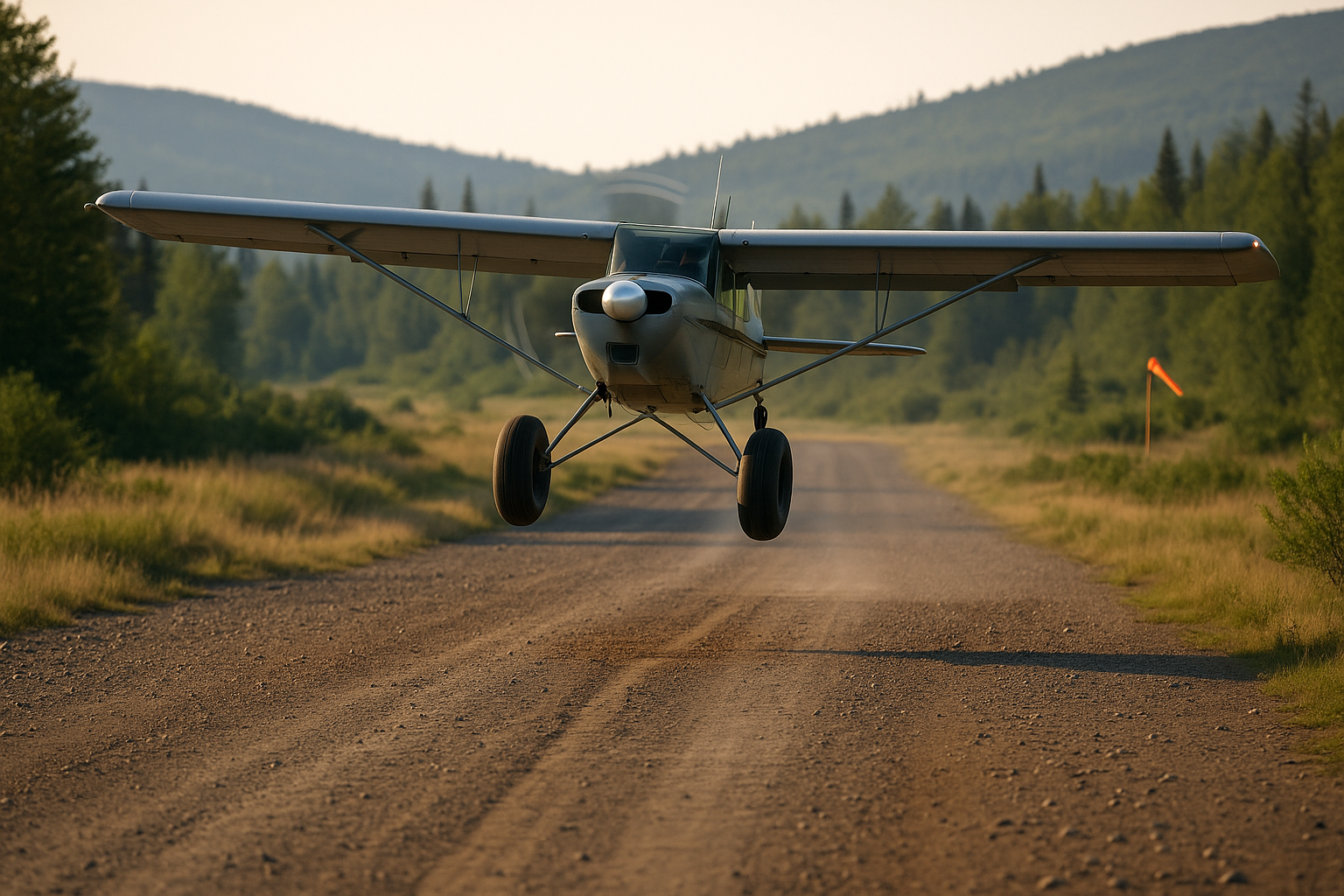
Bush flying is a specific style of piloting focused on operating to and from unimproved, remote, or short airstrips and off-airport landing sites. For student pilots and instructors, bush flying during flight training presents an opportunity to develop judgment, stick-and-rudder skill, and risk management at the same time. This guide introduces core concepts, explains why bush flying matters in real-world aviation, and gives practical, training-focused direction without inventing regulatory requirements.
The value of learning bush flying principles early in training is not that every pilot will operate from dirt strips or tundra. The value lies in developing a practical mindset: how to assess performance when runways are short or rough, how to read terrain and wind, how to make conservative decisions when information is limited, and how to manage the human factors that contribute to mishaps. This piece is written for student pilots, flight instructors, and aviation professionals who want training strategies, safety takeaways, and realistic examples to use in instruction or personal learning.
What Bush Flying Means Practically
In practical terms, bush flying is about operating safely where infrastructure is limited. That includes short or soft runways, narrow clearings, steeply sloped strips, beaches, frozen lakes, and clearings cut in or near wilderness. Aircraft are often lightly modified for these environments with larger tires, flap adjustments, or other gear, but the essential skills come from careful performance planning and precise control at low speed near the ground.
Key operational realities are predictable: takeoff and landing distances are often shorter or longer than paved runway numbers suggest; terrain and wind can create unexpected shear or turbulence; surface conditions change with weather; and rescue or maintenance support can be hours away. Pilots operating in these environments must combine sound airmanship, conservative decision-making, and solid preflight planning.
Why Bush Flying Matters in Real-World Aviation
Learning bush flying techniques during flight training sharpens core piloting skills that transfer to many other aviation contexts. Soft-field and short-field techniques improve control during slippery or soft runways at municipal airports. Terrain and wind assessment skills are directly relevant to mountain flying and coastal operations. Risk assessment and diversion planning are useful for cross-country planning in any aircraft.
From a safety perspective, many off-airport operations have a higher consequence for mistakes. Repairs and rescue are more difficult, weather can change quickly and without notice, and navigational aids are often minimal. Training that emphasizes conservative go/no-go decision-making, thorough preflight reconnaissance, and management of energy on approach reduces exposure to those risks for student pilots and instructors.
How Pilots Should Understand Bush Flying
Understanding bush flying is partly technique and partly mindset. Technique covers aircraft control, performance assessment, and pattern management. Mindset covers risk management, planning for contingencies, and knowing personal and aircraft limits. Below are the major topics pilots should internalize.
Aircraft Performance and Weight Management
Performance is fundamental. Off-airport strips often require more takeoff and landing distance than smooth paved runways. Surface rolling resistance, slope, and soft ground all affect ground roll and acceleration. Pilots must understand how weight, center of gravity, and flap settings affect takeoff and landing behavior. When operating near performance margins, lightening the aircraft by removing unnecessary baggage and passengers can materially improve controllability and shorten ground roll.
Surface Assessment and Landing Technique
Before committing to an approach, visually inspect the landing site from several angles if possible. Look for ruts, standing water, rocks, driftwood, holes, and wire fences. On approach, fly a stabilized approach with a clear plan for touchdown point and rollout. Soft-field technique emphasizes minimizing nosewheel or tailwheel loading to avoid digging in, maintaining a lower airspeed into the threshold with power as necessary, and using aerodynamic braking rather than heavy wheel braking. Short-field technique emphasizes precision in touchdown point, maximum available lift at slow speed, and effective use of flaps and brakes to minimize landing distance.
Wind, Crosswind, and Wind Shear
Wind direction and speed near the surface may differ significantly from what ATIS or a regional forecast reports. Terrain can funnel wind and create localized shear. Prioritize low-level wind reconnaissance on arrival, and be prepared to go around if winds exceed your technique capability. For student pilots, practicing crosswind control and knowing comfortable crosswind limits for the aircraft and pilot skill level is essential before attempting remote strips where a go-around may be more difficult.
Density Altitude and High-Altitude Operations
High-elevation strips or hot temperatures reduce engine and aerodynamic performance. Density altitude affects climb rate, takeoff roll, and control response. Understand how your aircraft’s performance changes with altitude and temperature, and use conservative power and weight management to maintain safety margins. When performance is marginal, plan for longer ground roll and reduced climb gradient, and avoid steep obstacles on departure paths.
Obstacle and Terrain Management
Bush strips often sit in valleys, on ridge tops, or at the base of slopes. Know your departure and approach airspace, and identify obstacles such as trees, ridgelines, and power lines. Plan energy management carefully. In many bush operations, the margin between clearing obstacles and settling short is small. Fly approaches that allow a safe go-around with usable climb performance.
Navigation and Situational Awareness
Remote operations may have no published procedures or navigation aids. Use topographic maps, GPS databases, and satellite imagery to plan and confirm waypoints and landmarks. Build systems for position reporting and estimated times. If you need to divert, have alternate landing sites identified with their terrain and surface conditions in mind.
Survival, Emergency Planning, and Equipment
In remote areas, a simple mechanical problem can become a survival scenario. Carry appropriate emergency and survival equipment for the climate and terrain you are flying over. Items include water, a signaling device, basic first aid, shelter, and a way to start a fire if necessary. Train with the gear so you know how to use it under stress.
Human Factors and Decision-Making
Bush flying highlights human factors issues such as get-there-itis, mission fixation, and fatigue. When training, instructors should emphasize how to conduct a realistic risk assessment, the value of conservative personal minimums, and the importance of turning back or diverting early. Encourage students to verbalize their decision process and to treat marginal conditions as opportunities to practice turning around safely.
Common Mistakes or Misunderstandings
Many incidents in remote operations stem from a small number of predictable mistakes. Understanding these common errors helps instructors focus training and helps students adopt safer habits.
One frequent error is underestimating surface conditions. A runway that looks firm at a distance may be soft near the threshold after rain or melting snow. Pilots who commit late to an approach may discover they cannot stop within the available surface. Another mistake is poor reconnaissance. Overconfidence based on a single aerial pass or reliance on out-of-date reports can lead to unexpected obstacles on final.
Technique mistakes are another category. Students often use too much braking on soft surfaces, causing nosegear collapse or tailwheel dig-in. Conversely, insufficient control on approach can lead to float and overshoot on short fields. Misjudging wind at low altitude, or failing to account for wind shear and turbulence near terrain, can cause a pilot to land long or drift into an obstacle.
Human factors include continuation bias. Once a pilot has committed to a destination, it becomes psychologically harder to cancel the approach. This is why structured go/no-go decision points during the approach are valuable. Another misunderstanding is assuming that a familiar aircraft behaves the same everywhere. Different surfaces and densities alter handling significantly.
Practical Training Example: Remote Strip Approach and Landing
Imagine a day training flight where an instructor plans to introduce a student to a short grass strip located in a valley clearing. The flight begins with route reconnaissance using sectional charts and satellite imagery. En route, the instructor and student identify landmarks that define the approach corridor and plan a circuit that keeps the aircraft clear of a ridge aligned with the approach path.
On arrival, they perform an overhead or circuit reconnaissance to view the strip surface, noting ruts and a soft patch near the far end. The instructor points out the wind indicator and demonstrates how nearby trees show a crosswind component at the surface that was not obvious on the ATIS-like weather briefing. They decide to perform a conservative traffic pattern, deliberately aiming for a touchdown zone that avoids the soft patch. The student flies a stabilized approach at a slightly higher than normal approach speed to maintain control and allow for a go-around. The instructor emphasizes a firm go-around decision point: if the approach becomes unstable, if the touchdown point moves, or if the surface looks worse than expected, initiate a go-around immediately.
At touchdown, the instructor coaches power management to cushion the landing and then uses aerodynamic braking and gentle wheel braking to avoid digging in. After clearing the strip, they inspect the surface on the ground and discuss options for departure, including removing unnecessary weight and using shorter takeoff techniques with a clear climb path planned.
This scenario highlights preflight reconnaissance, conservative decision-making, stabilized approach technique, and the instructor’s role in allowing the student to practice while maintaining a safe margin. It also shows the value of adjusting plans when surface or wind conditions differ from expectations.
Best Practices for Pilots Training in Bush Flying
Best practices combine preparation, conservative judgment, and deliberate technique development. Instructors should scaffold training so students master basic stick-and-rudder skills first, then add complexity with short, soft, and sloped-field work under direct supervision.
- Start with fundamentals: Ensure the student is proficient in soft-field and short-field takeoffs and landings on prepared surfaces before attempting remote strips.
- Use staged exposure: Progress from wide-open grass fields to shorter and rougher strips, and finally to constrained or sloped fields with clear go-around options.
- Plan conservatively: Build energy margins into approaches and departures, and plan for multiple alternates and diversion routes.
- Preflight reconnaissance: Use maps, imagery, pilot reports, and if possible, local knowledge to understand the strip layout, surface, and common winds.
- Limit aircraft loading: Remove nonessential weight if operating close to performance limits to improve climb and ground handling.
- Brief the emergency plan: Before each approach to an unfamiliar field, articulate a clear go-around point, an emergency landing option, and who will take action if necessary.
- Train for equipment failure: Practice simulated engine-out procedures over safe terrain and review forced-landing theory specific to the region you operate in.
- Carry appropriate survival gear: Tailor the gear to the environment, but avoid turning the aircraft into an over-burdened load.
- Record and debrief: After each remote operation, critically debrief decisions, technique, and what could improve for the next flight.
Instructor Guidance: Structuring Safe Bush-Flying Lessons
Instructors play a pivotal role in balancing student learning with safety. Start by defining clear objectives and conservative personal minimums. Use demonstration flights to show the correct visual scanning, approach stabilization, and touchdown technique. Allow students to fly with increasing responsibility, and maintain a low threshold for taking control if the approach becomes unstable.
Teach students to verbalize their decision process. For example, before each approach the student should state the touchdown zone, go-around point, expected wind, and escape plan. This habit externalizes decision-making and makes it easier for the instructor to coach corrective choices.
Simulate emergency scenarios on the ground and in flight. Practice aborted takeoffs and go-arounds in a low-risk environment so the student understands the power and control inputs required. Use progressive tasks that build situational awareness, such as identifying subtle surface hazards during a reconnaissance pass.
Maintenance and Aircraft Considerations
Aircraft used for bush flying require close attention to tires, brakes, and suspension. Visual checks for loose skin, proper tire inflation for larger bush wheels, and inspection of all external fittings matter. While major modifications may be beyond most training aircraft, simple, well-documented changes such as larger tires or protective gear must be matched to pilot proficiency and maintained carefully.
A conservatively maintained aircraft with predictable handling is safer in remote operations than a marginally higher-performance aircraft that has not been inspected thoroughly. If operating in saltwater environments, plan for corrosion control and rinse procedures. If operating from unimproved strips at frequent intervals, schedule more frequent inspections of wheel components and the airframe underside.
Legal and Regulatory Context
Legal and regulatory requirements for operating to off-airport sites vary by country and region and depend on the type of operation. Pilots should consult applicable local regulations and operate within the privileges of their certificate, airworthiness limitations of the aircraft, and any landowner permissions required for private fields. Instructors should teach students to verify legal permissions and to document authorization when necessary.
Do not assume off-airport operations are allowed by default. When planning a flight to a private or unlisted field, confirm permission in advance and respect any rules or local constraints.
Common Questions Pilots Ask
Do student pilots need special endorsements to fly to remote strips?
Endorsement and certification requirements vary by jurisdiction and the type of operation. Instructors should advise students to follow local regulations and industry best practices. When in doubt, consult a certificating authority or a flight school manager for clarification.
How should I choose a suitable training area for initial bush operations?
Choose a wide, well-maintained grass field with no immediate obstacles, good visibility, and predictable winds. Use that environment to practice soft-field and short-field techniques before progressing to narrower, rougher, or sloped sites.
What survival gear is essential for bush flying?
Essential items depend on climate and terrain. Basic items include water, a signaling device, a first aid kit, an emergency shelter, warm clothing, and the ability to start a fire. Tailor the list to your operating area and carry only what you can securely stow without overloading the aircraft.
When should I abandon an approach to a remote strip?
Establish clear go-around triggers such as an unstable approach, unexpected surface hazards, inability to land within the planned touchdown zone, or wind conditions beyond your capability. If any of these occur, execute a go-around promptly and divert to an alternate if necessary.
How does pilot currency affect bush flying safety?
Currency is critical. Regular practice of short-field, soft-field, and crosswind techniques reduces the likelihood of technique-related mistakes. Infrequent operators should limit exposure to challenging strips until they regain proficiency under an instructor’s supervision.
Key Takeaways
- Practical takeaway: Practice soft-field and short-field techniques progressively and always perform a visual reconnaissance before committing to a remote strip.
- Safety takeaway: Use conservative decision-making and clear go-around triggers to avoid irreversible commitment near the ground.
- Training and operational takeaway: Structure lessons with staged exposure, verbalized decision-making, and thorough debriefs to build transferable skills.
Bush flying is not a single technique but an integrated approach to operating where margins are smaller and consequences are higher. When taught and practiced with sound judgment, bush flying skills make better, more capable pilots. For instructors, the best outcomes come from staged exposure, clear safety thresholds, and candid, scenario-based debriefs that reinforce conservative decision-making and precise aircraft control.